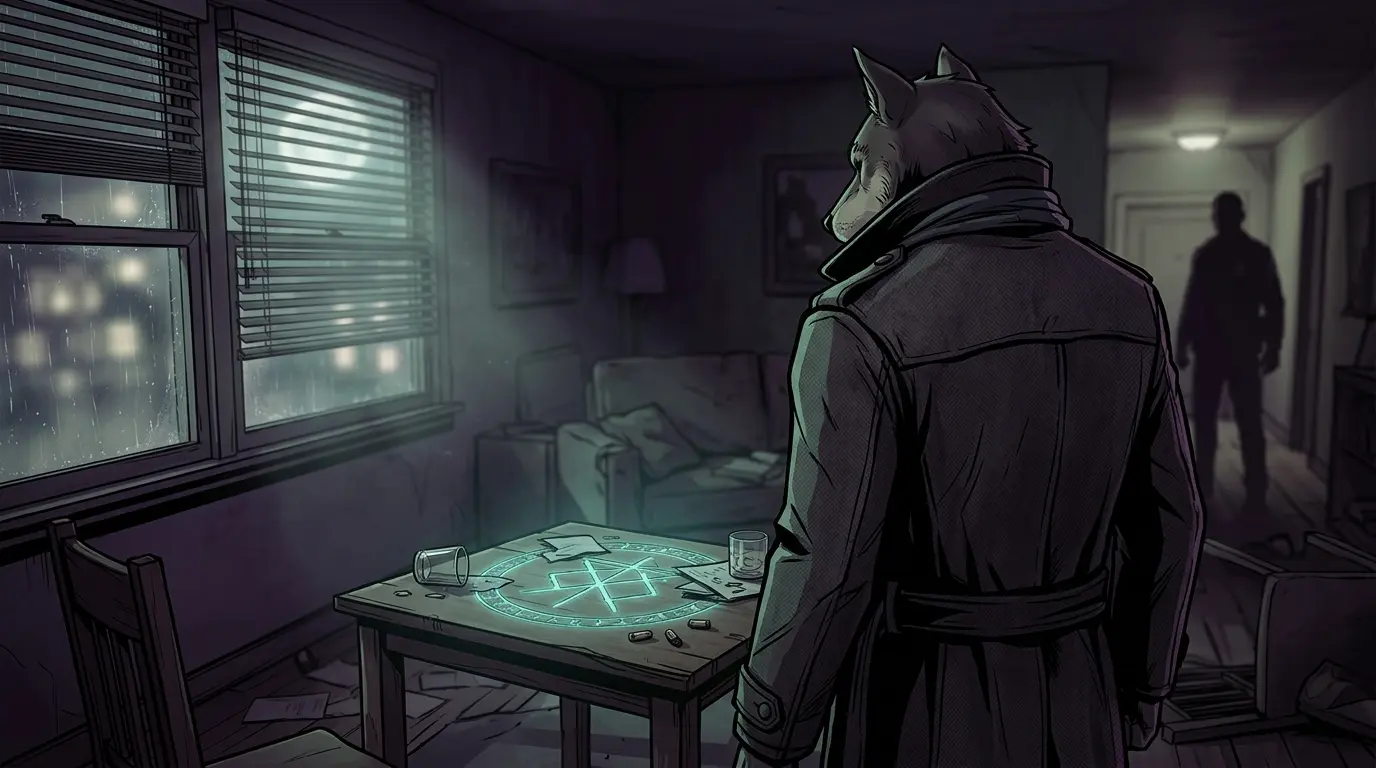
Cthulhu: The Cosmic Abyss is a narrative puzzle-adventure released April 16, 2026, by Big Bad Wolf and Nacon, dropping players into a Lovecraftian prison called R’lyeh across seven chapters. Most early frustration comes from two places: misreading the corruption-based sanity system and stalling on multi-step deduction puzzles without enough clue context. This cthulhu the cosmic abyss guide covers both pain points in full, walking through sanity mechanics, chapter puzzle logic, trophy tips, and beginner mistakes to avoid. If you enjoy psychological horror experiences, check out our list of the best survival horror games in 2026 for more recommendations alongside this one.
What Cthulhu: The Cosmic Abyss Is and What Players Should Expect
At its core, Cthulhu: The Cosmic Abyss is a narrative adventure built around investigation, deduction, and environmental puzzle-solving. The game unfolds across approximately 15 hours and seven chapters, all set inside R’lyeh, the infamous sunken city from H.P. Lovecraft’s mythology. Players control protagonist Noah, who must analyze clues, link evidence in the VAULT system, and navigate non-Euclidean spaces that deliberately break conventional geometry.
The challenge profile leans heavily on observation and logic rather than reflexes or combat. You will spend most of your time reading environmental details, collecting materials, and working through layered deduction sequences. The horror comes less from jump scares and more from a creeping psychological pressure tied directly to corruption mechanics.
This game suits players who enjoy:
- Story-rich investigation games with branching outcomes
- Logic puzzles that require combining environmental clues before acting
- Lovecraftian atmosphere and lore-dense world-building
- Trophy hunting across multiple endings (six total based on corruption level)
- Methodical pacing with a meaningful consequence system
One detail that surprises many beginners is the replay structure. If you replay chapters, your progress resets, so making deliberate choices during a single run matters more than experimenting carelessly and assuming you can undo mistakes without cost.
Key takeaway: Approach every room as an investigation scene. Rushing past clues or guessing puzzle solutions without full context will cost you corruption points and potentially lock you out of the true ending.
How the Sanity System Works
The sanity system in Cthulhu: The Cosmic Abyss is managed through a Corruption Meter that tracks Noah’s deteriorating mental state throughout the game. Understanding this meter is the single most important skill for anyone using this cthulhu the cosmic abyss guide for the first time. For a broader look at how sanity mechanics have evolved in horror games, our breakdown of Eternal Darkness: Sanity’s Requiem shows how deep this design tradition goes.

Here is how the corruption loop works:
- Corruption increases when Noah makes wrong deductions, fails investigations, or overuses the clue analysis function without sufficient energy.
- Corruption decreases when Noah takes correct, low-corruption paths through investigations, such as using sonar-guided tunnels or resolving guardian encounters without lethal methods.
- Exceeding the corruption threshold triggers hallucinations, degrades the game’s visual and audio environment, and pushes the story toward bad endings.
- Six different endings exist based on your total corruption level. Only one ending is considered the true ending, earned via the “Mens Sana” trophy by never exceeding the corruption threshold across the entire run.
Energy is a separate but connected resource. Noah needs energy to analyze clues using the VAULT system. The primary recovery item is the Lichen Stimulant, which takes the form of orange mushrooms found throughout the environment. Consuming 10 of them across a playthrough unlocks the “Addicted” trophy, so they are not rare items you need to hoard indefinitely. That said, burning them without purpose wastes a resource you may need during a demanding deduction sequence.
The Corruption Meter is not just a health bar. It is a record of how carefully you read the game’s world. Every wrong link in the VAULT and every shortcut around a deduction costs you more than it appears to in the moment.
High corruption does not immediately end your run. Instead, it layers in sensory distortions that make already-complex puzzles significantly harder to read, which compounds the problem rapidly if left unchecked.
How Exploration, Clues, and Puzzle Progression Work
Every chapter in Cthulhu: The Cosmic Abyss follows a consistent loop that ties exploration directly to sanity management. Understanding this loop is key to staying low-corruption across the full 15-hour runtime.
- Explore the space fully before interacting with any puzzle element. Rooms contain notes, environmental details, and materials that provide sonar frequencies or deduction context.
- Collect and analyze clues using the VAULT system. Link related clues carefully. Wrong links raise corruption, so only connect evidence you have read and understood.
- Use the Key AI to assist with analysis and sonar when you have enough energy. The Key AI is a built-in tool that reduces guesswork on material frequencies.
- Solve the chapter’s deduction with all evidence assembled. Completing 15 total deductions across the game earns the “Elementary” trophy.
- Advance through the gated area once the deduction resolves, using the sonar frequency or crafted item the investigation revealed.
Rushing past readable text or collectible materials is the most common reason players stall mid-chapter. The puzzle is almost always solvable with items already in the room if you have collected everything first.
Sonar frequencies are derived from analyzed materials. For example, Electrum frequencies allow Noah to reshape metallic objects, while Hybrid Mucus provides sonar for navigating underwater tunnels. Combining materials can create compound frequencies with broader applications. The key habit is to analyze every material you pick up before assuming you know its function.
Best Early Tips for Managing Sanity
Staying low-corruption across a full run requires building a few consistent habits from the very first chapter rather than trying to course-correct after the meter climbs.
Scan Every Room Before Touching Anything
- Walk the full perimeter of each space and collect every readable item before beginning any VAULT session. Missing a document can make a correct deduction look incorrect.
Use Lichen Stimulants Proactively, Not Desperately
- Orange mushrooms are plentiful enough to consume before demanding analysis sequences. Do not save them for after your energy is already exhausted during a puzzle. The “Addicted” trophy requires consuming 10, so there is no reason to avoid them.
Prefer Non-Lethal and Non-Aggressive Investigation Paths
- When the game offers a choice in how to resolve an encounter or investigation, the option that avoids confrontation or uses a crafted tool is almost always the low-corruption path. The Chapter 5 guardian sequence is the clearest example: using crafted frequencies and the Yith Orb to hypnotize rather than confront the guardian keeps your corruption low and earns the “His Master’s Voice” trophy.
Do Not Link Clues in the VAULT Without Full Evidence
- Every wrong link in the VAULT adds to corruption. If you are unsure of a connection, leave it open and keep exploring. For players following a horror game guide approach, this patience-first method will feel familiar.
Track Your Evolutions and Energy Upgrades Early
- The game contains 15 Evolutions (earning the “Augmented Agent” trophy) and 4 Energy Upgrades (earning the “Full Charge” trophy), equippable through the Control menu. Picking these up consistently expands your energy ceiling and reduces how often you drain your analysis capacity mid-investigation.
Key takeaway: Sanity is a resource to manage proactively, chapter by chapter. The meter climbs through small mistakes accumulating, not through single catastrophic errors, so the correction needs to happen before you need it.
Puzzle Guide: How to Solve the Most Common Early Puzzles
This cthulhu the cosmic abyss guide breaks down the most searched-for puzzle types by chapter. Each category below covers what to look for, where players typically misread the setup, and the correct order of operations.
Chapter 1: The Page and Stone Arrangement
The Chapter 1 puzzle requires Noah to place five missing pages on a wall circle. Three of the pages are found on the floor and two are on a table. One of the table pages must be turned over before it can be placed correctly. After completing the wall circle, Noah must collect two stones and place them in the basement structure. Completing this sequence correctly unlocks the “Artist” trophy.
- Common misread: Players place all five pages face-up and cannot complete the circle. Check both sides of every collectible document.
- Order: Collect floor pages, collect table pages, flip the one that does not visually match, place all five, then handle the stones.
Chapter 2: The Non-Euclidean Underwater Maze
The Chapter 2 maze is intentionally disorienting because it operates on non-Euclidean geometry, meaning standard navigation logic will loop you back to the start. The solution depends on reading the energy markings on tunnel walls, which indicate whether to take the path leading backwards or forwards relative to your entry direction. Using Hybrid Mucus sonar helps confirm which current tunnel you are navigating. Completing the maze on the low-corruption path unlocks the “Against the Tide” trophy.

- Common misread: Trusting spatial memory instead of the energy markings. The geometry actively misleads.
- Use sonar on every junction before committing to a direction.
Chapter 3: Metallic Cube Devices and the Wing of Secrets Maze
Chapter 3 introduces three metallic cubes that must each be reshaped into cylinders using the Electrum frequency, then placed on their corresponding plates. The Wing of Secrets maze that follows uses an energy-guided sequence: Backwards, then Forwards, then Backwards, then Forwards twice in a row, then Backwards once more. Deviating from this sequence returns Noah to the start of the maze.

- Common misread: Applying Electrum to the cubes before reaching the plates, then misplacing a reshaped cylinder.
- Memorize or note the maze sequence before entering: Back, Forward, Back, Forward, Forward, Back.
Chapter 5: Guardian Encounter Frequencies
The Chapter 5 guardian can be resolved without combat. Use Macroplankton, Human Blood, and Shoggoth Heart frequencies to reveal invisible tentacles. Then craft the Yith Orb by placing Zirconium in a bowl alongside a medallion. Using the Yith Orb to hypnotize the guardian completes the sequence on the low-corruption path and earns “His Master’s Voice.” The game also contains 9 Monolith collectibles that slot into Noah’s progression through the Control menu.
Common Mistakes to Avoid
- Guessing VAULT links without full evidence: Every wrong connection raises corruption. If you have not read every document in the room, the deduction is not ready to attempt.
- Hoarding Lichen Stimulants: Orange mushrooms are recovery items, not rare treasures. Saving them for a moment that never comes means entering analysis sequences under-energized and making more errors.
- Ignoring sonar before maze junctions: Non-Euclidean spaces will loop you without warning. Firing sonar before every decision point costs energy but saves far more in wasted traversal.
- Replaying chapters to fix mistakes without understanding the consequence: Chapter replays reset your progress. A replay intended to fix one wrong deduction can cost you collectibles and trophy progress already earned.
- Using lethal or aggressive solutions in guardian encounters: Combat-adjacent choices in key encounters almost always carry higher corruption costs than investigative solutions. When a crafted item or frequency is available, use it.
- Skipping Evolution and Energy Upgrade pickups: Missing even a few of the 15 Evolutions or 4 Energy Upgrades early leaves Noah with a smaller analysis window throughout the mid-game, where investigation sequences become more demanding.
- Misreading hallucinations as bugs: High corruption produces intentional visual and audio distortions. If the environment starts behaving strangely, treat it as a signal to check your corruption level rather than a technical issue.
Cthulhu: The Cosmic Abyss Guide at a Glance
| Priority | Recommendation |
|---|---|
| First focus | Scan every room fully before opening the VAULT or attempting any deduction |
| Main sanity rule | Never link clues in the VAULT until you have collected all evidence in the area |
| Safest puzzle habit | Use sonar at every maze junction rather than trusting spatial memory |
| Top resource priority | Energy Upgrades and Evolutions; collect all 4 upgrades and all 15 Evolutions via the Control menu |
| Biggest beginner mistake | Replaying chapters without understanding that progress and collectibles reset |
| Trophy to target first | “Mens Sana” for the true ending; requires never exceeding the corruption threshold |
Pro tip: Treat each chapter like a contained investigation scene. Complete every collection action before making a single deduction attempt, and your corruption will stay manageable through the mid-game even without perfect play.
Frequently Asked Questions
How do you recover sanity or reduce corruption in Cthulhu: The Cosmic Abyss?
Corruption decreases when Noah takes correct, low-corruption investigation paths, such as using sonar-guided routes through mazes or resolving guardian encounters with crafted tools instead of direct confrontation. Energy, which is a related but separate resource needed for clue analysis, is restored by consuming Lichen Stimulants (orange mushrooms found throughout the environment). Managing both resources together is the core of the sanity system.
How many endings does Cthulhu: The Cosmic Abyss have, and how do you get the true ending?
The game has six endings determined by your total corruption level at the end of the run. The true ending is tied to the “Mens Sana” trophy and requires that Noah never exceeds the corruption threshold at any point during the playthrough. This means maintaining low-corruption choices across all seven chapters, not just the final one.
What happens if corruption gets too high?
Exceeding the corruption threshold triggers hallucinations that distort the visual and audio environment. These are intentional design choices, not bugs. High corruption also pushes the story toward one of the five bad endings, locking you out of the true ending for that run. The compounding effect is significant: hallucinations make the investigation puzzles harder to read, which leads to more wrong VAULT links, which raises corruption further.
Does the Cthulhu: The Cosmic Abyss trophy guide require multiple playthroughs?
The cthulhu the cosmic abyss trophy guide for 100% completion involves earning trophies across different corruption paths, which implies engaging with multiple outcomes. However, replaying chapters resets progress, so players pursuing a full trophy list should plan their chapter choices carefully. Key trophies like “Elementary” (15 deductions), “Augmented Agent” (15 Evolutions), and “Full Charge” (4 Energy Upgrades) all require consistent collection habits rather than isolated chapter replays.
What is the VAULT system and how does it affect puzzle progression?
The VAULT is Noah’s central investigation tool. It allows players to link and analyze collected clues, run deductions, and use the Key AI for sonar assistance. Wrong links between clues raise corruption, so the VAULT is both the primary puzzle interface and the primary source of sanity risk. Completing 15 successful deductions using the VAULT earns the “Elementary” trophy.
The Bottom Line on Cthulhu: The Cosmic Abyss for Beginners
Success in Cthulhu: The Cosmic Abyss comes down to patience with the investigation loop, not skill at any one puzzle. The Corruption Meter punishes guessing and rewards thorough observation, which means the most important habit you can build is completing every collection action in a space before opening the VAULT. For puzzles specifically, sonar and material frequencies are always the key. Every maze, every device, and every encounter has a crafted solution available if you have analyzed the right materials. The game rewards players who treat each chapter as a self-contained scene to read fully, not a sequence of obstacles to push through. For more in-depth horror puzzle strategies, our Silent Hill f review explores how another major 2026 horror title handles environmental tension and puzzle design.