
Silent Hill f is the first full original game in the hugely popular survival horror series, Silent Hill, since the last and lowest point in the series, Silent Hill: Downpour in 2012 (not including the shorter entries: P.T., Silent Hill Ascension, and The Short Message). Returning after Bloober Team’s critically acclaimed Silent Hill 2 remake, Silent Hill f brings a fresh, new take to Silent Hill by tapping into its Japanese horror roots, which have been progressively lost over the years.
By focusing on the series’ Japanese origins, Silent Hill f is also the first entry in the series to not be set in the titular tourist town, instead taking place in a secluded rural Japanese town called Ebisugaoka. While the change in setting may not make sense in terms of the series’ lore, it does give the newest entry an entirely new look, which sets it apart from the previous games. Historically in the series, the town of Silent Hill balances between the Fog World, a version of the town haunted by monsters and encaptured in a blanket of fog, and the Otherworld, an industrial, nightmarish twist of the town where the monsters become even more deadly. In Silent Hill f, the developers wanted to explore the concept of beautiful horror often found in Japanese horror, so Ebisugaoka’s version of the Fog World progressively becomes more infested with various red coloured fauna, such as Red Spider Lilies, which sprout from its enemies, creating some gruesome, and utterly gorgeous body horror elements. Meanwhile, the Overworld sections of the game are replaced by the Dark Shrine, which the main character, Hinako, visits when she’s unconscious or asleep. There, she often needs to perform a series of rituals or tasks, guided by a mysterious man wearing a fox mask.
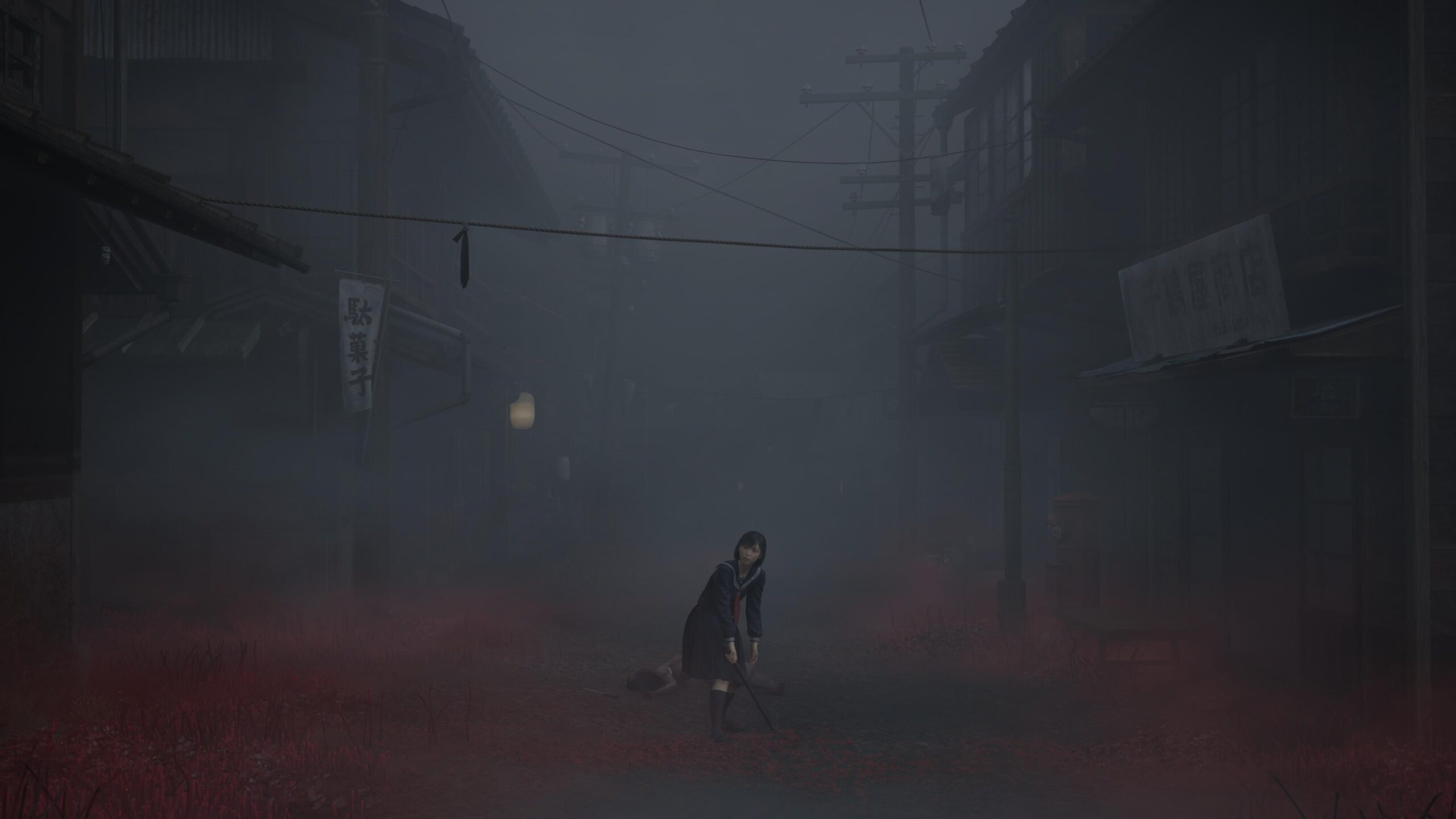
Writer Ryukishi07 joined the development team on Silent Hill f’s story, most known for the When They Cry visual novel series, as the team felt as though they needed to bring in someone who “really understands the essence of Japanese horror”. Silent Hill f starts as Hinako gets into an argument with her abusive father. Storming out of the house, she goes to look for her friends so she can talk to them about it. When they meet up, a fog suddenly sweeps across the town, red flowers growing where it touches. One of Hinako’s friends, Sakuko, gets caught in the fog, and red stalks sprout from her skin, killing her. Terrified, the teenagers run to safety, encountering horrifying monsters along the way.
Set in the 1960s, Silent Hill f covers the story of Hinako and her friends trying to survive as the town becomes more twisted by the fog and monsters infest its streets. Like previous entries in the series, underneath the creepy enemies and struggle for survival is a reflection of the main character’s inner struggles and mental state. In Hinako’s case, as a teenager becoming a young woman, she faces the expectations of women in 1960s Japan based on the societal pressures, traditions, and cultural values of that time. The enemies and evolving world around her reflect this, mimicking the men and women in her life and also the expectations being thrust upon her.
The story is compelling, but grows more so towards its latter segments. While the first half of the game was intriguing and the dynamic between Hinako and her friends was really well done to build uncertainty in whether they could be trusted or not, unfortunately I felt like a lot of the game focused on going over the same points over and over again. We devote a Dark Shrine puzzle section to this, and then another Dark Shrine puzzle section, followed by a boss fight. All to repeat over information that we’d already gotten the gist of within the first hour of the game. In fact, a lot of Silent Hill f’s latter gameplay felt like the developers were just filling in the time, focusing more on the gameplay length than quality.
While some of the enemy designs work really well and I like their symbolism and link to Hinako’s story, others were very on-the-nose. Silent Hill f also takes away the need for analysis that previous entries in the series have become so popular for, no longer is there a need to watch an hour-long video on the enemy designs and what they represent,a because the moment you encounter a new enemy, a new entry will appear in Hinako’s journal describing what it is and what it represents. While the journal is useful for elaborating on some of the backstory elements revealed in notes and cutscenes (in fact, it’s very essential and a must-read), the enemy section of it does not feel necessary and gives off the impression that the developers do not trust the player to read into this themselves or draw their own conclusions.
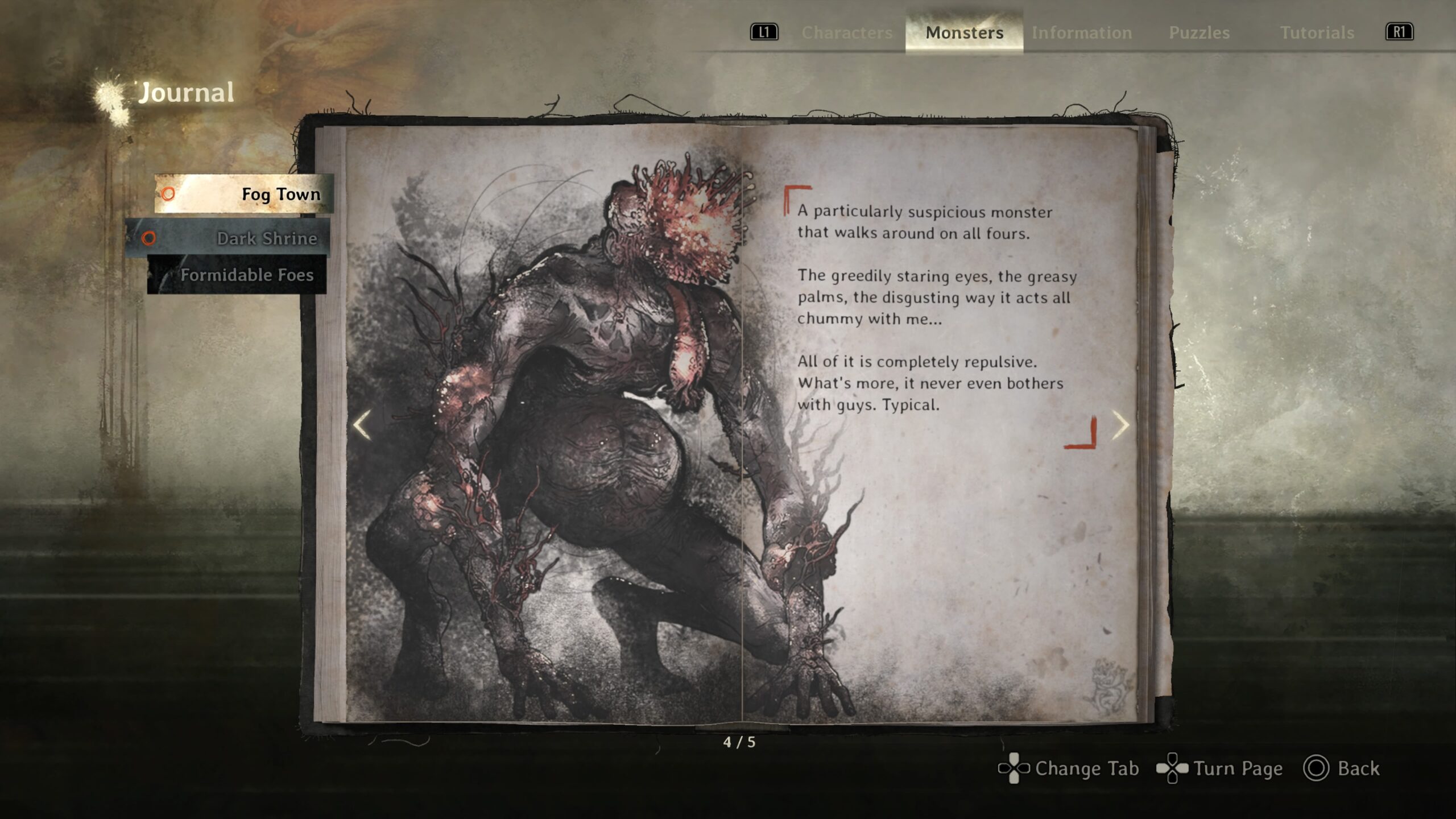
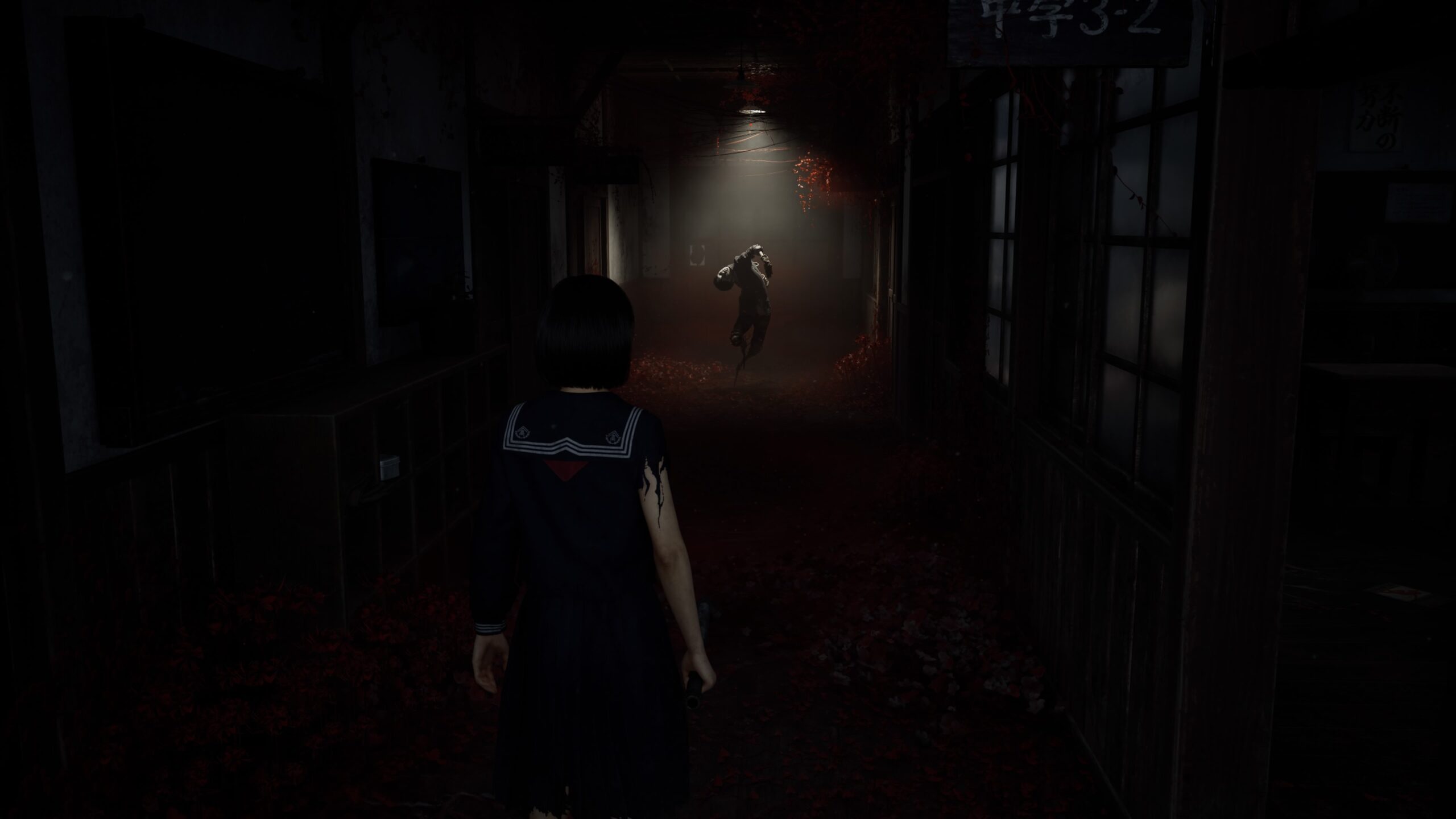
On top of this, while there are variations between the Fog World and Dark Shrine enemies, there are four main designs that they are based on, and all of these are introduced early on in the game, meaning that the rest of it is just a repeat of the same enemies over and over again. This grew especially tiresome towards the end of the game, where the developers seemed to have given up on building any sort of tension and reduced the gameplay down to a hack n’ slash with wave after wave of the same enemies.
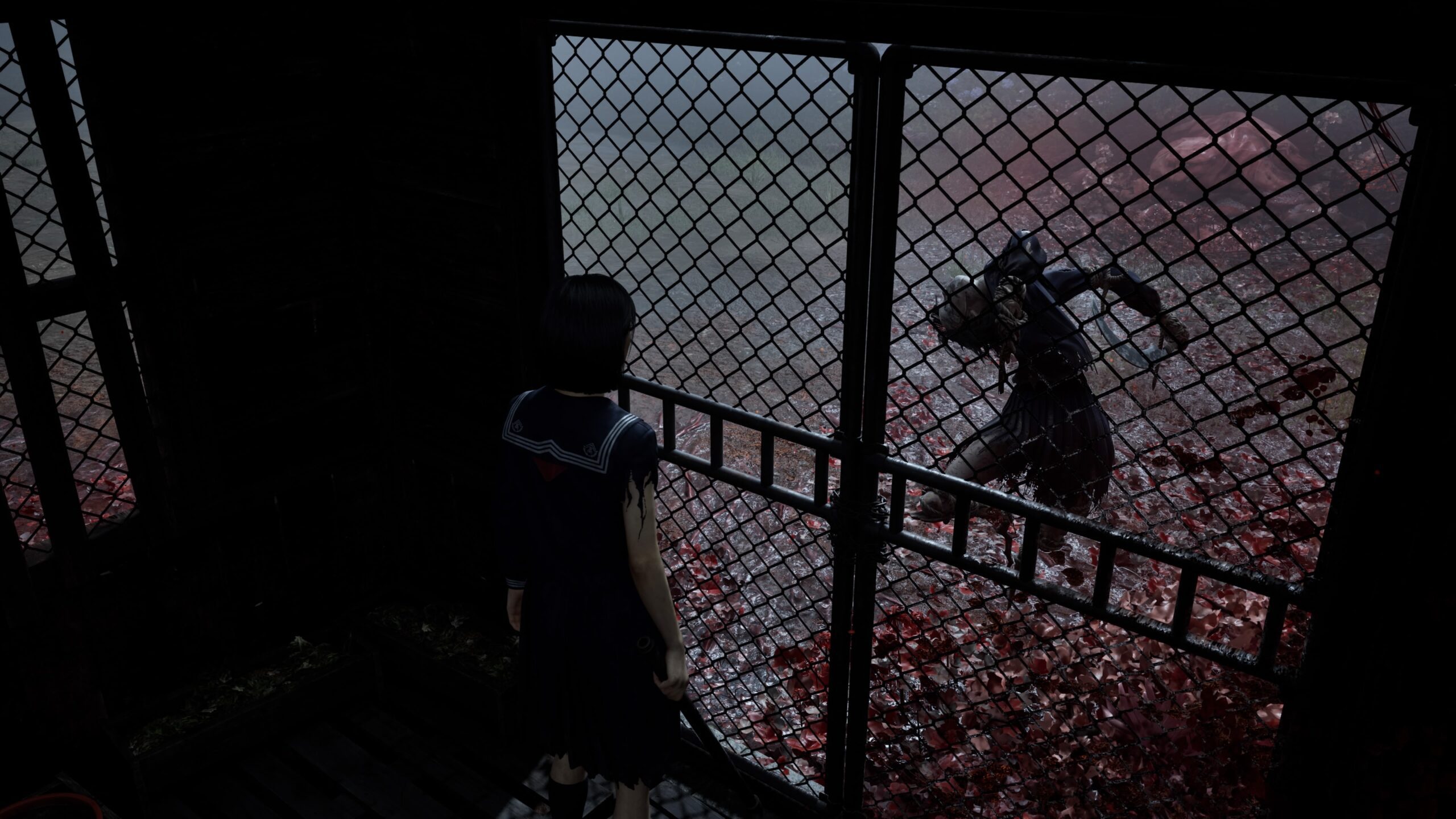
That being said, there’s a lot about the enemy design that is done really well gameplay-wise. The boss fights towards the end of the game offer a breath of fresh air from the repetitive combat, and the early game comes up with plenty of ways to bring terror and tension through its enemy placement and movement. Enemies will often appear at windows as you enter buildings, and then disappear again when you leave to go and take a look. Some will seem dead or immobile and will spring to life at random moments, not just when you walk past. Other times you’ll hear them walking around when you turn your back and they’ll freeze up again when you turn around to look. They are also cleverly placed, with the developers often positioning them in locations that they know the player will run to, such as a hut in a field where I encountered a large enemy and needed to hide to replenish my health. My favourite moment of all happened as I was running through the street away from an enemy and climbed up a ledge, believing that, as per video game law, the enemy wouldn’t be able to follow me past that point. It jumped up the ledge after me. For once, enemies in Silent Hill f feel like they have more mobility than the player, further accentuating that helpless feeling.
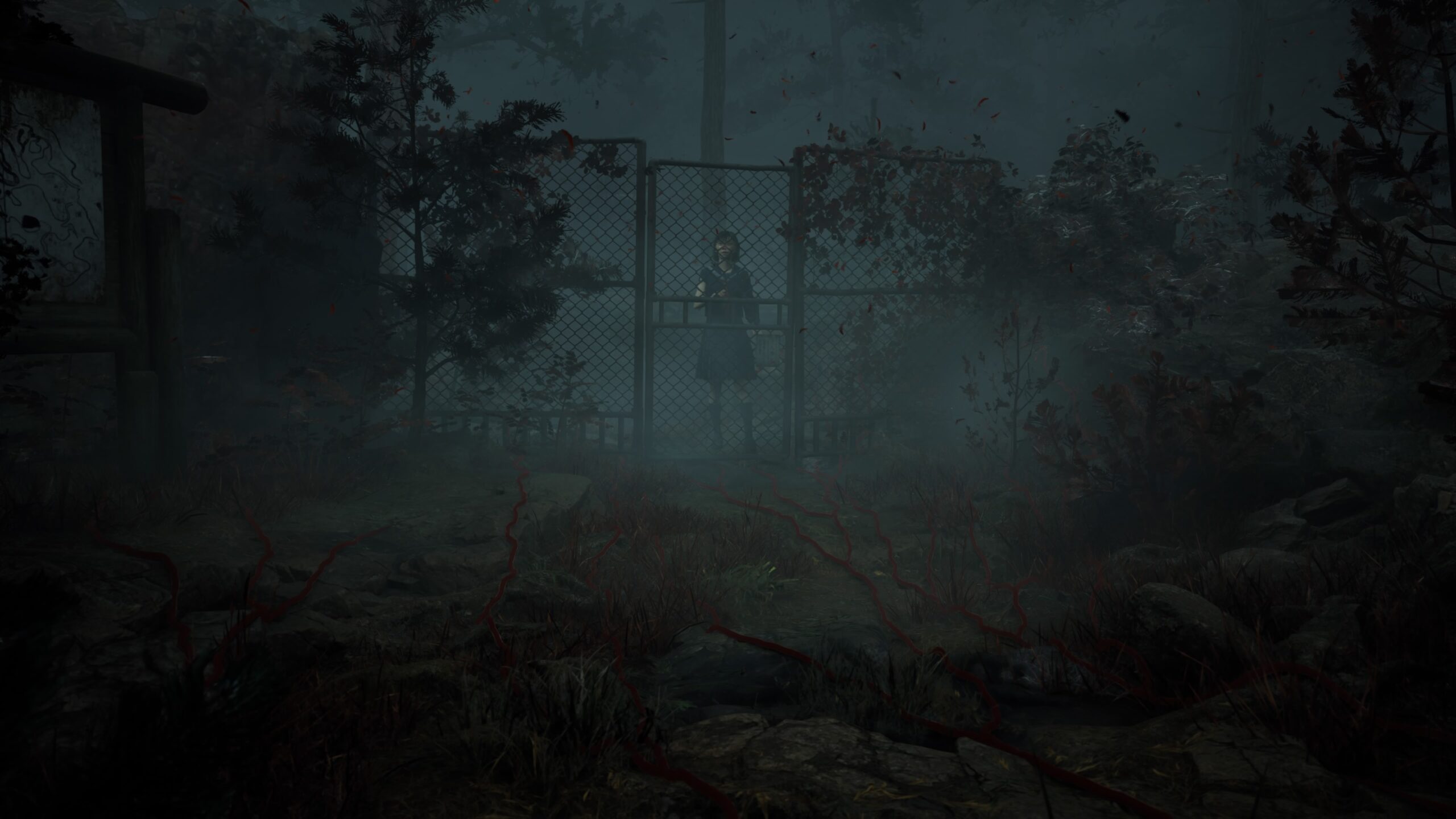
This, of course, would have been far more effective in a semi-open world environment where there is a need to stick around and explore buildings. With previous Silent Hill games, while the progress was still fairly linear, you could walk around the town in between story beats, explore buildings, and uncover side bits and puzzles. Silent Hill f absolutely prevents you from doing this. While you can sometimes dip behind a house and find a note there, most of the time there is no opportunity to hang around the town and explore it. This feels like a massive waste of the setting, as I would have loved to take a breather and explore Ebisugaoka and find out more about its history and the people living in it, the same way we could do in Silent Hill.
This also takes away the thing I love most about survival horror games like Silent Hill and Resident Evil, and that’s the satisfaction in having a location to explore, solve puzzles for, and progressively unlock. In Silent Hill, you’ll often pick up an object and realise it’s for a puzzle that you saw earlier in another building, so you’ll make note to head back there at some point and see what it unlocks. Silent Hill f doesn’t have this, you simply move from one location to the next, with little reason for doing so besides thinking her friends might be there, or the group deciding that the next building will be safer than their current location. In fact, the game actively prevents you from even choosing your own path to the next location by blocking all other routes other than the one it specifically wants you to go down. This small town location would have been perfect as a semi-open world map that the player could slowly get to learn as the game went on, eventually being able to plot out their route and know where to go by memory. We could have explored the various homes, learnt more about the other lives within the village, which Hinako briefly mentions in relation to her own experiences and fears for her future—but the game is hyper-focused on Hinako’s singular path. This also means that there’s less of a need to stick around and kill off the enemies wandering the streets or buildings; while you may want to do this in Silent Hill 2 when you know you’ll be cycling back to the area later, this isn’t the case in Silent Hill f as any moment that you will be returning, the enemies will have respawned anyway. Considering there’s also usually no penalty for not killing enemies, and no reward for doing so, I actually found myself spending most of the game just running through them.
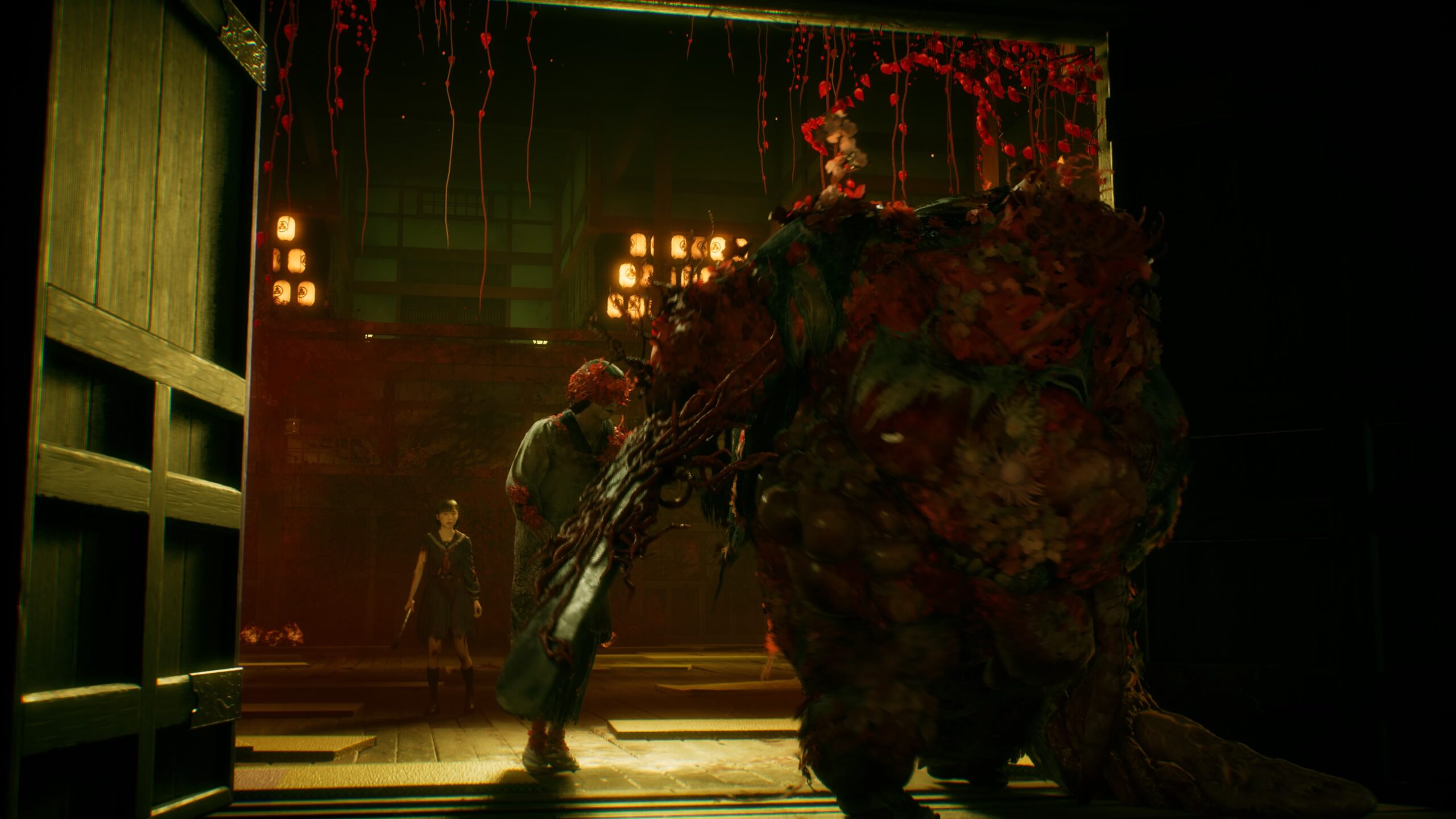
Silent Hill f also differs from the rest of the series by opting for melee combat rather than ranged, which especially makes more sense considering the move from the American setting. The aim was to make Hinako feel more vulnerable as a result, but I actually feel like this did the opposite, as there’s a difference between pointing a gun and firing at an enemy, and bludgeoning it to death with an axe like Kratos. In this sense, Silent Hill f feels most like it’s leaning towards the action-horror genre rather than survival horror.
While the combat was fun to begin with, with dodging and parries feeling satisfying, the repetitive enemies get incredibly grating towards the end. They all have their individual move sets that you need to learn to know when to dodge and parry. And a lot of these are designed in a way that their swipes are staggered, making parrying trickier. But your biggest enemy is the camera, especially in the more close-quarter sections. Towards the end of the game, where a lot of the maps are filled with tight corridors, I spent a lot of time unable to see anything as the camera would glitch through the wall or an enemy. Silent Hill f’s melee combat is clearly better designed for open spaces, which may also be why boss fights feel so much better. Hinako’s dodge is very swift and wide, and the environment is littered with objects that she can get caught on, which is very often in more confined environments.
Resources come in the form of health, stamina, and sanity replenishments, and you also need to keep an eye on your weapon durability because if you allow it to break, then it will disappear and you’ll be helpless until you find another. You can pray at hokora shrines to save your progress (there’s no manual saving besides this, and automatic saves are minimal), trade in resources for Faith, the game’s currency, and then use that Faith and Ema tablets, a rarer resource, to upgrade your health, stamina, sanity, or Omamori capacity. Omamori are charms that can either be bought at random at the shrines or found around the map; they give the player bonuses such as more damage when weapon durability is low. You can also use up sanity to use the focus mechanic, which allows you to build up strength into your next attack and deal a more powerful blow.
Puzzles act as chunks in between story sections rather than parts of the environment, usually taking place within the Dark Shrine and consisting of placing items in an order described in a riddle. These feel equally unsatisfying, especially in the way they are used, as it felt as though the developers were just including them to tick off a checklist of Silent Hill elements that they needed to include for this to still count as a Silent Hill game. The riddles are also usually so nonsensical to what we’re actually doing, especially if you play the puzzles in hard mode, as I did since I love puzzle games. The objective of each puzzle often felt really unclear, making them trickier to work out based on this, rather than the difficulty of the actual puzzle. I also found a few localisation issues with the puzzles, as some relied on you picking out an image of an object listed in the riddle but on a few occasions this would be a Japanese fauna or another object that may be unknown to people who do not live in Japan or consume a lot of media set there, at least they certainly were to me and I had to look up images of them to solve the puzzle.
Legendary composer Akira Yamaoka returns in Silent Hill f to deliver a very unique soundtrack alongside Kensuke Inage that’s authentic to the location and one of the best in the series. Once again tapping into Japanese roots, there’s less piano tracks here and more ancient Japanese court music mixed with ambient sounds to create something truly special. I particularly love the throat singing tracks that would play during early sections while moving through Ebisugaoka. Later on, especially during the Dark Shrine scenes, drums are used a lot to increasingly grow the tension and pace. My favourite track is Mayoi Uta, which is used in both the opening and end credits scenes, but for non-Japanese speakers, it’s only subtitled during the end credits, which makes it hit harder for those who couldn’t understand the lyrics to begin with.
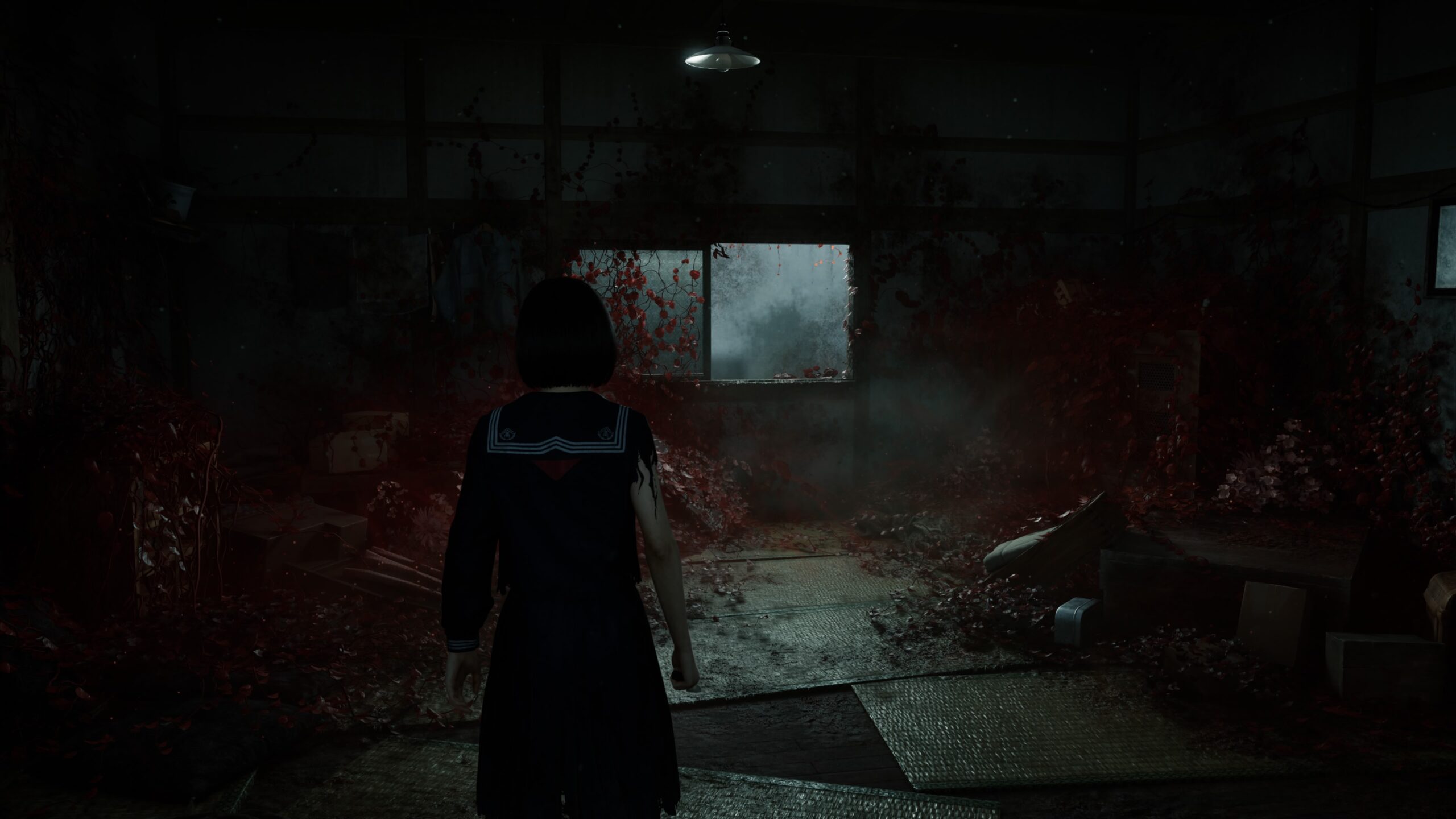
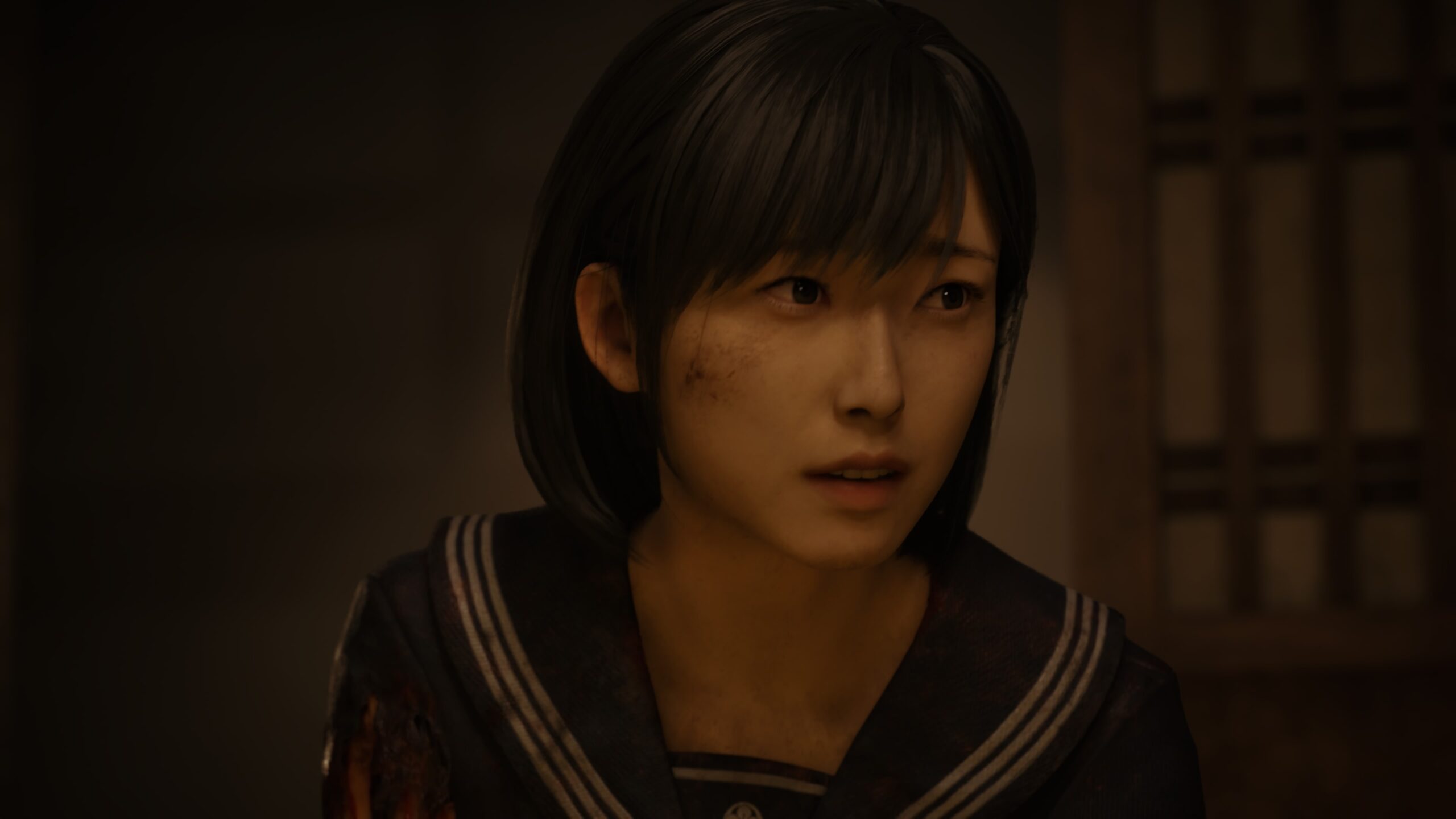
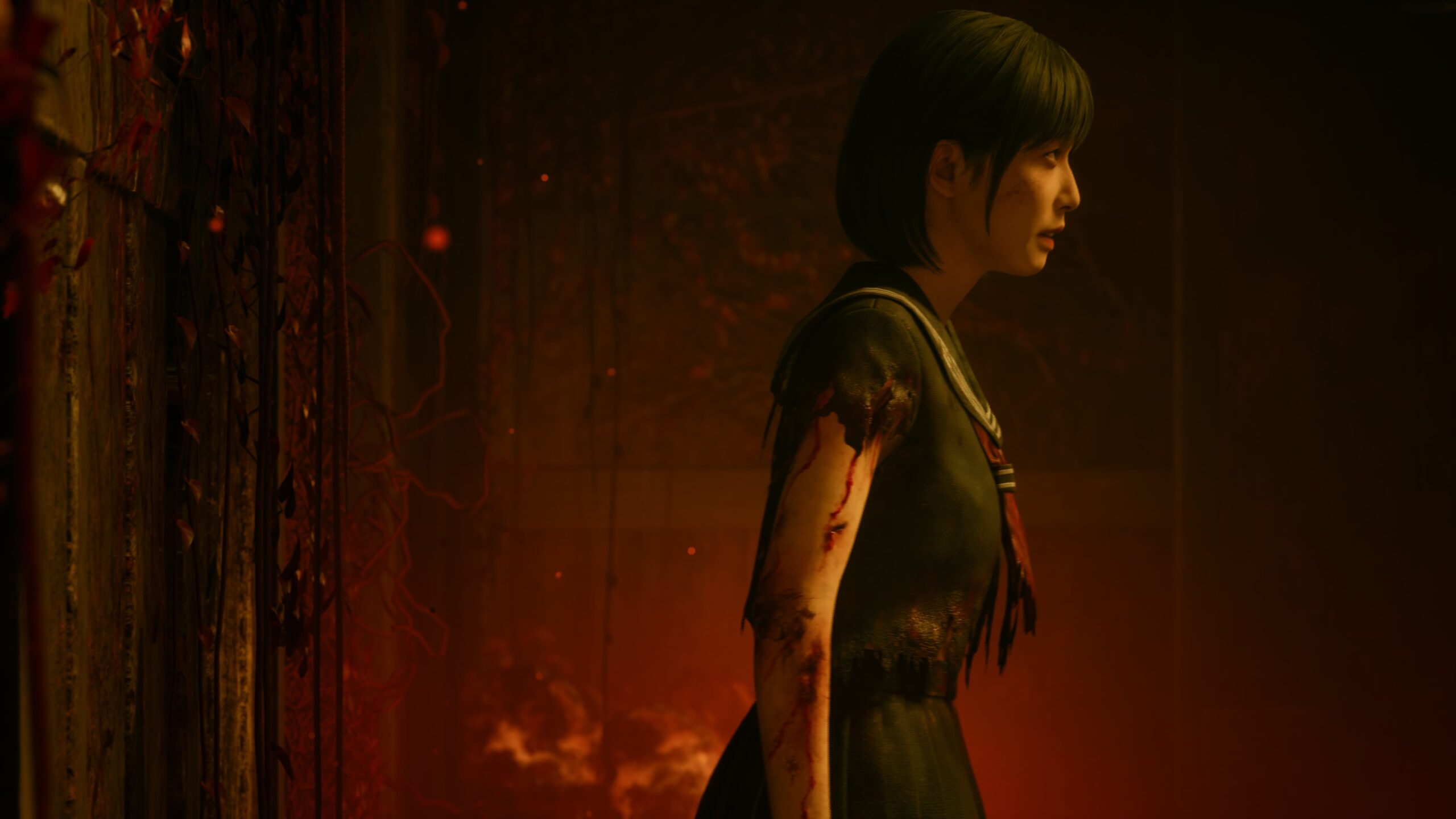
However, even towards the end of Silent Hill f where I was no longer finding enjoyment in the gameplay and just wanted to see the story through, the art design continued to amaze me. Although the Dark Shrine segments looked as boring as they were to play, the Fog World was a constant visual treat. As mentioned earlier, the developers wanted to explore beauty in horror, which they certainly accomplished here. Gruesome enemy designs start to incorporate fauna as it infests more of the town, swathing each scene in a hue of red which strikingly stands out against the Fog World. This is some of the most beautiful visual imagery that I have seen in a game, and it’s a shame that Silent Hill f’s version of the Otherworld was so dull in comparison. On top of this, the motion capture is also really well done and also served as an important element to the plot as it wouldn’t have hit the same without being able to read into the minute expressions of Hinako’s friends, or watch as she pulls away from herself during certain story elements.
For Silent Hill fans who have been excitedly waiting for the next original entry in the series, Silent Hill f will not be the game they are waiting for. In fact, I feel as though the Silent Hill name puts an expectation on Silent Hill f for it to be something that it’s not, and this story and setting could have easily been used in a very similar game without the incorporation of the Silent Hill name. The first and only time that Silent Hill f feels like a Silent Hill game is during the obligatory school section that most entries in the series have, set in a contained environment that had us slowly unveiling the locked sections of the school while learning more about its pupils and teachers.
But even for those who will enjoy Silent Hill f‘s action-horror gameplay, its worst crime as a horror game is that it’s boring. Boring to the extent that I was incredibly reluctant to keep picking it up, which is unusual considering it’s only around ten to fifteen hours long the first time you play it. In its latter half, the developers seemed to have given up on coming up with interesting ways to build tension and horror, instead repeating what we’ve already played several times over. The Dark Shrine sections, in particular, are where I really started to resent the gameplay, and this began very early on. These sections essentially consist of finding objects that are scattered throughout a maze-like environment, moving through the same waves of enemies, and then completing a puzzle which consists of a vague riddle (was The Riddler on the development team or something?) and placing objects in order of that riddle.
Hinako’s story is one worth experiencing, but the gameplay makes it unbearable. Unfortunately, like previous entries in the series, its true endings are locked behind NG+ and NG++, and even NG+++. These endings do provide much-needed context to Hinako’s story to understand it fully. Considering a lot of players will find it so miserable to play the first time around, they may not see these endings and get the full picture. While the story falls into some tropes around its topic, which we’ve seen a million times before, Hinako’s view on it and the way it impacts her friendships are where the meat of the story lies, and it’s one that will leave you thinking about it once the game is over. But the gameplay is where Silent Hill f is let down the most, offering very little in terms of exploration reward, sections that drag themselves out to the point that they are very unwelcome, and enemies that are so overused that their novelty wears off very quickly.
Jess reviewed Silent Hill f on PlayStation 5 with her own bought copy.