
If there’s one game out there that absolutely deserves the title of “cult classic,” it would have to be Eternal Darkness: Sanity’s Requiem. Released on the Nintendo GameCube in 2002, it marked a milestone for Nintendo as the first Mature-rated game the company had ever published since the inception of the Entertainment Software Rating Board in 1994. Although critically beloved, it was commercially unsuccessful, selling less than half a million units after its release. Attempts to get a sequel made were unsuccessful (repeatedly!), and the game regularly gets mentioned around this time of year because it was just that good. How did a game like this ever get made? More to the point, how did Nintendo ever get away with releasing it?
Once Upon A Time In St. Catherines
The story behind Eternal Darkness started back around 1996. Silicon Knights, led by Denis Dyack, was promoting their first entry for the Sony PlayStation, Blood Omen: Legacy of Kain, at E3 (incidentally, it was also their last made-for-PC game as well). Their presentation caught the eye of Nintendo employees who were walking the booths, which then led to a conversation between Nintendo execs and Dyack. Nintendo, up to this point, had a well-earned reputation for “family friendly” entertainment with games like Super Mario Bros. and The Legend of Zelda. They were wanting to break out of the mold and start reaching a more mature game audience.
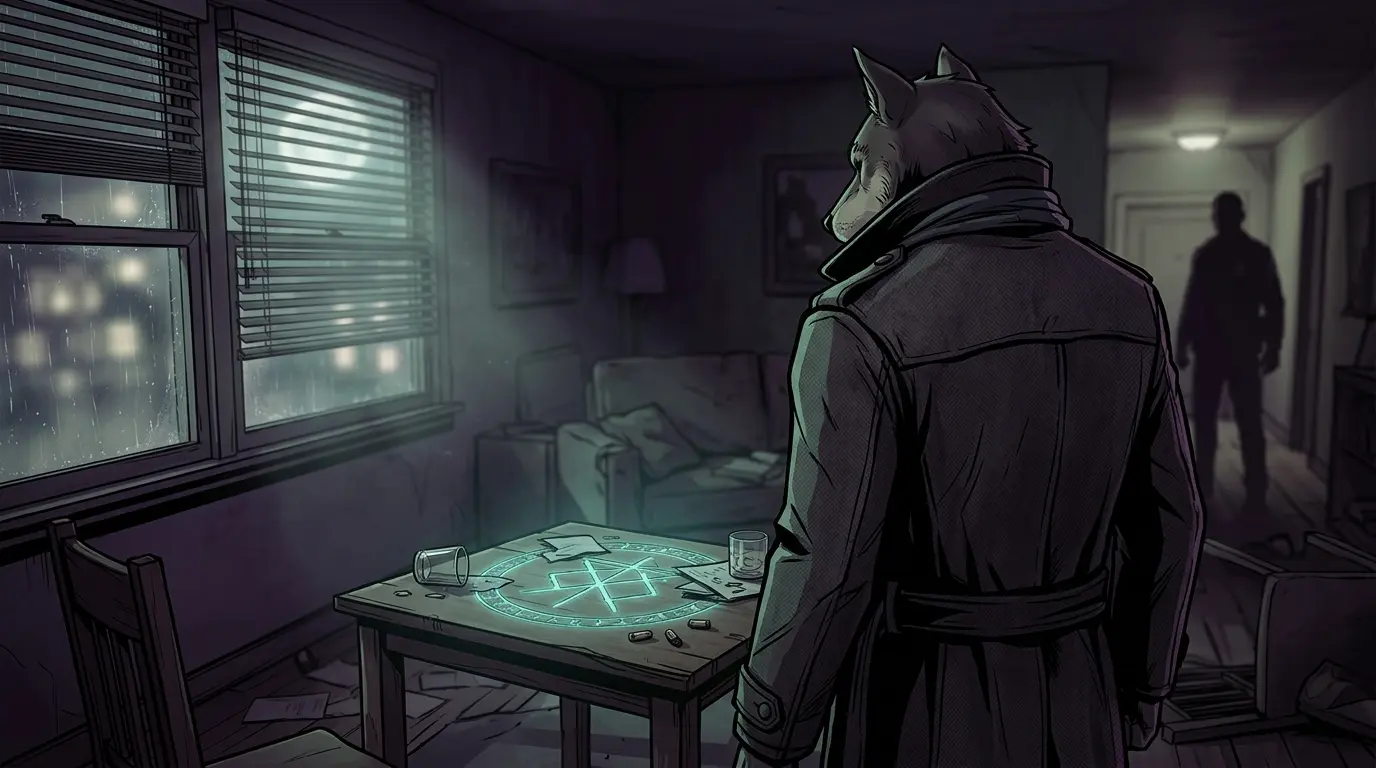
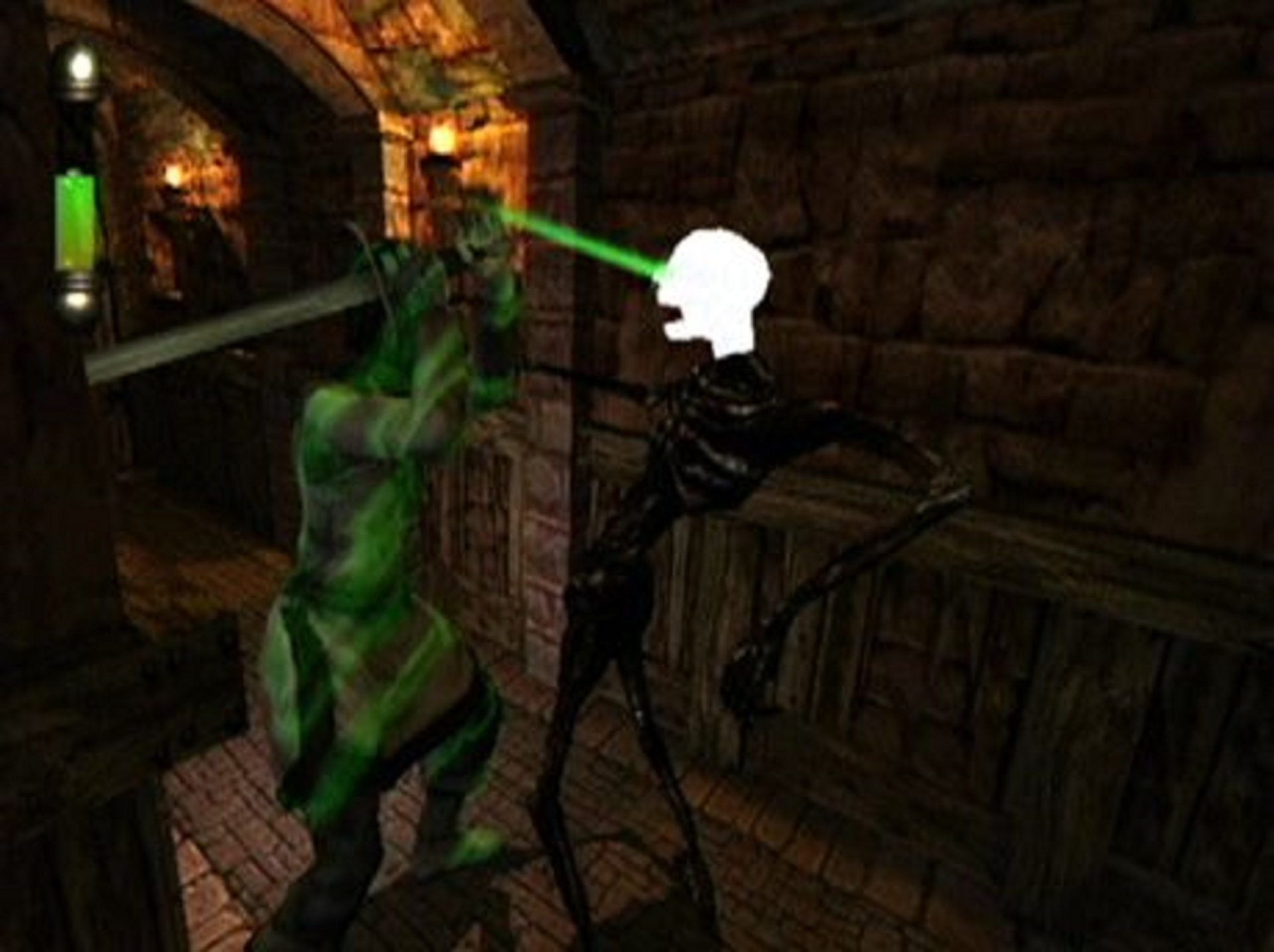
Dyack didn’t want to ape the survival horror flagship, Resident Evil, but rather go in the opposite direction and lean more towards psychological and cosmic horror. In an interview he gave to The Escapist back in 2006, Dyack stated, “…video games were under fire for messing with people’s heads, and being accused of being murder simulators and stuff. So, we thought, wouldn’t it be a good idea to make something that really does mess with people’s heads?” In this respect, Eternal Darkness delivered with their groundbreaking (and sometimes fourth-wall breaking) “insanity meter.” Inspired to some extent by the TTRPG Call of Cthulhu, the insanity meter caused all manner of things to happen within the game when a given character’s Sanity (one of the three attributes every character had) dropped below a certain point. Some might be as subtle as entering a new room and everything is upside down, including the character. Some were less subtle, such as the character exploding unexpectedly in a shower of blood and viscera. And some ran a realistic risk of doing real damage to the player’s TV or console, such as showing the volume turning down or displaying a message saying the memory card was being formatted (and the player potentially freaking out to the point of doing something well-intentioned but technically wrong). The insanity effects didn’t play terribly long, usually not more than a few seconds, but the way they played out stuck with you long after the little white flash announcing your “return to reality” was gone.
When development started, Nintendo was squarely in the N64 release cycle, and the amount of content that Silicon Knights was putting into the project, such as full voice acting for all the cinematics along with surround sound, would have required a high-capacity GamePak cartridge. The N64 Expansion Pak memory add-on (all 4MB of it) was, according to Dyack in an interview with IGN, optional. Around the time of the IGN interview, Nintendo was starting to gear up for the GameCube. The decision was made to move Eternal Darkness over to the new console. While the game was close to completion in 2000, the shift to the GameCube extended the process. The bulk of the game’s visuals and sound had to be completely redone. But, in compensation, Silicon Knights gained the horsepower needed to do more impressive visuals in terms of character models and textures.
Eternal Darkness: Sanity’s Requiem released in North America in June 2002. Almost twenty-five years later, it still holds a Metacritic score of 92. Critics genuinely loved the game, praising its camera work, sound design, and narrative audacity. Yet this did not seem to translate into game sales. And it’s not necessarily hard to see why. With games like Halo coming out on the first-generation Xbox about eight months earlier, as well as the new lineup from Sony’s PlayStation 2, Eternal Darkness sort of got lost in the shuffle. Consumers could only play so many amazing games at one time, and while the GameCube was certainly cheaper than the Xbox or the PS2, having all three consoles was a luxury most gamers couldn’t afford at the time. Not to mention it would have been a constant pain in the ass to keep switching console inputs (this was before the HDMI standard was established). Had Eternal Darkness been ready to go as a launch day title in September 2001, as Nintendo had originally hoped, it’s possible that it might have managed to hold its own against the likes of Microsoft and Sony.
Once Upon A Time In Rhode Island
The story of Eternal Darkness, that is to say the plot of the game, is certainly sweeping and not entirely linear. While there are obvious Lovecraftian influences, the game’s splash screen (before the start menu) works in a quote from Edgar Allen Poe’s “The Raven.” The decline of the mind, as well as the body and the spirit, which are so prevalent in Lovecraft’s Cthulhu Mythos, are also present in the Gothic horror of Poe and his contemporaries, and both are deftly incorporated into Eternal Darkness. At the same time, the game also gives a nod to horror anthology movies like Creepshow and Tales From The Darkside in terms of narrative presentation, though it eschews a lot of B-movie horror movie tropes (a conscious effort to avoid invidious comparison to Resident Evil).
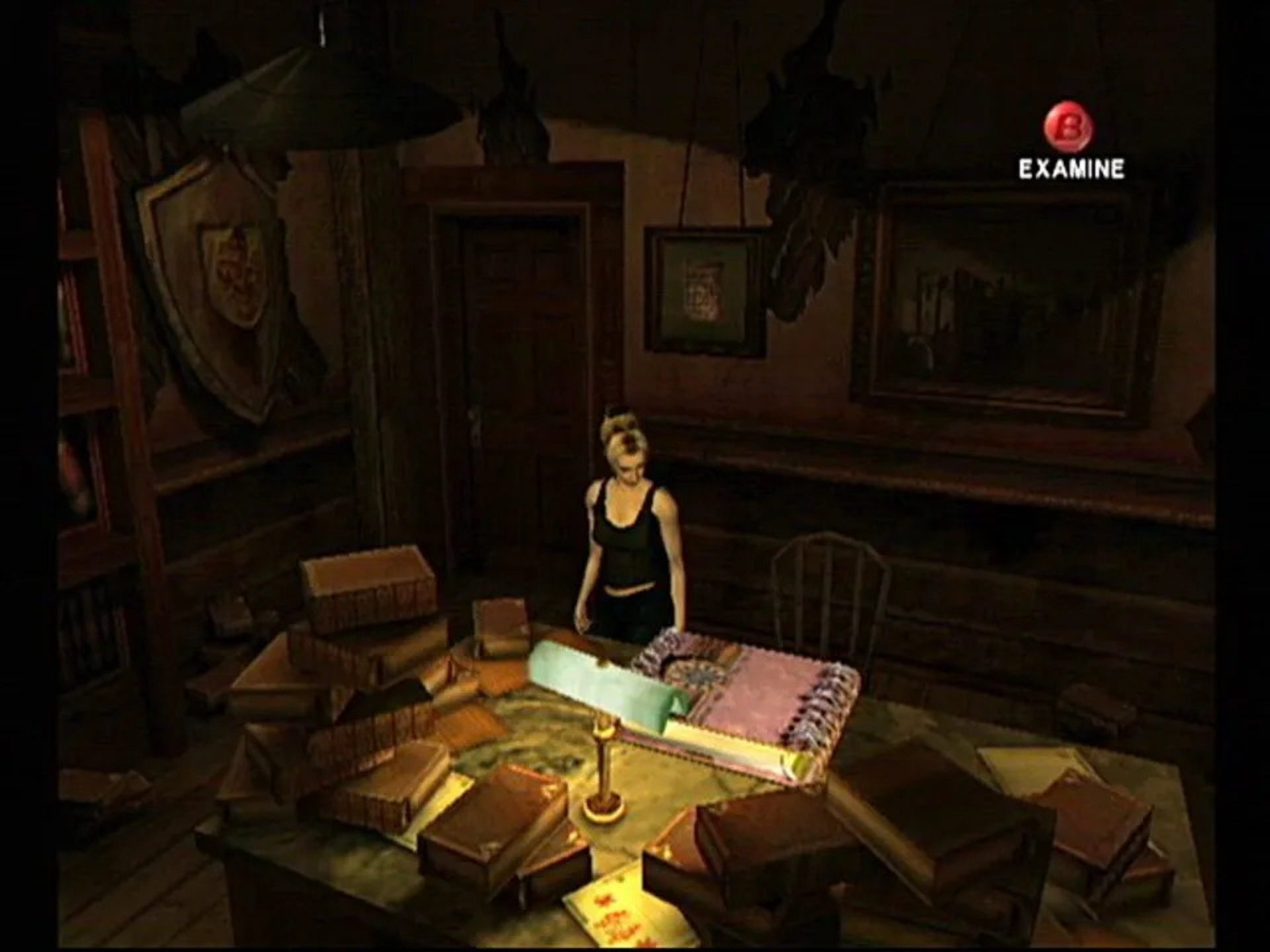
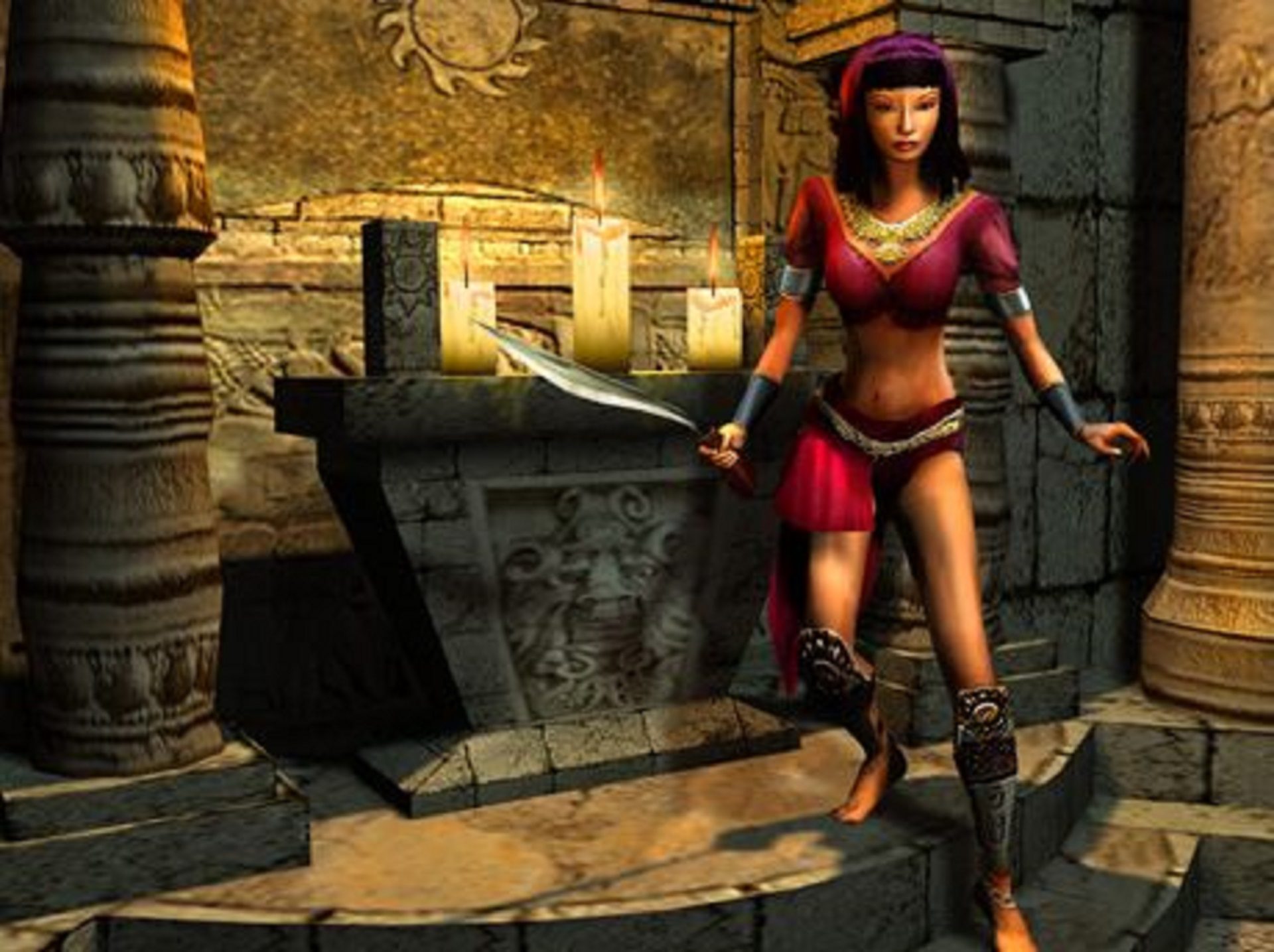
Taking place over the span of two thousand years across four different locales, players assume the role of different protagonists across multiple chapters. The one players become most familiar with is Alex Roivas, a young woman whose grandfather, Edward Roivas, has been found murdered in the ancestral family estate. The body’s so badly mangled that positive identification is exceedingly difficult, and the actual cause of death is impossible to determine (though simple decapitation will probably satisfy the coroner’s department). After the funeral and two weeks of the local cops getting nowhere, she goes through her grandfather’s library in an effort to find clues to his death. She comes across a book bound in human skin (never a good thing) known as “The Tome of Eternal Darkness.” The book, hidden in a secret room, is part magical grimoire, part historical reference. Each person Alex reads about has their own chapter, and thus we as players get to experience the often grim involvement of the protagonists as they are caught up in a battle for the fate of existence.
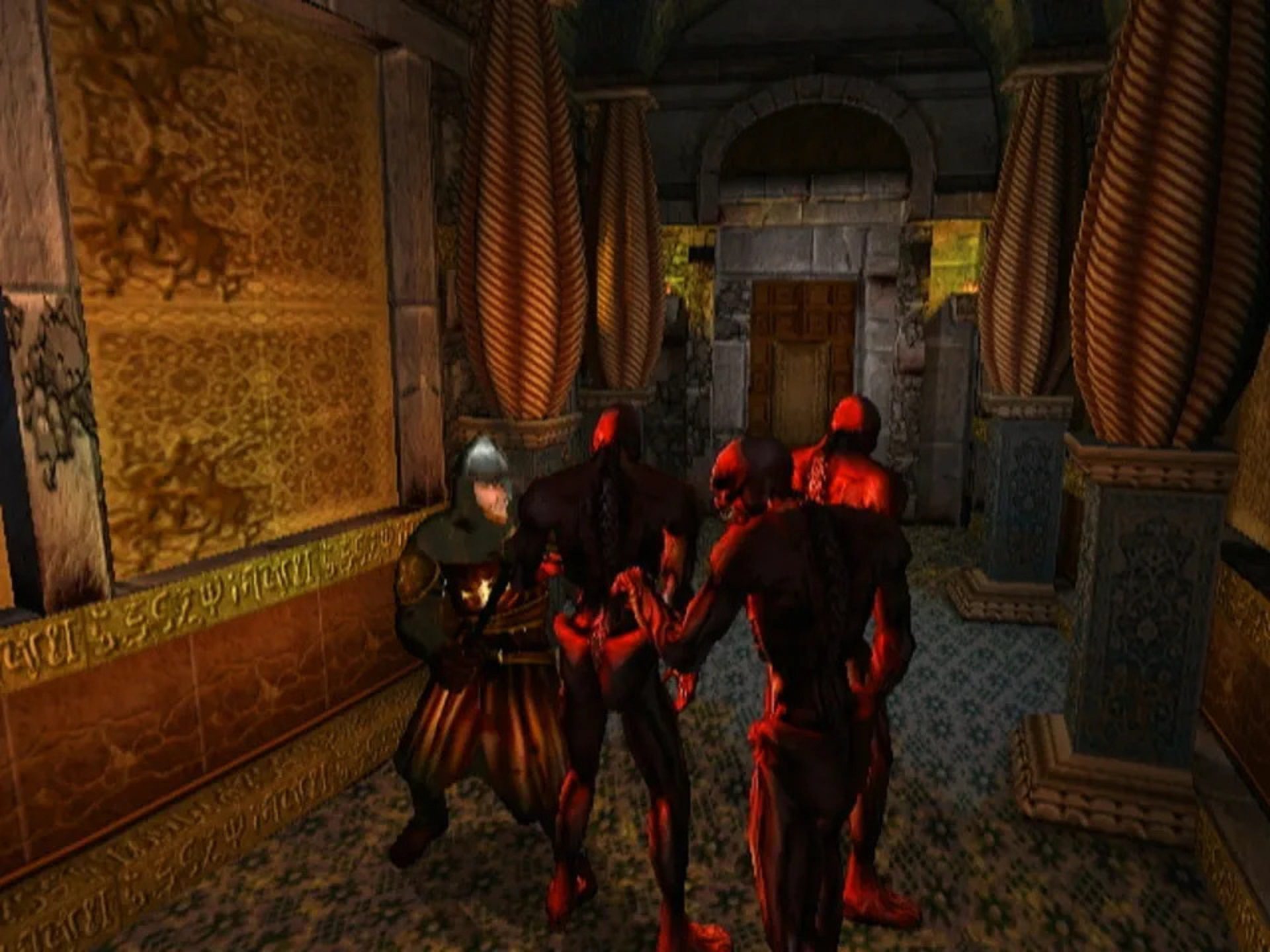
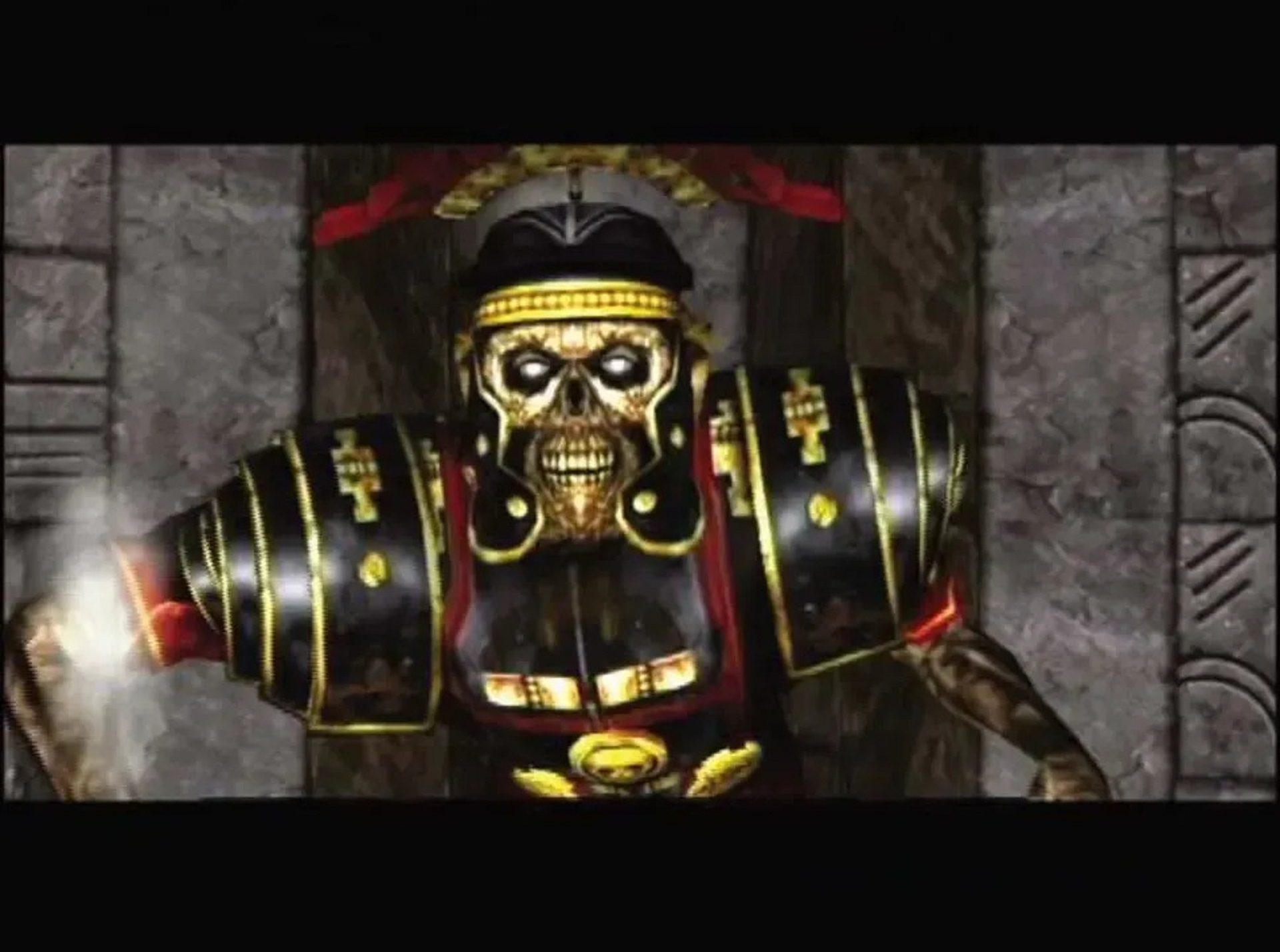
The first chapter has us briefly playing Pious Augustus, a Roman military commander circa 26 B.C., who discovers the terrifying artifacts of the Ancients in a Persian ruin known as the Forbidden City. You actually get to choose which artifact (and which Ancient) Pious commits himself to, which has all manner of implications for players in subsequent chapters. The Ancients themselves each have appropriately Lovecraftian names, and each corresponds to one of the three attributes that the characters possess. Chattur’gha corresponds to the Health attribute, a creature of raw power that causes enemies to deal more physical damage to the protagonists as well as soaking up more damage from their weapons. Xel’lotath corresponds to the Sanity attribute, and merely coming into the same room as enemies causes the character’s Sanity to drop faster. Ulyaoth corresponds to the Mind (or Magic) attribute, making monsters more resistant to the game’s spell system. Pious himself becomes a lich-like entity and sets about making arrangements to bring forth his Ancient master in a ritual which will likely see the world destroyed. As to the other artifacts, they disappear elsewhere and become the objects of contention across the centuries.
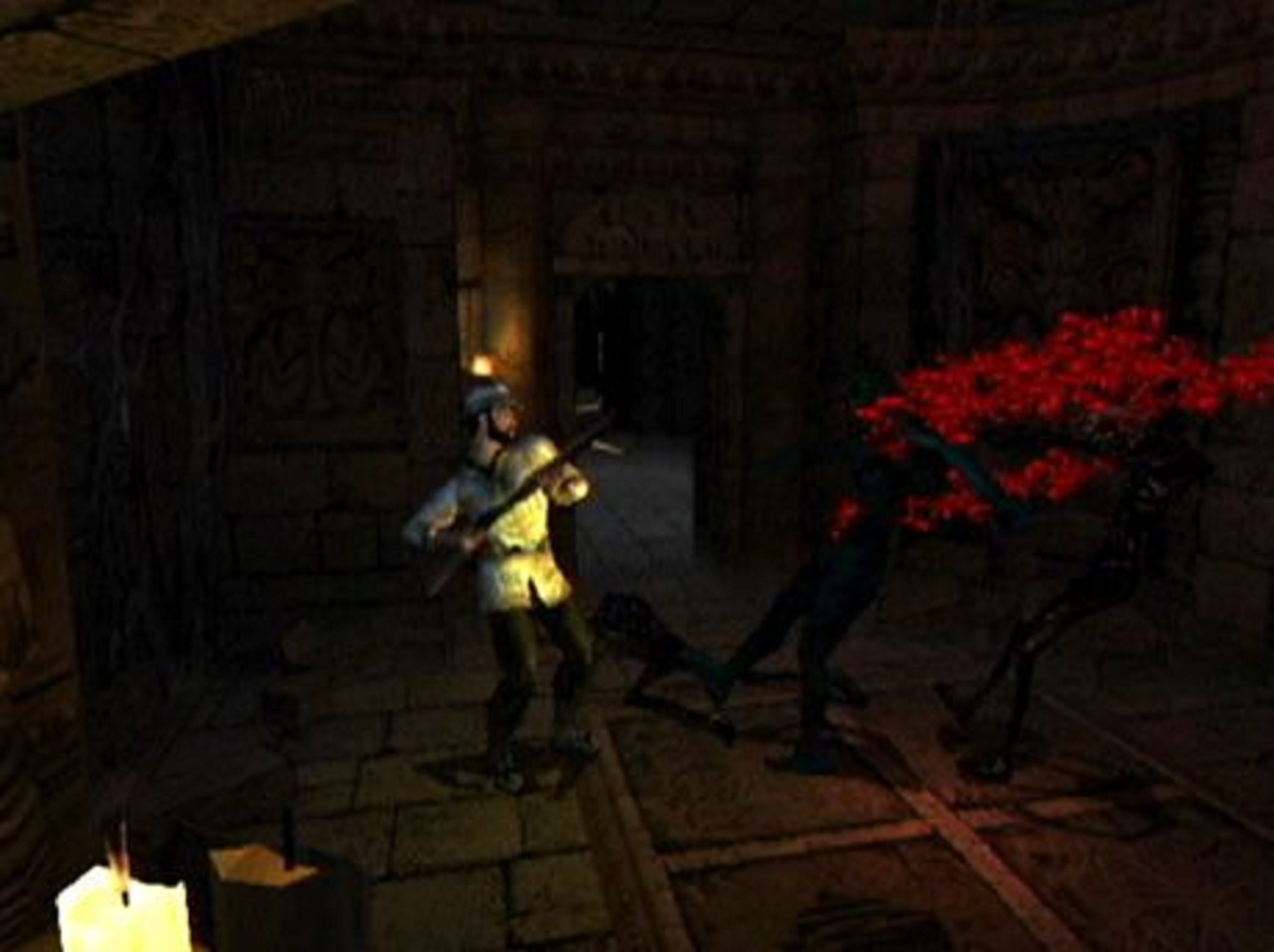
As the game progresses, players must navigate the four locales in different time periods, each protagonist starting out for different reasons, yet a number of them suffering grisly fates as Pious destroys them, or they find that their lives are a necessary sacrifice to try and counter Pious in a 4D chess game spanning centuries. Beyond the three Ancients gunning to destroy the world, we’re introduced to a fourth Ancient, Mantorok, not exactly “benevolent,” but certainly less interested in casually destroying the world, and willing to enlist mortal aid to destroy Pious’ master. Additionally, characters come across different runes and “magic circles” which allow the player to not simply cast spells, but to develop them by experimenting with different runes. By invoking one of the Ancients and using the right rune combinations, one can do everything from heal injuries to send out fireballs to even turn invisible. At the conclusion of each chapter, Alex is free to roam around the mansion, ostensibly to collect items that she will invariably need when the final battle against Pious begins.
As final battles go, it’s pretty epic, with Pious’ master fighting against the Ancient, you as Alex summon to beat them, and the ghosts of those who’ve perished before all this to help you take down Pious himself. But the story doesn’t end with the defeat of Pious’ master. By defeating Pious’ master, you’ve inadvertently unleashed another Ancient on the world. The ghost of Edward Roivas manages to send the summoned Ancient back to where it came from, but at a cost to Alex’s peace of mind. At this point, you’re given the opportunity to start a new game with the existing save and choose a different Ancient than the first time around. Complete the game three times, and the “true” ending becomes revealed. Mantorok, despite being a large fleshy lump sitting in a ruin in Cambodia, has been playing multidimensional go with the other Ancients, using different incarnations of the Roivas family as well as others to help thwart his rivals. Each of your playthroughs represents different timelines, and by defeating each Ancient in those different timelines, Mantorok bends reality to a point where none of the other Ancients exist. Only Mantorok remains, and he’s ostensibly dying (though how long this will take is anybody’s guess).
A Dark Dreaming
As far as the past, Eternal Darkness has become one of those games that critics love, and other people wonder what the fuss is all about. While Nintendo patented the “insanity meter” system back in 2005 and has consistently renewed the trademark, they have otherwise failed to do anything with the game. No remasters, certainly no remakes, not even an emulation for the Switch on the eShop. It’s theoretically possible it will come out again, but history would suggest the possibility is slim.
As for Denis Dyack, he certainly seems interested in the concept, though he’s unable to develop a true sequel owing to Nintendo owning the trademark and rights to the original game. Unfortunately for him, he’s more interested in it than the critical mass of gamers needed to make it happen seems to be. In 2013, Dyack went through one failed attempt after another to obtain funding through Kickstarter to try and create a “spiritual sequel” known as Shadow Of The Eternals. Three different studios founded by Dyack have shut down in the effort. Silicon Knights closed in 2013 due to bankruptcy stemming from the lawsuit Epic Games won due to improper code attribution in Too Human. Precursor Games opened and closed in the same year, the Kickstarter failures contributing to its demise. A year later, Quantum Entangled Entertainment started up to try and once more make Shadow Of The Eternals happen, only to close in 2018, the project “indefinitely on hold.”
Dyack’s fifth studio, Apocalypse Studios, has notionally been working on a free-to-play action-RPG titled Deadhaus Sonata, which seems to be a spiritual sequel to Blood Omen: The Legacy of Kain. The game’s YouTube channel has a staggering number of worldbuilding videos, and copies of Twitch streams showing off early gameplay from a few years ago. Its Steam page shows no release date.
Cosmic horror has historically been a hard sell across various forms of media, starting with Lovecraft himself. Most movies can’t seem to capture the flavor correctly (In The Mouth Of Madness probably comes closest). Novels can range wildly from absurdist comedy (John Dies At The End) to horror-tinged sci-fi (Jeff VanderMeer’s “Southern Reach” trilogy) to critical deconstructions of the Cthulhu Mythos itself (Lovecraft Country). It relies on the notion that, as Stephen King so elegantly put it, “Size defeats us.” The Universe is too vast, our perceptions of it too narrow, our understanding of it unspeakably too limited, and any knowledge we might accidentally come across is beyond our capacity to properly make sense of it. Alex Roivas herself alludes to this in Eternal Darkness at the end, stating, “To think that once I could not see beyond the veil of our reality…to see those who dwell behind. I was once a fool…” Eternal Darkness: Sanity’s Requiem is, much like the framework book it centers around, perhaps simply too big for most gamers to get behind in ways that cannot be fully understood.