Nintendo Switch Online has always been the cheapest way to get a console online, but 2026 has widened the gap between what Nintendo charges and what Microsoft and Sony charge for their own subscriptions. This piece breaks down what $19.99 a year actually buys on Switch and Switch 2, how that compares against Xbox Game Pass Ultimate and PS Plus after their respective 2026 price shifts, and where Nintendo’s service still falls short. It does not cover third-party subscription bundles or regional pricing outside the U.S. in detail, since Nintendo’s floor price has moved in Japan but held domestically.
Is Nintendo Switch Online still worth it in 2026?
Yes, if you mainly play Nintendo’s own online multiplayer titles and want cloud saves and retro games at the lowest possible price. No, if you expect a rotating catalog of modern games or any form of cloud streaming – Nintendo Switch Online does not offer either, and the Expansion Pack tier only pays for itself if you specifically want the GameCube, N64, and DLC content bundled into it.
The base Individual plan at $19.99 per year remains the cheapest online multiplayer access among the three major console ecosystems, and the eight-person Family plan at $34.99 per year is arguably unmatched in the entire subscription market. But Nintendo Switch Online is not competing in the same category as Xbox Game Pass or PS Plus Extra – it’s a multiplayer pass with a retro library attached, not a modern game catalog, and that distinction matters more than the sticker price.
What $19.99 actually buys you on Nintendo Switch Online
The base tier covers online multiplayer for compatible Switch and Switch 2 games, Save Data Cloud backups, a rotating library of NES, Super NES, and Game Boy titles with added online play, the Nintendo Music app, and GameChat on Switch 2 hardware. GameChat is the more meaningful addition here – built-in voice and video during online play addresses one of the longest-running complaints about Nintendo’s online infrastructure, which historically lagged well behind Xbox Live and PlayStation Network on basics like party systems and matchmaking.
Nintendo Switch Online also includes exclusive offers and game trials. These extras are a smaller part of the membership than online play, cloud saves, and the retro library, but they can add value for subscribers considering the base tier.
What’s gone is the game voucher system, which let members pre-purchase upcoming first-party titles at a discount – Nintendo cancelled that program effective January 30, 2026. That removes one of the few ways NSO members could save money on new Nintendo releases, and it hasn’t been replaced with anything comparable.
The Expansion Pack math: GameCube, N64, and DLC bundles
The $49.99-per-year Expansion Pack tier adds Nintendo 64, Game Boy Advance, and Sega Genesis libraries with online play, plus – for Switch 2 owners specifically – GameCube games for the first time on the service. It also bundles select Switch 2 Edition upgrade packs, the Animal Crossing: New Horizons – Happy Home Paradise DLC, and the Mario Kart 8 Deluxe Booster Course Pass and its 48 additional tracks.
If you’d buy all of that content separately, the combined cost exceeds the $49.99 subscription price – but only if you actually want every piece of it. For players who don’t own Animal Crossing or Mario Kart 8 Deluxe, or who have no interest in N64 and GameCube games, that math falls apart fast. Both Kyusai and ClickOff‘s independent reviews of the service reach the same conclusion from different angles: Kyusai frames Expansion Pack as worthwhile for retro obsessives, while ClickOff explicitly advises skipping it unless you specifically want the N64 and GameCube catalog, since standalone purchases of the DLC often work out cheaper for players who don’t need the rest.
Nintendo also isn’t holding its pricing line everywhere. In Japan, both tiers rose effective July 2026 – the Individual annual plan from ¥2,400 to ¥3,000 and the Expansion Pack Individual plan from ¥4,900 to ¥5,900, according to TechTimes. U.S. pricing hasn’t moved, but the Japanese increase is the first sign that Nintendo’s famously low floor price isn’t guaranteed to stay put.
Key takeaway: Expansion Pack is a targeted purchase, not a default upgrade – check whether you’d buy the included DLC and retro libraries separately before paying the extra $30 a year.
How Game Pass and PS Plus stack up on price and library
Xbox Game Pass went through two structural changes in the past eighteen months. Late 2025 saw Core renamed to Essential and Standard renamed to Premium, alongside a jump in Ultimate pricing from $19.99 to $29.99 per month. Microsoft then reversed course on April 21, 2026, cutting Ultimate to $22.99 per month and PC Game Pass from $16.49 to $13.99, while simultaneously removing Call of Duty day-one access from Ultimate – new entries in the series will now join the service roughly a year after retail release instead of on launch day.
That’s a meaningful downgrade for anyone who subscribed specifically for shooter access, even with the price cut. What Ultimate still offers is day-one access to Xbox Game Studios releases, including Gears E-Day and Clockwork Revolution, both confirmed as permanent Xbox console exclusives at the June 2026 Xbox Games Showcase. Given that a single first-party game at retail runs $69.99, playing three or four day-one titles a year gets Ultimate subscribers to break-even fairly quickly.
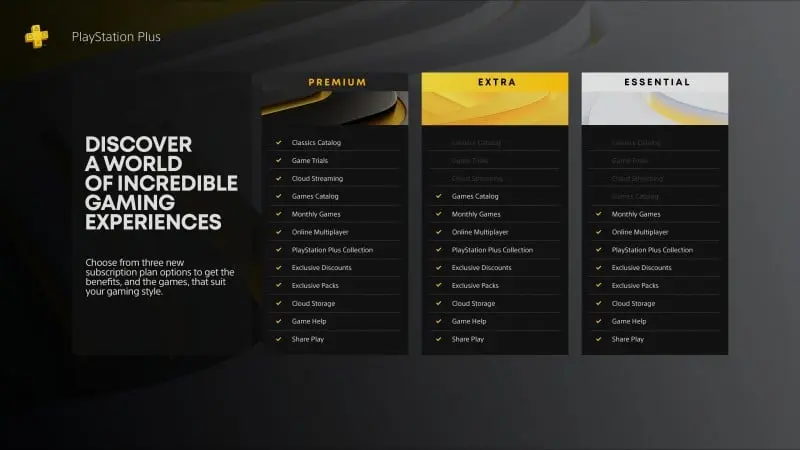
PS Plus has kept its three-tier structure and pricing steady: Essential at $9.99/month ($79.99/year) functions primarily as PlayStation’s multiplayer paywall, Extra at $14.99/month ($134.99/year) adds hundreds of PS4 and PS5 titles, and Premium at $17.99/month ($159.99/year) layers in cloud streaming and classic PS1, PS2, and PSP games. Sony’s approach to its Extra catalog is notably patient – major first-party titles like God of War and Horizon Zero Dawn typically arrive 12 to 18 months after their retail release, which rewards subscribers willing to wait but offers nothing for players who want new games at launch.
Online multiplayer: the cost of just getting online
Strip away every extra feature and compare only what it costs to play online on each platform, and Nintendo’s advantage is stark. NSO Individual runs $19.99 annually – about four times cheaper than PS Plus Essential’s $79.99 and roughly six times cheaper than Game Pass Essential’s $119.88 equivalent annual cost. The eight-person NSO Family plan drops that further to under $5 per person.
The caveat is quality, not price. Xbox Live and PlayStation Network have run more mature voice chat, party, and matchmaking systems for years, and while GameChat narrows that gap on Switch 2, it doesn’t fully close it. Free-to-play titles like Fortnite and Apex Legends sidestep the whole comparison – none of the three platforms require a paid subscription to play those online – but any premium title with online multiplayer, including co-op games built for the format, still needs the paid tier behind it.
Cloud gaming: the gap Nintendo doesn’t close
This is where Nintendo Switch Online stops being competitive on features rather than just price. NSO has no cloud gaming component at all – there’s no way to stream Switch or Switch 2 games to a phone, browser, or smart TV through the subscription. Everything runs locally on Nintendo hardware.
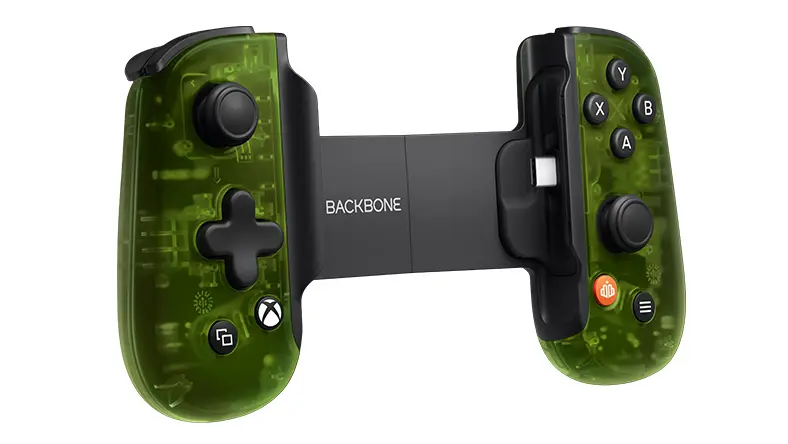
Xbox Game Pass includes cloud gaming at every paid tier, even the $9.99 Essential plan, streaming to Android, iOS, Windows, macOS, smart TVs, and browsers at up to 1080p/60fps. PS Plus Premium offers cloud streaming too, though it covers a smaller slice of the catalog than Xbox’s implementation and is a separate system from the free Remote Play feature. For players who want to game away from their console or Switch, Microsoft’s offering is the clear leader, and Nintendo isn’t in the conversation at all.
Key takeaway: if cloud streaming across devices matters to you, Nintendo Switch Online cannot deliver it at any price tier – this is a hard limitation, not a pricing gap.
Family plans: Nintendo’s one undeniable win
Neither Microsoft nor Sony offers a family plan for their gaming subscriptions. Nintendo does, and it’s aggressive: the Switch Online + Expansion Pack Family Membership covers up to eight Nintendo accounts for $79.99 per year, and those accounts don’t need to share a household – just a willingness to split the bill. Fill all eight slots and the cost lands around $10 per person per year for the full Expansion Pack tier, or roughly $4.37 per person for the base Family plan at $34.99.
That’s a number neither competitor can touch, and it’s the strongest argument for NSO in any household with multiple Nintendo accounts, related or not.
Nintendo’s own membership comparison confirms the eight-person split, and it’s worth noting this is the single line item where Nintendo’s service isn’t just cheaper than the competition – it’s structurally offering something Xbox and PlayStation don’t offer at all.
Full pricing and feature comparison
The table below lines up the current tiers side by side, including effective monthly cost where it isn’t advertised directly.
| Service | Tier | Price | Modern Game Catalog | Cloud Gaming | Effective Monthly |
|---|---|---|---|---|---|
| Nintendo Switch Online | Individual | $19.99/year | No (retro only) | No | $1.67 |
| Nintendo Switch Online | Expansion Pack Individual | $49.99/year | No (retro + DLC) | No | $4.17 |
| Xbox Game Pass | Essential | $9.99/month | 50+ | Yes | $9.99 |
| Xbox Game Pass | Premium | $14.99/month | 200+ | Yes | $14.99 |
| Xbox Game Pass | Ultimate | $22.99/month | 400+ (day-one, excl. CoD) | Yes | $22.99 |
| PS Plus | Essential | $79.99/year | ~3 monthly games | No | $6.67 |
| PS Plus | Extra | $134.99/year | Hundreds | No | $11.25 |
| PS Plus | Premium | $159.99/year | Hundreds + classics | Yes (select titles) | $13.33 |
Who should skip Nintendo Switch Online
The service makes little sense for a specific set of players. If you don’t play any online multiplayer on Switch or Switch 2, the base tier is optional entirely – offline single-player games need nothing from NSO. If you’re chasing a rotating catalog of modern games the way Game Pass or PS Plus Extra provide, Nintendo simply doesn’t offer that model at any price, and no amount of Expansion Pack spending changes it.
- Cloud gaming users – NSO offers zero streaming options across every tier, a hard limitation rather than a pricing gap.
- Modern catalog seekers – NSO’s library is entirely retro; there’s no equivalent to Game Pass’s 400+ current-gen titles or PS Plus Extra’s back catalog of recent releases.
- Voice chat power users – GameChat is an improvement, but Nintendo’s online infrastructure still trails the maturity of Xbox Live and PlayStation Network.
- Expansion Pack completionists without the games – the DLC and retro bundle only beats standalone pricing if you actually want Animal Crossing, Mario Kart 8 Deluxe, and the N64/GameCube libraries.
Players who want online co-op in compatible premium Switch and Switch 2 games still need an active NSO membership, which keeps the base subscription important for anyone leaning into the platforms’ multiplayer library.
So is it worth paying for?
Nintendo Switch Online’s $19.99 floor price remains the cheapest way to get a console online in the U.S., and the eight-person Family plan at $34.99 has no real competitor from either Microsoft or Sony. But the service is not built to compete with Game Pass or PS Plus Extra on catalog depth or cloud access, and it was never meant to – it’s a multiplayer pass with a retro library bolted on, not a modern game subscription.
The honest framing for 2026: pay for the base tier if you play Nintendo’s online multiplayer titles at all, since nothing else on the market comes close to the price. Only add the Expansion Pack if you’d genuinely buy the GameCube, N64, and DLC content it bundles – otherwise that $30 premium is paying for access you won’t use.