Lead
Roblox used its annual Roblox Developers Conference to outline changes planned across the platform for players and creators. Three executives detailed updates involving chat, game access, AI-assisted creation, engine technology, and creator payments, according to PCGamesN. The announcements cover a new friend-focused chat tab, browser-based play, offline-capable modes, AI creation tools, and a physical card connected to developer earnings.
The keynote presents these updates as parts of a broader effort to make Roblox easier to play and easier to build on. Some of the changes are focused on access, including playing in a browser rather than through an installed app. Others focus on the tools available to creators, from improved rendering and cameras to AI systems that can assist with building, testing, and NPC behavior. On the business side, Roblox Wallet and Roblox Card are intended to give developers additional ways to manage earnings.
Not every announced feature has the same immediacy. Browser play and the revised chat experience have clear, practical uses for existing players, while offline modes are planned for a later rollout. The AI tools and Roblox Reality were among the keynote’s most ambitious demonstrations, but their eventual use will depend on how creators apply them in live experiences.
Event Context Block
RDC is Roblox’s annual gathering for its creator community. The event’s stated focus was the creation of anything, anywhere, and by anyone, a theme attributed to Lead Engineer Nick Tornow. That framing connects the player-facing and creator-facing announcements: Roblox is presenting them as efforts to reduce friction between an idea, its creation, and access to a game.
The platform’s plans span several distinct areas rather than one single product launch. Players are set to receive new ways to communicate and enter games, while developers are being offered engine improvements, creation systems, testing tools, and financial features. The result is a broad roadmap that combines access changes with technical and economic updates.
For players, the common thread is a smoother route into Roblox games. For creators, the emphasis is on expanding what can be made on the platform and simplifying some of the steps involved in operating an experience. The conference also showed Roblox continuing to connect its engine work with creator tools, including systems intended to support more detailed environments and new forms of interaction.
Editorial Highlight
The most immediately understandable announcements are browser-based play and the reworked chat system. Playing directly through a browser could make it simpler to open a shared game link without first installing the Roblox app, while the dedicated friends tab is designed to make conversations with known contacts easier to find. Both changes address everyday points of friction for people already using the platform.
Offline-capable modes and standalone Roblox apps could also change how games are accessed, although offline play is scheduled later than browser support. The announcement describes standalone apps as a way for players to join particular games without first moving through the main platform. Together, those additions suggest a more flexible set of entry points for Roblox experiences.
The AI announcements deserve more caution. The ability to build a game from a prompt, change an environment without revising its underlying code, or test with AI-controlled characters is attention-grabbing. But the usefulness of those features will depend on the quality of the tools in practice and on whether creators find them suitable for their own work. Roblox Reality’s emphasis on photorealistic environmental changes is especially ambitious within a platform widely associated with stylized, block-like avatars and worlds.
Roblox Wallet appears more directly connected to a recurring creator need because it is intended to automate daily collection of earnings in local currency and show where that revenue comes from. Roblox Card is less immediately intuitive: it is a physical card for spending developer earnings outside the platform. The card may offer another option for creators, but its role alongside Wallet will be clearer once the features are in use.
Per-Announcement Breakdown
Chat, browser play, and offline modes: Roblox chat is set to receive a dedicated friends tab, allowing players to speak directly with people they know. The options described include text, AI-powered speech-to-text, in-game voice chat, and emoji support. The update follows Roblox’s age-category changes from the previous year, which were described as having reduced chat use.
Browser play is expected by the end of 2026. Rather than requiring an app installation, the feature is intended to let a person open a shared text or social-media link and enter a game through a browser. Offline-playable modes are planned from mid-2027, allowing games to be started when an internet connection is unavailable or when a player is on the move. Roblox also announced standalone apps intended to let players join specific games without going through the main platform.
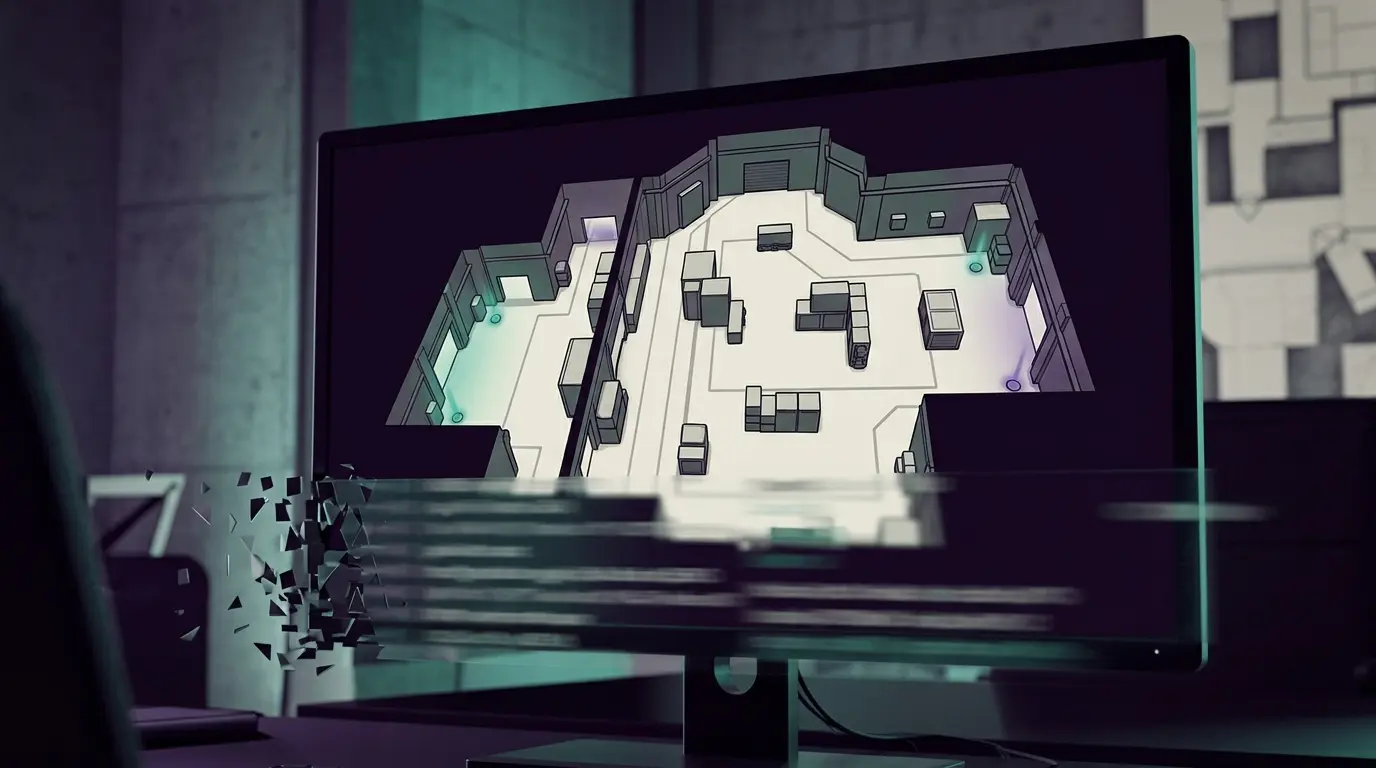
Engine, graphics, and 2.5D support: Roblox announced faster loading and rendering, along with graphics additions including blur and shadow effects. Orthographic camera support is also planned, opening the possibility of 2.5D-style games that differ from the platform’s usual perspective. Demonstrations at RDC were described as showing a substantial loading-time difference, though no specific benchmark figures were provided. The practical impact will become clearer as these technical changes reach games on the platform.
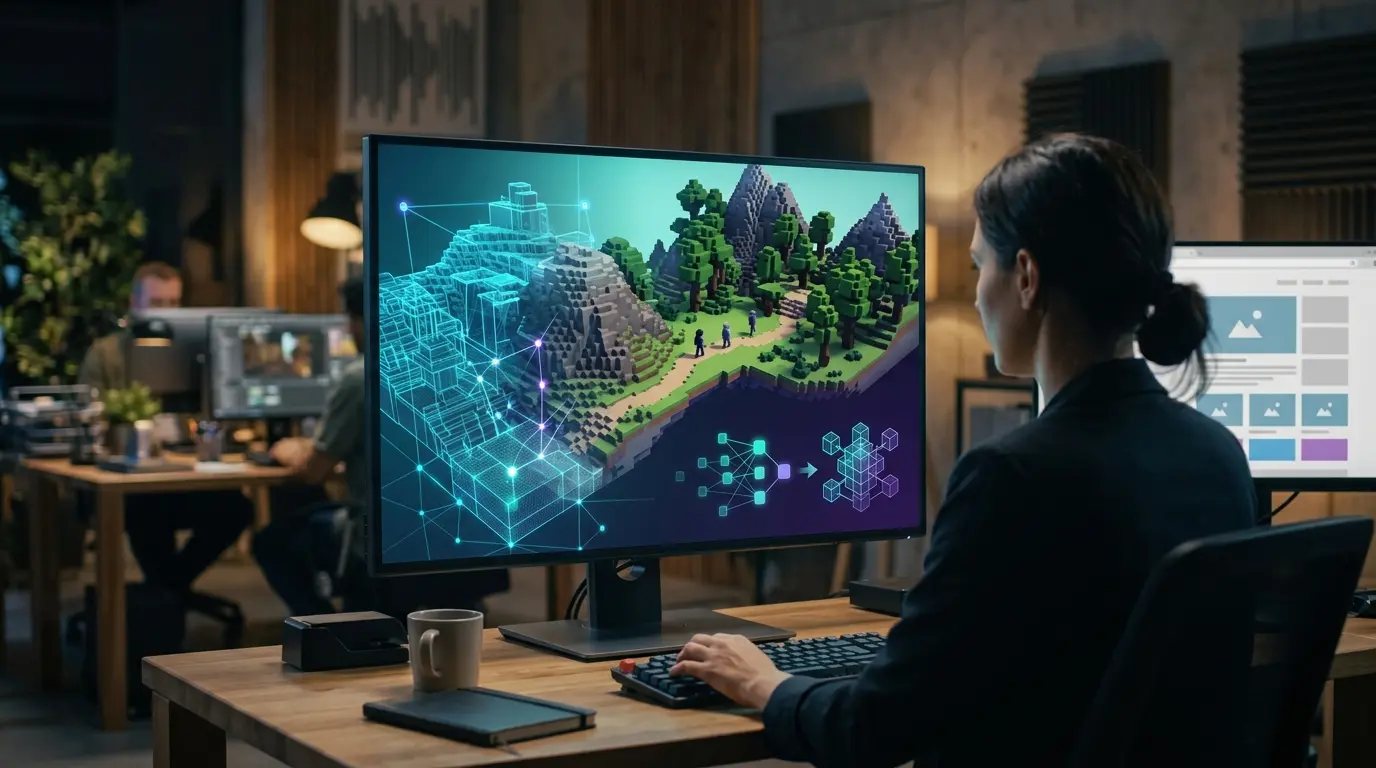
AI creation, Roblox Reality, and NPCs: Head of Foundation AI & Infrastructure Anupam Singh presented AI-powered tools that include the ability to generate an entire game from a single prompt in roughly 10 to 15 minutes. The demonstration described a prompt-based workflow that can produce a functional environment, while other tools are intended to help creators generate and modify 3D content.
Roblox also described characters gaining the ability to pick up and interact with in-game objects. AI-powered testing is intended to run without real players, and AI assistance for NPCs is designed to support dialogue and text that responds to player actions. Roblox Reality is presented as a system that can alter environmental and weather effects without changing the underlying code. The technology is meant to layer photorealistic changes over the Roblox engine, including adjustments to lighting, weather, and scenery.
Roblox Wallet and Roblox Card: Roblox Wallet is intended to let developers collect profits automatically every day in their local currency, while also providing a breakdown of where earnings originate. Wallet analytics are scheduled to roll out in the United States in December 2026. The United Kingdom and European Union are expected to follow in the first half of 2027, with a worldwide expansion planned afterward.
Roblox Card is a physical card that developers can use to spend earnings outside the platform. Roblox is working with payment provider Airwallex on the card. Chief Business Officer Enrico D’Angelo said the product does not mean Roblox will operate as a financial institution or bank. The distinction clarifies the card’s intended role, even as its practical value for developers will rest on how it works alongside Wallet.
What to watch: Browser play is the nearest announced player-facing change, with a target of the end of 2026. United States Wallet analytics share that December 2026 window, followed by the United Kingdom and European Union rollout in the first half of 2027. Offline modes are planned from mid-2027. Roblox Reality, AI-assisted NPC tools, and standalone apps were announced without firm release windows in the supplied information, leaving their timing less defined than the browser, wallet, and offline-play plans.