
In GoldFire Studios’ sci-fi walking sim, Arctic Awakening, we play as Kai, a pilot in the year 2062, who is doing a routine supply drop to an Alaskan town with his co-pilot, Donovan, when the tail end of the plane suddenly detaches during a storm. While Donovan opts to parachute out of the plane, Kai lingers, determined to regain control, but ends up crash landing in the Arctic. When Kai awakens, Donovan is nowhere to be seen, but we are able to communicate with him through our digital watch. We find out that he’s injured, and must locate him so that he can receive medical treatment. Accompanied by his court-mandated therapy drone, Alfie, Kai journeys through the Arctic to find Donovan, work out how to escape, and also investigate how the crash happened.
In the very first instance of booting up Arctic Awakening, the game makes it clear that your dialogue and action choices will impact the story as well as your relationship with Alfie and Donovan. While I did feel the weight of my decisions through dialogue, it’s also the case that these decisions don’t really impact the storyline at all. Similar to Life is Strange or Telltale’s The Walking Dead games, the only decision that really matters in reaching different endings is the one provided to you at the end of the game.
Donovan and Alfie often work with these decisions by presenting opposing arguments to your choices. Depending on what you choose, they will then comment on that throughout the game, often making jabs if the decision you picked turned out to have negative consequences. This in particular irked me when it came to Donovan and Alfie as characters, while I think they are both written well and come with some interesting back stories in their relation to Kai, being constantly picked on due to my decisions grew tiresome. Alfie has a habit of consistently questioning your every decision and move, and while this is purposeful, as Kai himself grows frustrated by this and comments on it, it also makes Alfie extremely annoying to travel with, and I found it hard to grow a stronger bond with him while my eye was twitching from his constant belittling. While a lot of this could be put down to the developers trying to point out to the player why their decision may have been wrong, often times this commentary was not needed when the consequence of that decision was pretty obvious – for example, choosing to pass through a fence covered in warning signs and discovering it’s due to potential landslides when rocks suddenly start tumbling down the mountain.
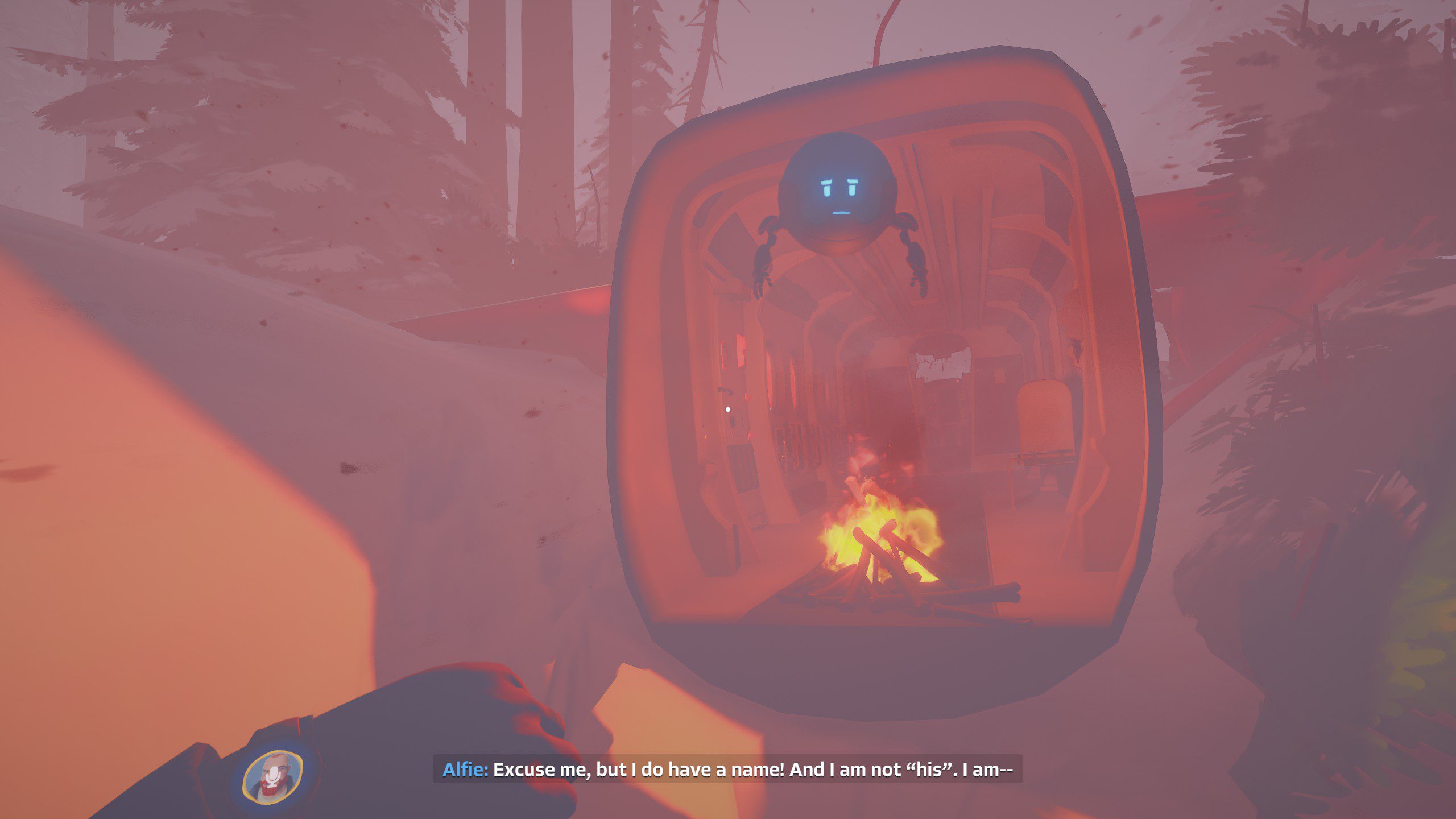
On top of this, Alfie also has a habit of spoonfeeding us information on Kai’s backstory and his relationship with Donovan, often spelling out to the player how we should feel about Donovan under the guise of therapeutic discussions. Alfie’s therapy also mostly consists of overanalysing Kai’s every decision or thought processing, making links where it’s not necessary, while also coming off as incredibly patronising. Alfie also somehow manages to come up with an excuse to halt our search for Donovan every single time we find some progress, always suggesting we set up camp, turn back for absolutely no reason, or ignore the obvious pointers to Donovan’s location in case it’s “dangerous”, as if the alternative of sitting in a plane wreck and waiting for rescue while Donovan is potentially bleeding out is any better. This felt like the walking sim variant of the horror movie trope “let’s split up”, in that it’s done so to prolong the plot and their progress, similarly to how “let’s split up” is made to put the characters into more precarious situations, even if it makes no sense logically. It also took out the urgency from Donovan’s rescue. While we’re aware that he’s severely injured and the game basically tells you that the situation is urgent, I simply did not get the impression that Kai and Alfie were in much of a rush to find him, and my every attempt to persuade Alfie that finding Donovan was a priority was always fought against.
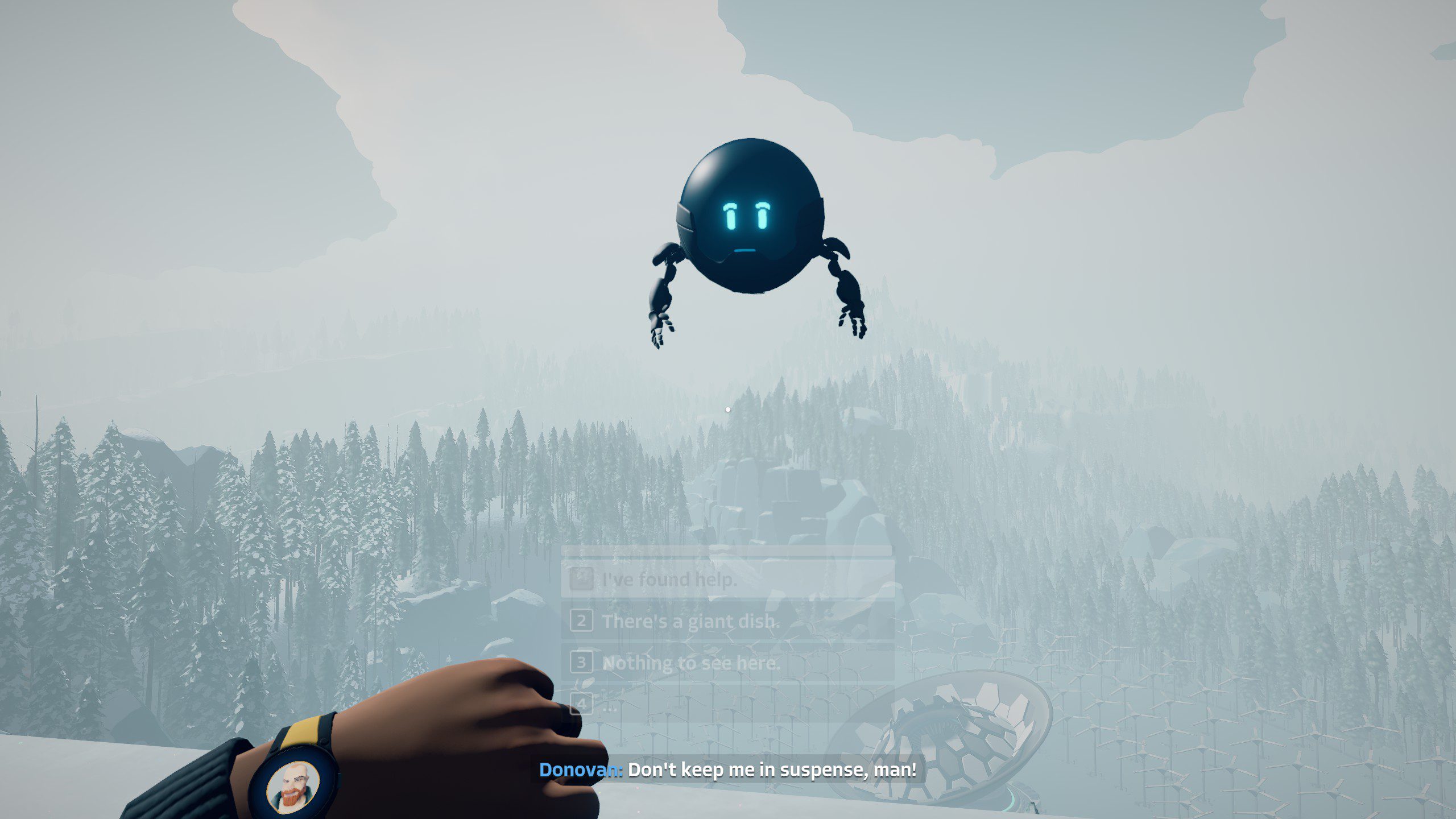
While Kai serves as an interesting main character, with enough flaws to work through to see genuine character growth by the end of the game, the character writing as a whole can come off as puzzling at times, especially when they seem to come to random conclusions when discovering new information about what’s going on in the area. As we follow Donovan’s cryptic directions, moving from location to location like Mario hopping from castle to castle after Princess Peach, Alfie and Kai seem to invent a story that maybe Donovan has… done this deliberately so he can run away? This idea seems to come out of nowhere and makes absolutely no sense other than to try and suggest a potential story outcome to the player when it’s quite evident what’s happened to him. Alfie and Kai also seem to have Prometheus-level survival instincts, being unable to draw up links that are obvious to the player, i.e. listening to the very vivid audio recordings of someone who also crash-landed in the area and came down with a virus, which Kai is also suffering from the symptoms of, but brushing this off as a simple “cough”.
The plot as a whole, while ending on a quite generic reveal, does have some interesting points, and I was pushing to progress so that I could uncover the answers to the game’s questions. However, at over ten hours long, Arctic Awakening is double the length of what walking sims would usually be. This wouldn’t usually be a problem had it not been so artificially padded with painfully slow walking and seemingly endless stretches of travelling required to reach the next story point and progress, while also barely answering any of the questions raised by the various cliffhanger reveals.
Similar to a lot of walking sims, Arctic Awakening also falls victim to random tasks in an attempt to bring in some gameplay to what is mostly a narrative experience. Only, these add nothing at all to the gameplay besides once again padding the overall gameplay length, often coming in the form of menial tasks such as collecting certain items or looking for something. A lot of my time with Arctic Awakening was also spent on trying to work out where to go or what to do next, as there were little to no objective pointers to guide us in the right direction, meaning I was often wandering, slowly, around large spaces to try and find what the game was waiting for me to do. It would have been beneficial if Alfie could give pointers for this, such as verbal hints or maybe using his flashlight to point us in the right direction.
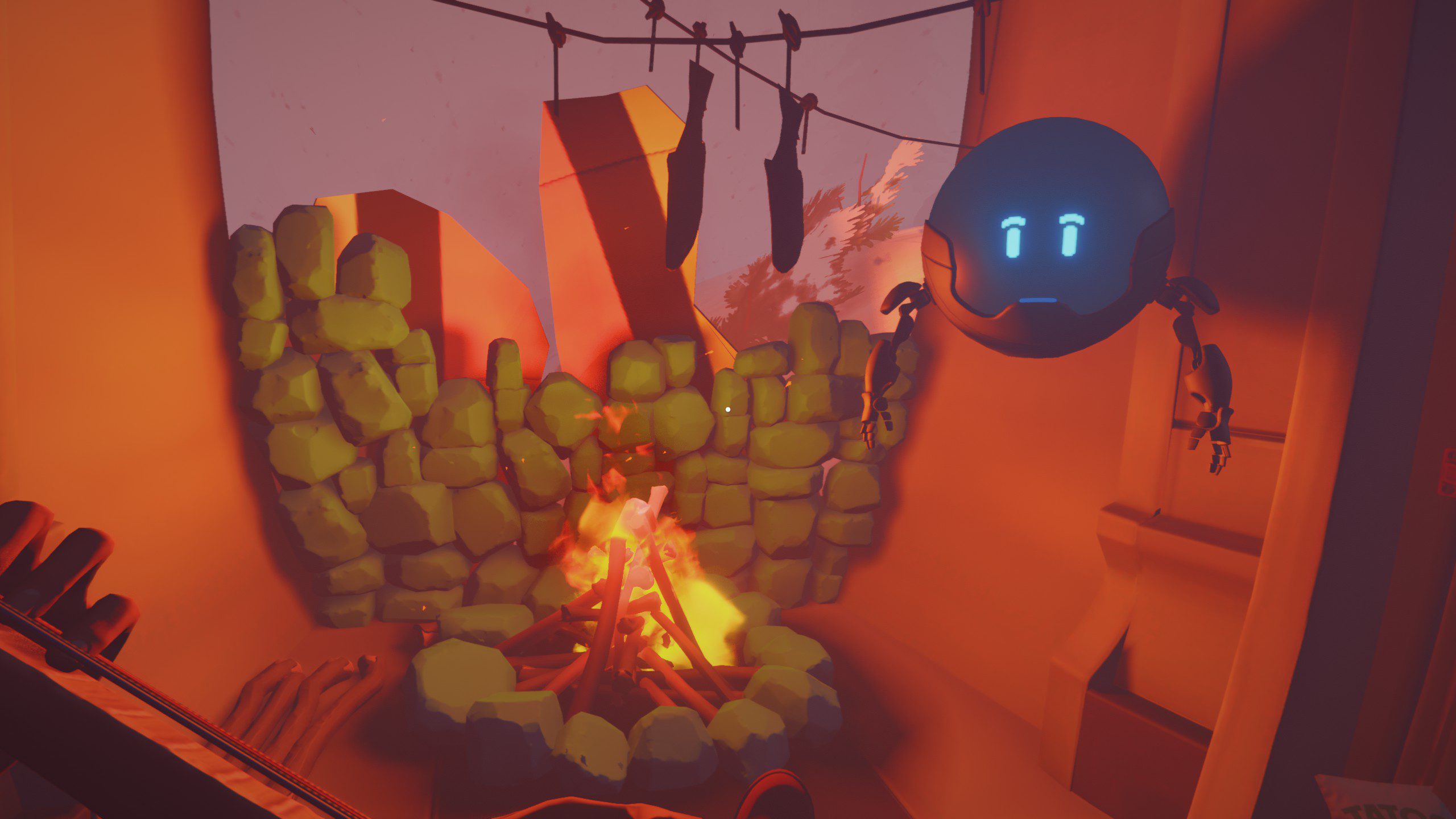
Another attempt at introducing gameplay comes in the form of the meager survival elements. Kai must manage his hunger and stress levels. These have their own bars, however if Kai’s vision becomes blurred, you can fill up one or the other by meditating at one of the cairns dotted around the area or by consuming food and beverages, which can also be collected. Because these survival elements didn’t feel very fleshed out, they also became more of a pointless annoyance rather than an actual challenge to the gameplay, as they should have been. The more you ignore these levels, the more hazy Kai’s vision becomes, which was irritating when it would happen during dialogue or one of the few cutscenes and would take away the focus from them.
The two walking sims that Arctic Awakening reminded me the most of are Firewatch, with its visuals and The Invincible, with its sci-fi themes. These games also have a heavy focus on narrative that consists mostly of dialogue between two characters. But both of these deal with their pacing well, which Arctic Awakenings struggles with, unnecessarily padding itself out with long stretches of walking and pointless gameplay moments. Had it focused more on its core aspect, its narrative, it would have made for a much better experience despite failing to answer a lot of the questions I had on some of the events that happened throughout the game. The plot feels very directionless, presenting a reveal at the end but failing to fill out some of the gaps. Its ten-hour gameplay length is split into five episodes… despite not being released episodically. Had the original plan been to release each episode one at a time, then the padding would make more sense and possibly wouldn’t have felt like such a drag.
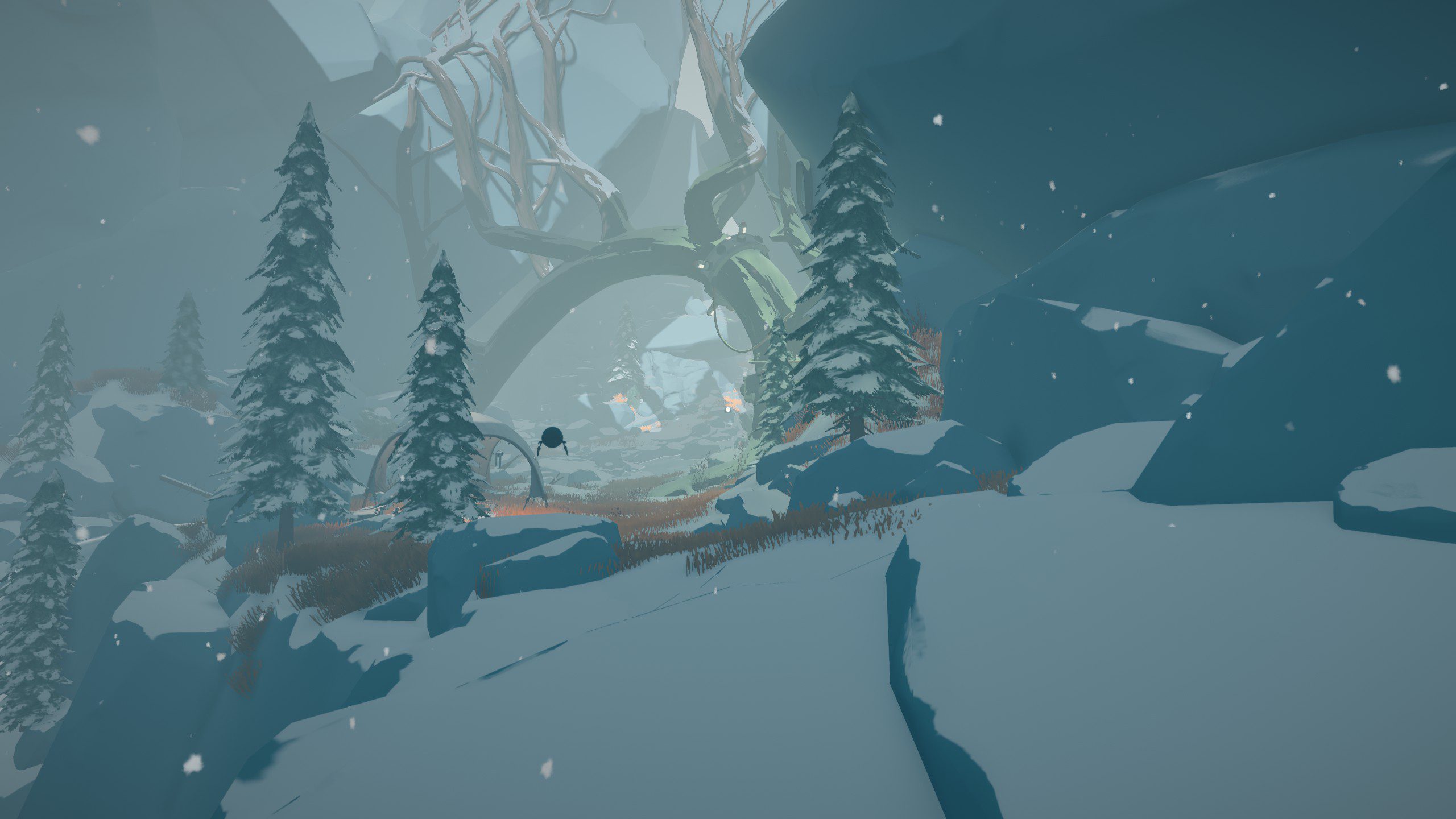
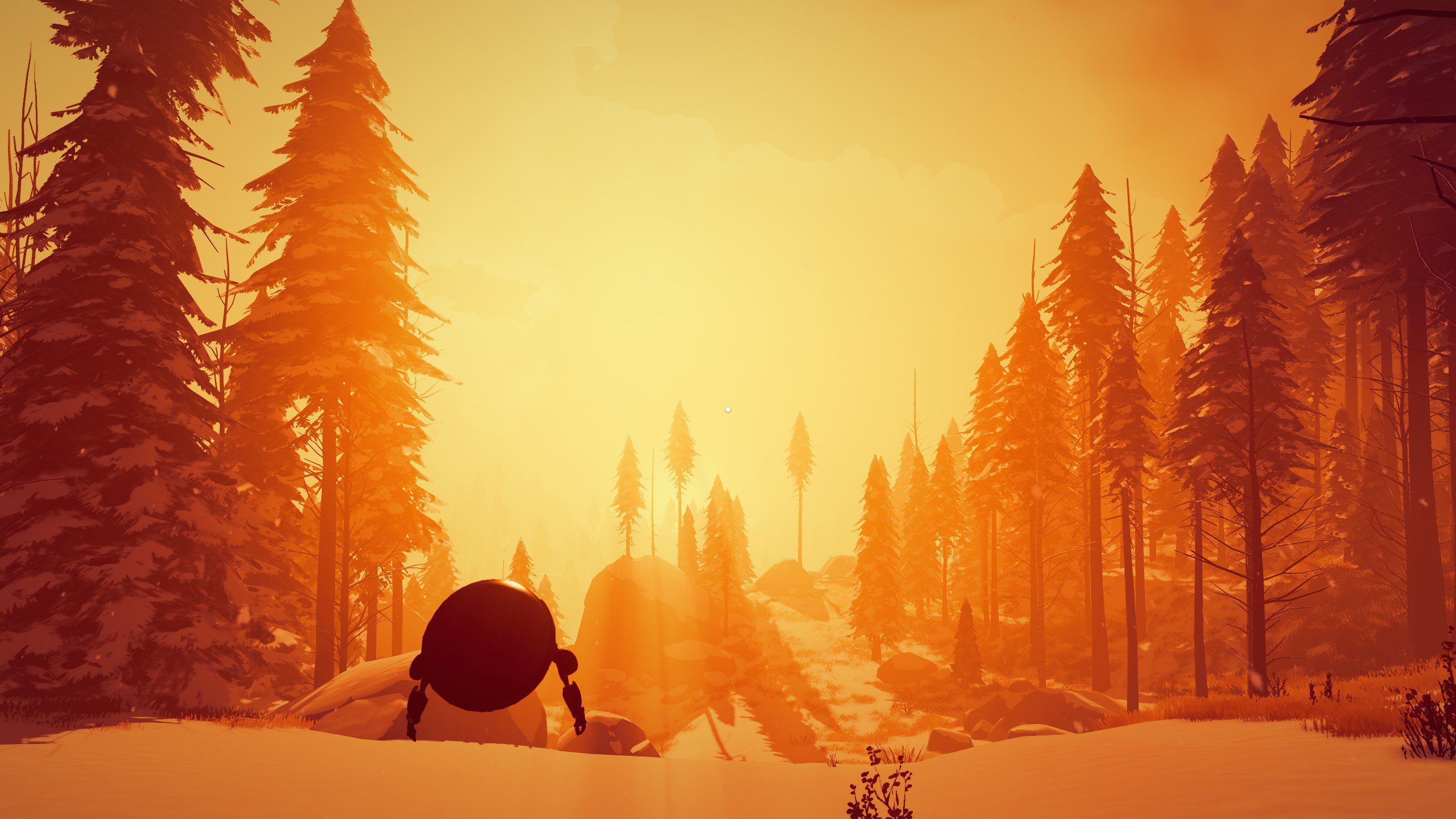
Arctic Awakening’s visuals are some of its strongest points. Here, it most resembles Firewatch with its smooth, blocky graphics and vibrant colour palette. There is plenty of beautiful scenery that perfectly complements the more emotional moments in the story. Unfortunately, a lot of the game was very dark, and it ran into the problem of the brightness setting only making the darker areas greyer and hazy when turned up. Its soundtrack is a mixture of electronics and acoustic guitar tracks, which suit the storyline and setting perfectly. That being said, I did encounter problems with the audio mixing as the dialogue would often not account for how quickly the player would be moving, with conversations being triggered at the same time and overlapping, or dialogue about a specific point of interest triggering too late once we had already passed it.
I also encountered quite a few bugs that forced me to restart the game, including clipping through the map, events or dialogue not triggering to progress the plot, and objects not becoming interactable when they were supposed to.
If you enjoyed Firewatch or The Invincible, then Arctic Awakening may be worth your time. While it’s not a perfect experience, it does offer similar gameplay and an interesting story that will keep you pushing through the boring filler to reach the ending. However, if this is a game that you’re eyeing up as your first dip into the genre, I would recommend the other two first.
Jess reviewed Arctic Awakening on PC with a provided review copy.