
The city-building genre has been experiencing a significant boom and even over-saturation in the last couple of years. Both indie and AAA titles have garnered a lot of attention, and it’s becoming increasingly difficult for new releases to stand out unless they offer a unique take and a fresh experience for the players.
Town to City, developed by Galaxy Grove and published by Kwalee, is a cozy, casual city-builder that focuses on developing a small town, decorating buildings with small dynamic details, and providing a beautiful suburban environment for our voxel citizens. The game was released into Early Access recently with a decent amount of content and a relatively polished experience.
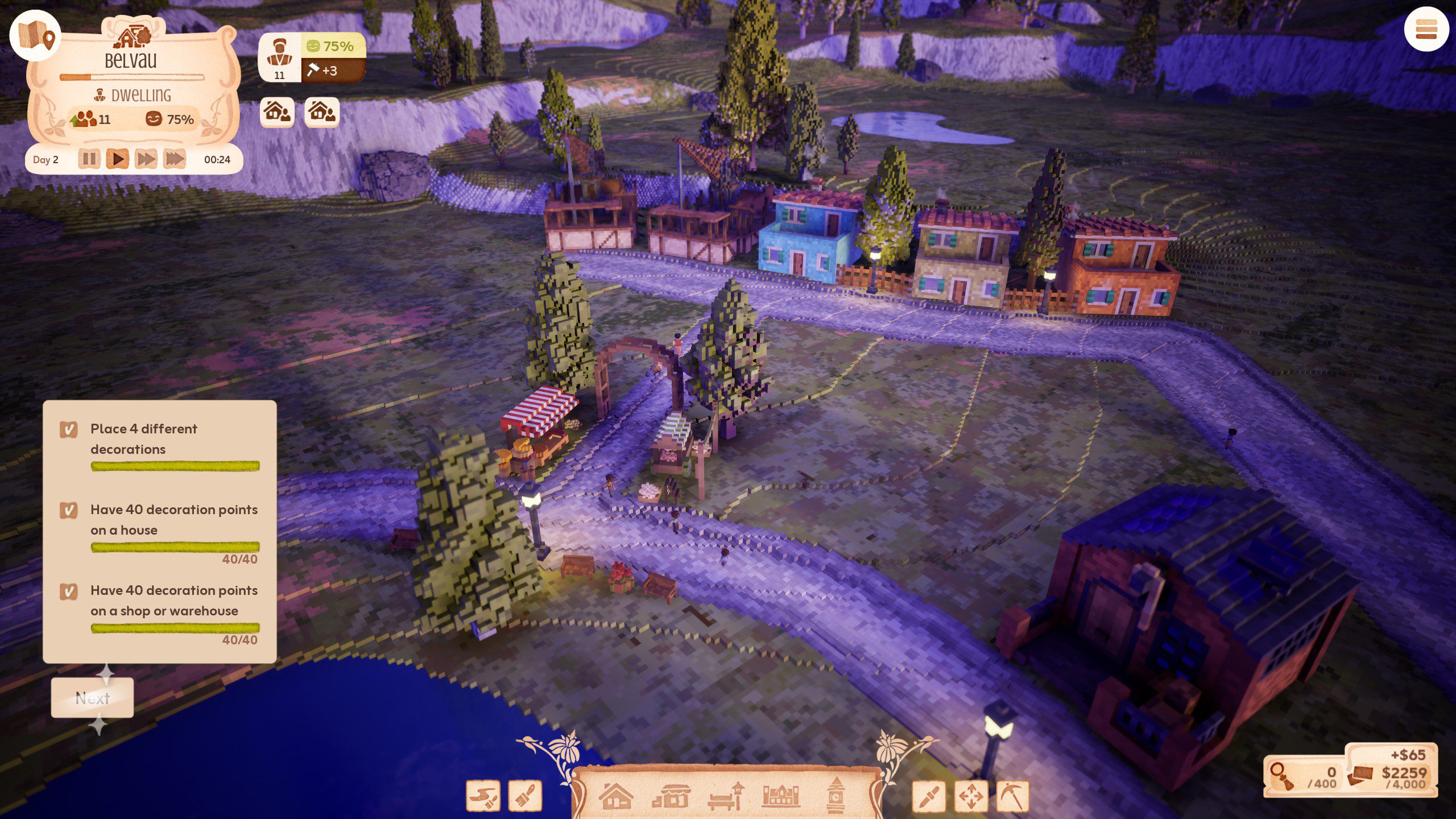
The first thing that caught my eye when playing Town to City was the voxel art style. The game and the models look very charming and well-designed, with vibrant colors and detailed visuals that create a beautiful environment to build a small, lovely town. There are a total of six maps in the campaign and sandbox mode, each with unique terrains and features. The maps look great as well, and make up for the lack of a terraforming feature by providing a few different environments.
An interesting feature of Town to City‘s visual design is the dynamic decorations. Items such as flower pots, trees, and lights change shape and attach to buildings based on their location. This reminded me of Tiny Glade, a small indie game released last year that focused on this type of dynamic building and design. This is currently a small feature in Town to City, but I do hope the development team adds more variety and options to this feature for the final version of the game.

Town to City has a camera option that allows us better control over the different parameters when capturing a screenshot, but I did find the focus and blur of the gameplay camera a bit unpolished when trying to zoom in and place small decorations in crowded parts of our town. The control over these small details in decorations is one of the more unique and charming aspects of the game, but the camera settings can use some adjustments to better accommodate this part of the gameplay.
Drawing roads and pathways is a major part of most city-building games, and Town to City has a minimal but workable interface for it. You can draw roads in straight lines or free form, and you can adjust the brush size or erase what you have placed. I do feel the options are a bit limiting in this aspect, and the addition of at least a curve tool would help a lot in creating smoother and better connections in our town. There are also no tools for terraforming or altering the terrain, which I can appreciate as a deliberate choice, but I hope that could lead to more maps in both story and sandbox mode.
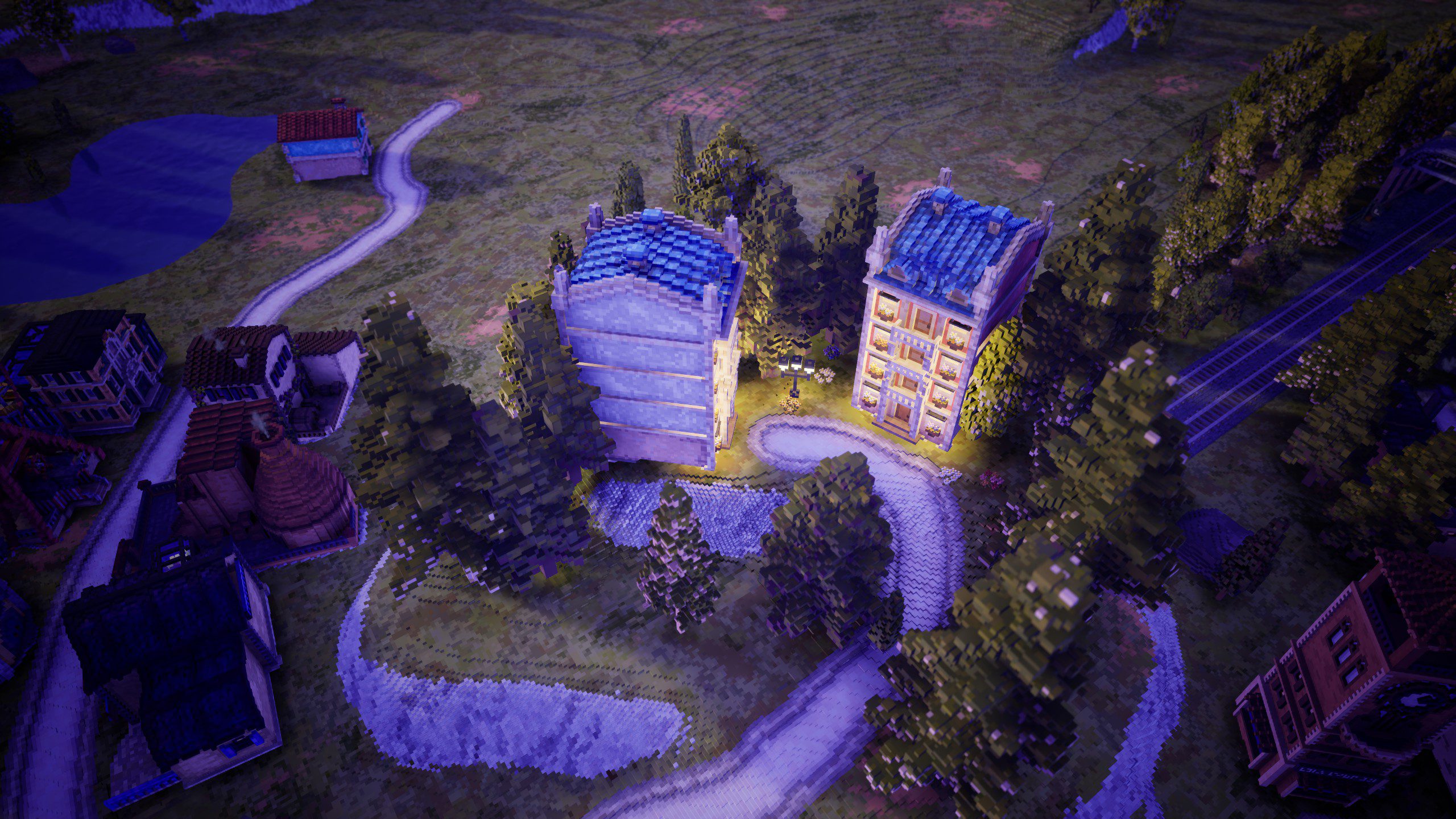
Town to City is one of the more casual and easy city management games I’ve played recently. While there are goals and citizen needs you have to meet, it never feels like the main focus of the game. The economy is pretty simple, and we never have to worry about losing money. And I could easily keep the happiness of my citizens near 100 percent, even in my largest town with more than a thousand people. I do not mind the casual difficulty as it lets me focus on designing a beautiful town, but a difficulty option can be a welcome addition in the final version of the game.
Once we have a decent enough population, we get requests from the citizens to help them or build new parks, service buildings, or relocate a family to their dream house. These requests often have funny dialogues and small stories that give life to the town’s inhabitants, and also provide small goals and challenges to overcome. This is another feature of Town to City that makes it feel more personal and detail-oriented, compared to most other titles in the genre that focus on a larger scale and macro management.
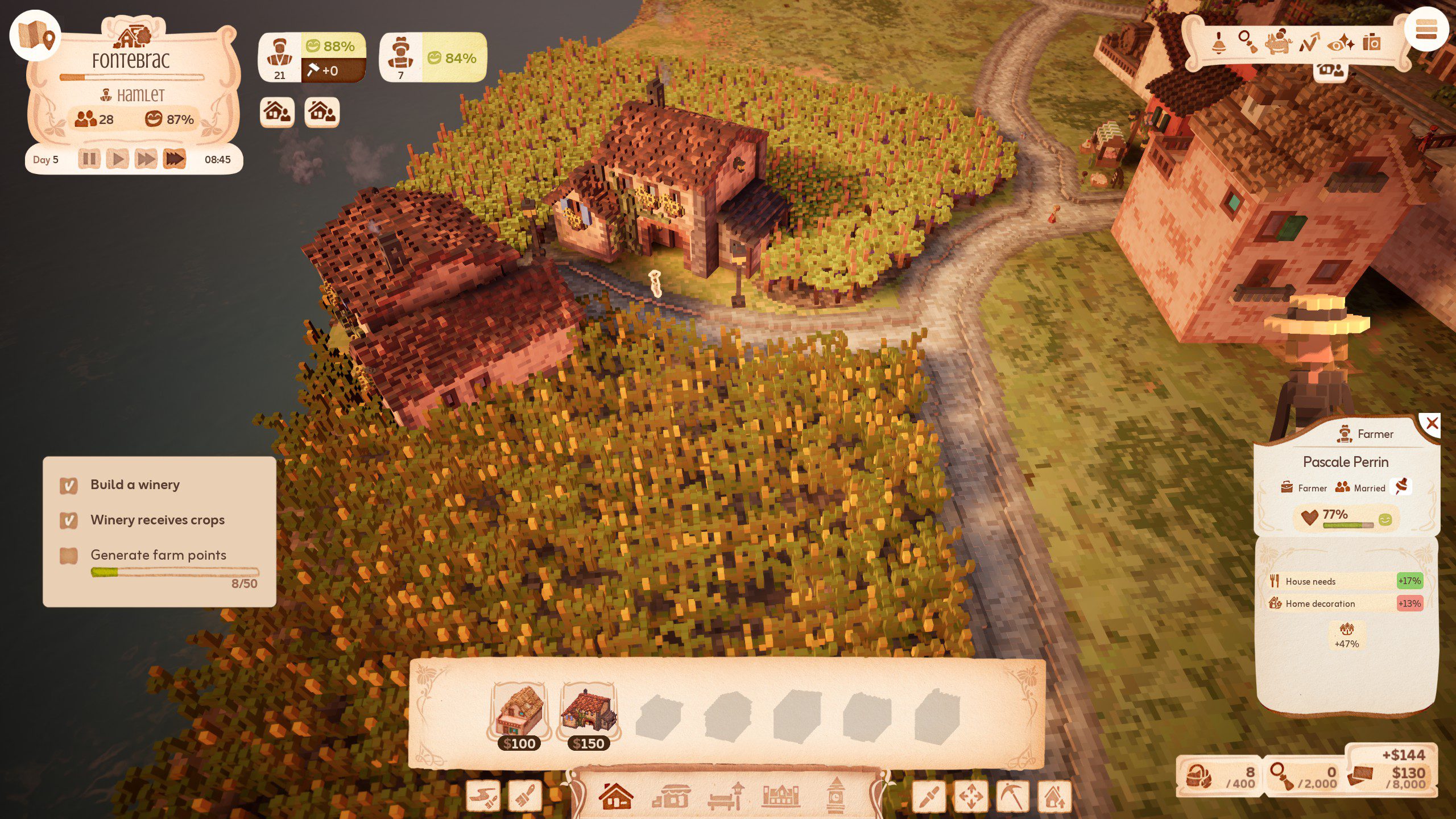
We unlock new buildings, decorations, and features by using research points. I was able to unlock everything in the current version of the game in less than 10 hours and felt satisfied with the final version of my town. Town to City has a population cap of 1,000, and while it’s easy to achieve most goals within that limit, there is an option to bring this limit lower or remove it completely. The game warns that higher populations can cause performance issues, but I never faced any by raising the population to about 1,300 citizens.
Town to City‘s maps are also not expandable, and we are limited to the space we are given in the beginning. In the story mode, we unlock new towns that focus on different types of production, and we have to switch between the towns and develop them simultaneously to get access to some new features and buildings. One of these extra towns is currently not available in Early Access, and I’m curious to see what new features will be available once it is playable.

The controls are fairly conventional for the genre, but I experienced some unusual interactions on a few occasions. The most notable one is that the game’s different menus act like separate windows that can lose focus if you click behind them, like a Windows interface, and hotkeys might not work as intended when you are navigating different menus. For example, I couldn’t pause the time with the space bar when I had the research or economy tab open, or if I clicked on the background when a menu was open, hitting the escape key would not close the currently open menu. This was a small flaw, but I noticed it enough for it to become somewhat annoying. Hopefully, this will be addressed during the Early Access period.
Town to City‘s Early Access release offers a decent amount of content in a well-polished state, in addition to its unique visual style and attention to detail, making it a worthy contender in the city-building genre. It’s a great starting point to improve the final experience based on feedback, and I look forward to its official release.
Nima reviewed Town to City in Early Access on PC with a provided review copy.










This is a very meaningful article, suitable for all readers. The sincere and close writing style makes me feel like I am chatting with a friend. bloodmoney