
Like a truly slippery snake, though rarely discussed nowadays, Cobra is a very influential series originally created by the late, great Buichi Terasawa. A classic collection of sci-fi tropes, a charismatic, snarky hero, and tons of sex appeal with just enough unique elements to inspire creatives across the globe. If Cobra made its way to your TV, you were likely enchanted by his Psycho-Gun: a flashy arm replacement superweapon powered by his mind. We all know the golden rule—if it shoots, it needs a video game.
Unlike the anime, the few prior attempts at a Cobra game never stuck the landing. Although its popularity has waned nowadays, Microids (publisher of many licensed games) and developer Magic Pockets are breathing new life into this classic with an adaptation of the original series’ first twelve episodes in the form of a 2D run-and-gun platformer. Sadly, although The Awakening won me over when it comes to its source material, it falls short in every other aspect.
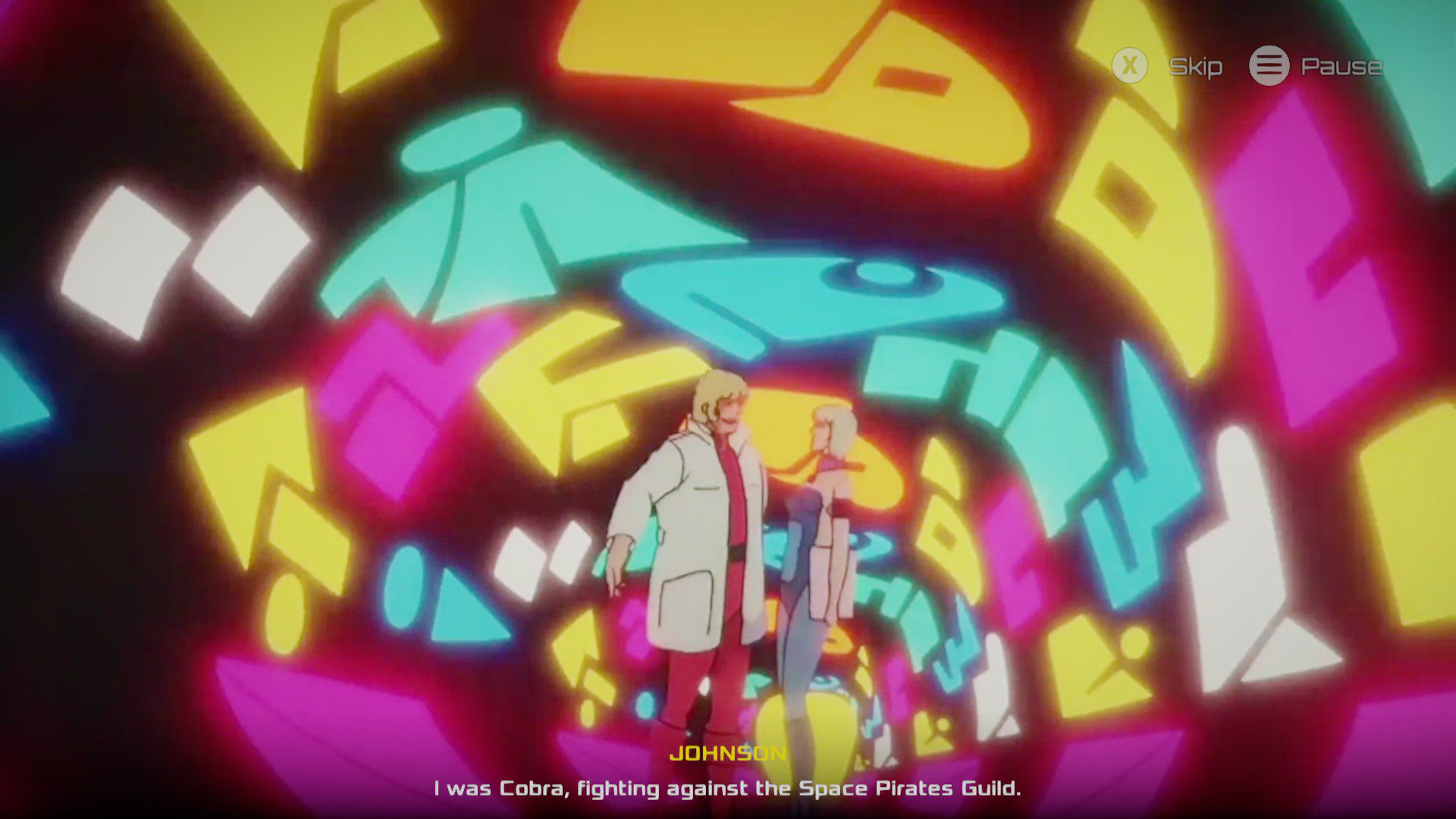
Cobra, the character that is, is incredibly charismatic, both in short dialogue sections in-game and the extensive anime footage (directed by the late, great Osamu Dezaki). Playing The Awakening does feel like going through a show, though it falls into the trap of many video game adaptations—a sort of reverence that leads to fitting gameplay sections wherever the source material allows, as opposed to creating unique gameplay that plays to its strengths.
The Awakening is very awkwardly put together, with levels lasting between seven and twenty-five minutes, depending on how much you explore or perish in its platforming or combat challenges. You really feel that length too, each new stage feeling like it is playing the game’s best (or worst) hits: here are the three multi-wave combat arenas, here are seven big platforming challenges, here is that open section where you run around and press buttons, here is the escape sequence. Maybe a boss somewhere along the way, perhaps even a repeated one. It gets quite monotonous.
Spicing up these standard screens are optional challenge rooms, usually with a one-time, unique gimmick and layout, ending with a reward: a fourth of a cosmetic/song for your ship base or a fragment of a skill upgrade: gun power, mind ability, or health. The flow of levels is all over the place because these rooms are optional and often unavailable on your first time through.
New gear is acquired metroidvania-style. Once you have it, you can go back to previous levels and collect whatever you had to skip previously. Sometimes it is just lying around in levels, sometimes Cobra simply remembers he can use it. The length and repetitiveness of these levels are big detractors for replays, and there is another checkmark for S-ranking/speedrunning, which means that to fully complete a level, you would often need to play it three times. That is, if you do not miss a collectible along the way. They are usually very easy to spot, but miss one, and who knows how much time it will take to get back to wherever it was.
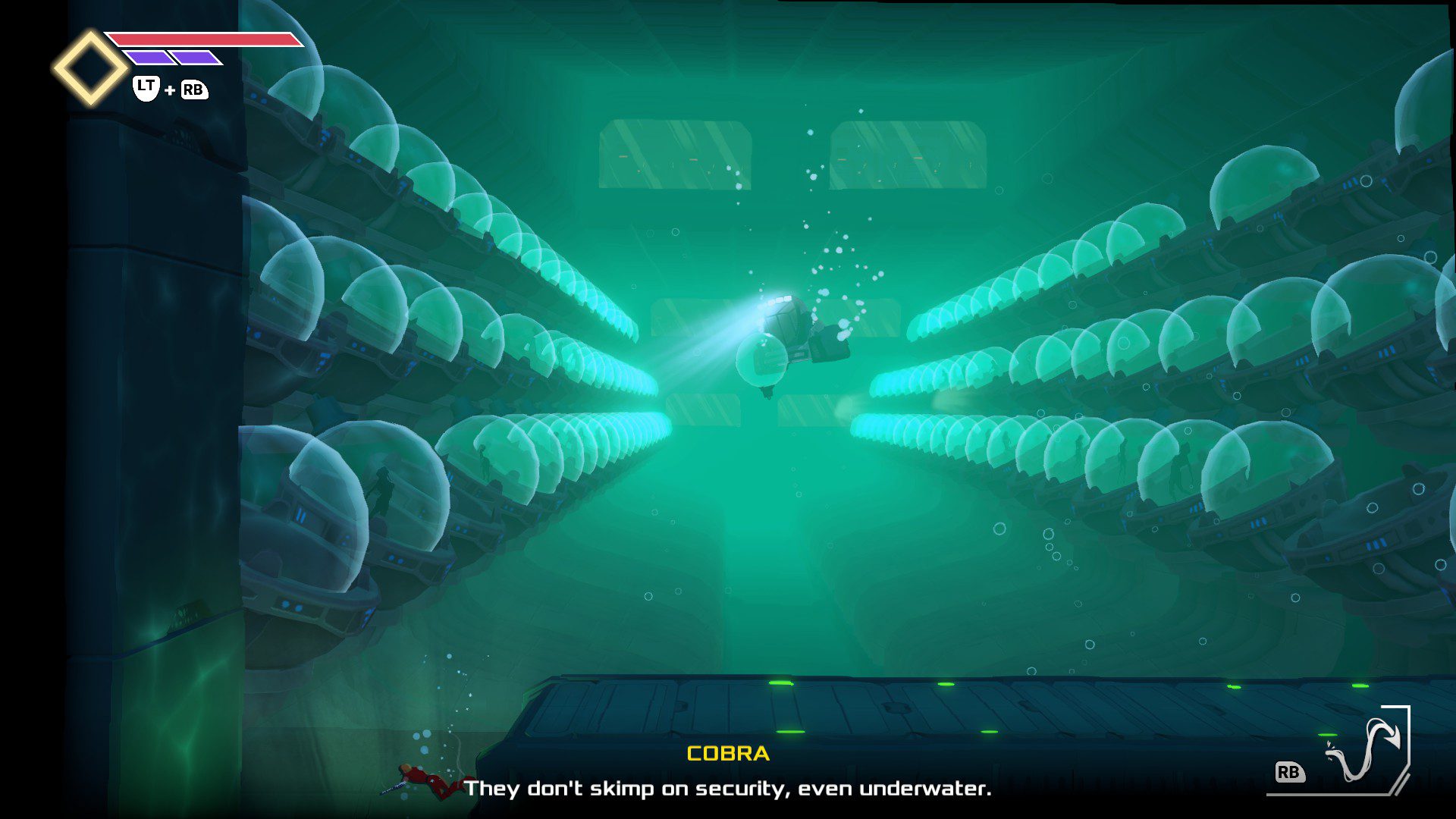
Swapping out some of the combat and even platforming challenges for a few of the aforementioned optional rooms would have greatly benefited the overall flow. That or not having the game be level-based. Perhaps due to that reverence, just trying to follow the anime closely, the current state of The Awakening is rather dull, and the length only gets worse each time you frustratingly die to one of its many control issues.
It is really tough to do a platformer without a good jump, and The Awakening has a really bad one. Slightly too fast, floaty and slippery when running, and obnoxiously slow when performed from a standstill—it is one of the worst jumps in recent memory. Cobra’s Psycho-gun feels solid if never perfect, especially when trying to shoot under your feet, but you can always stop and aim precisely with a press of a button.
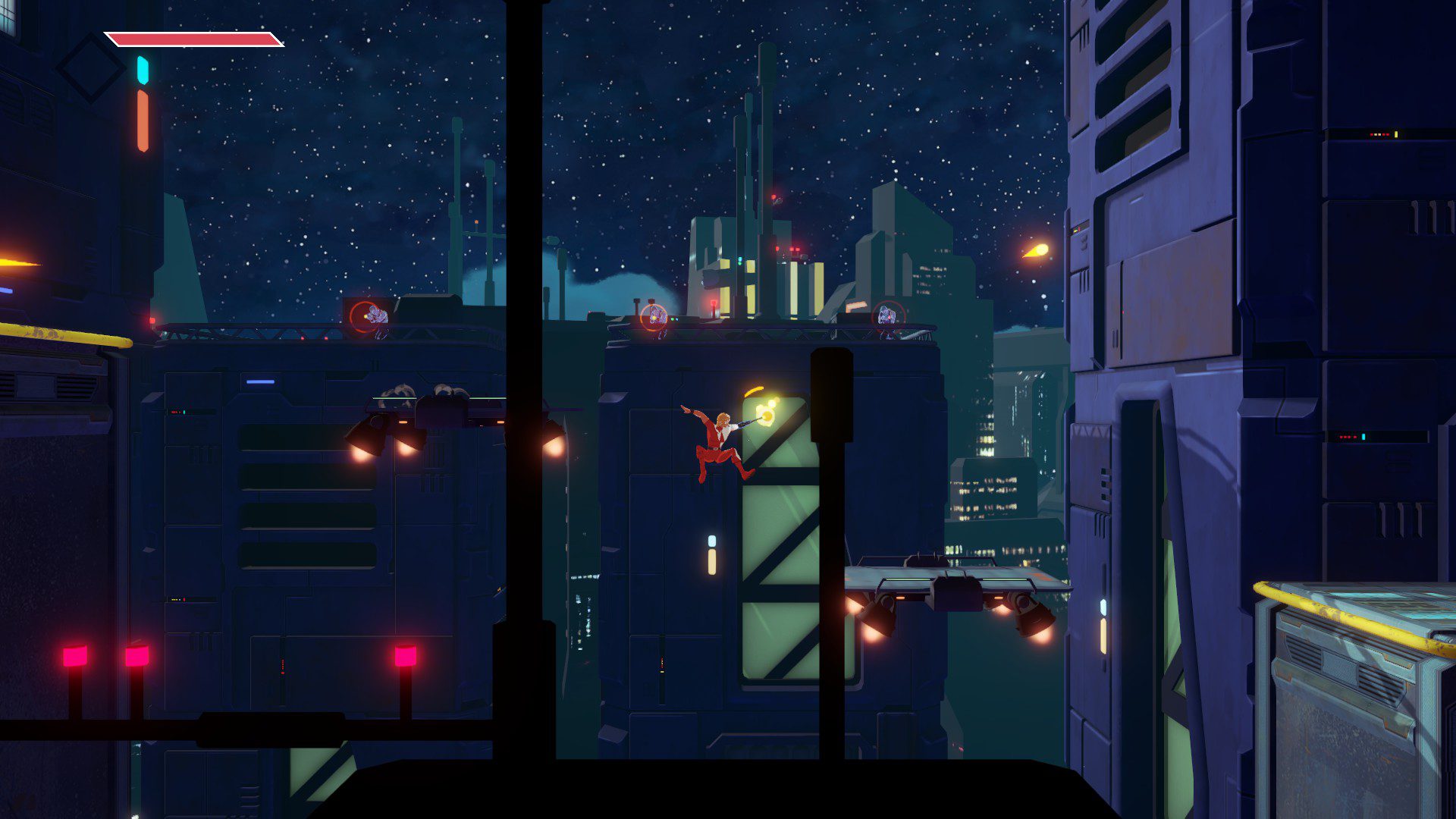
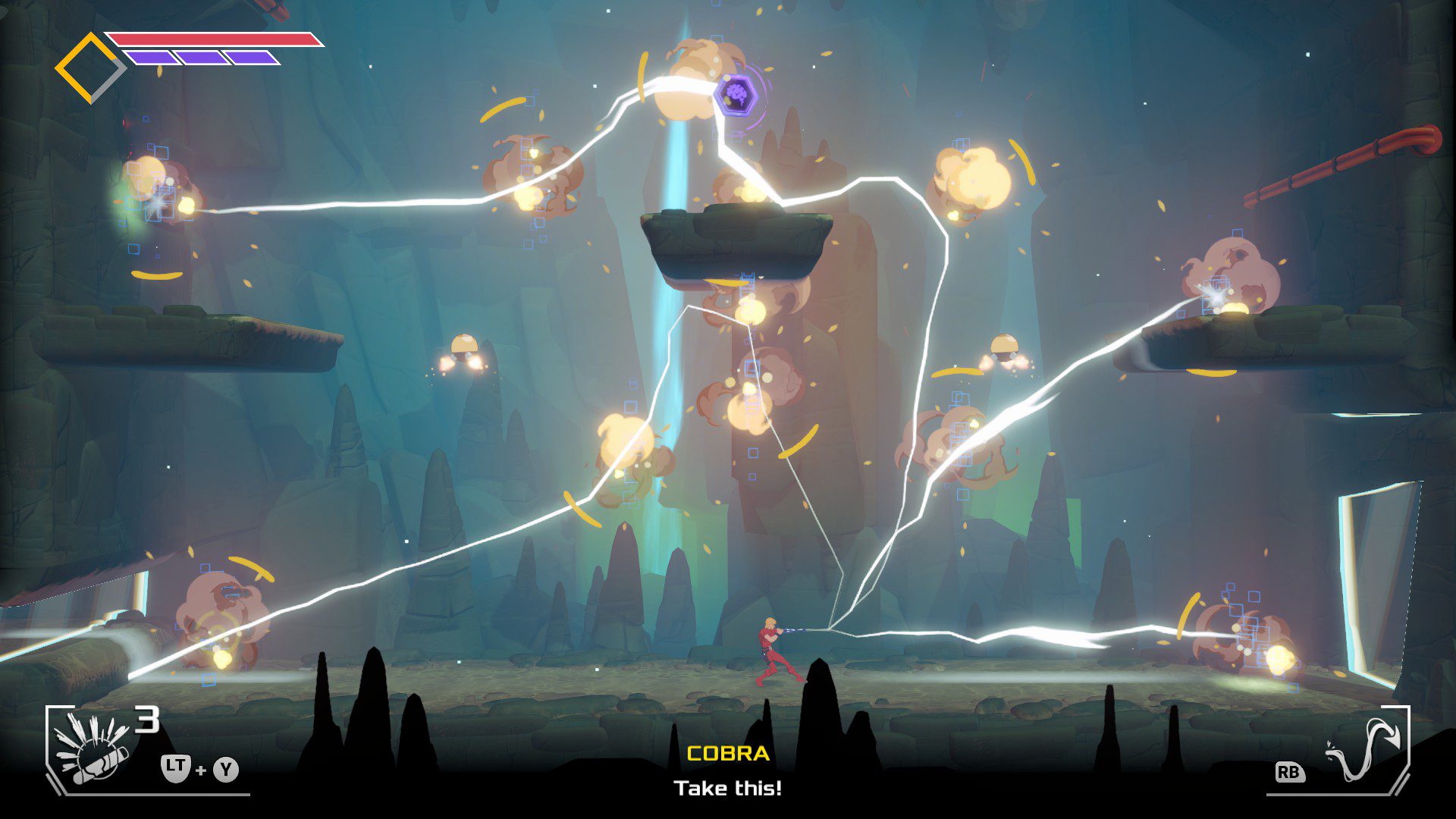
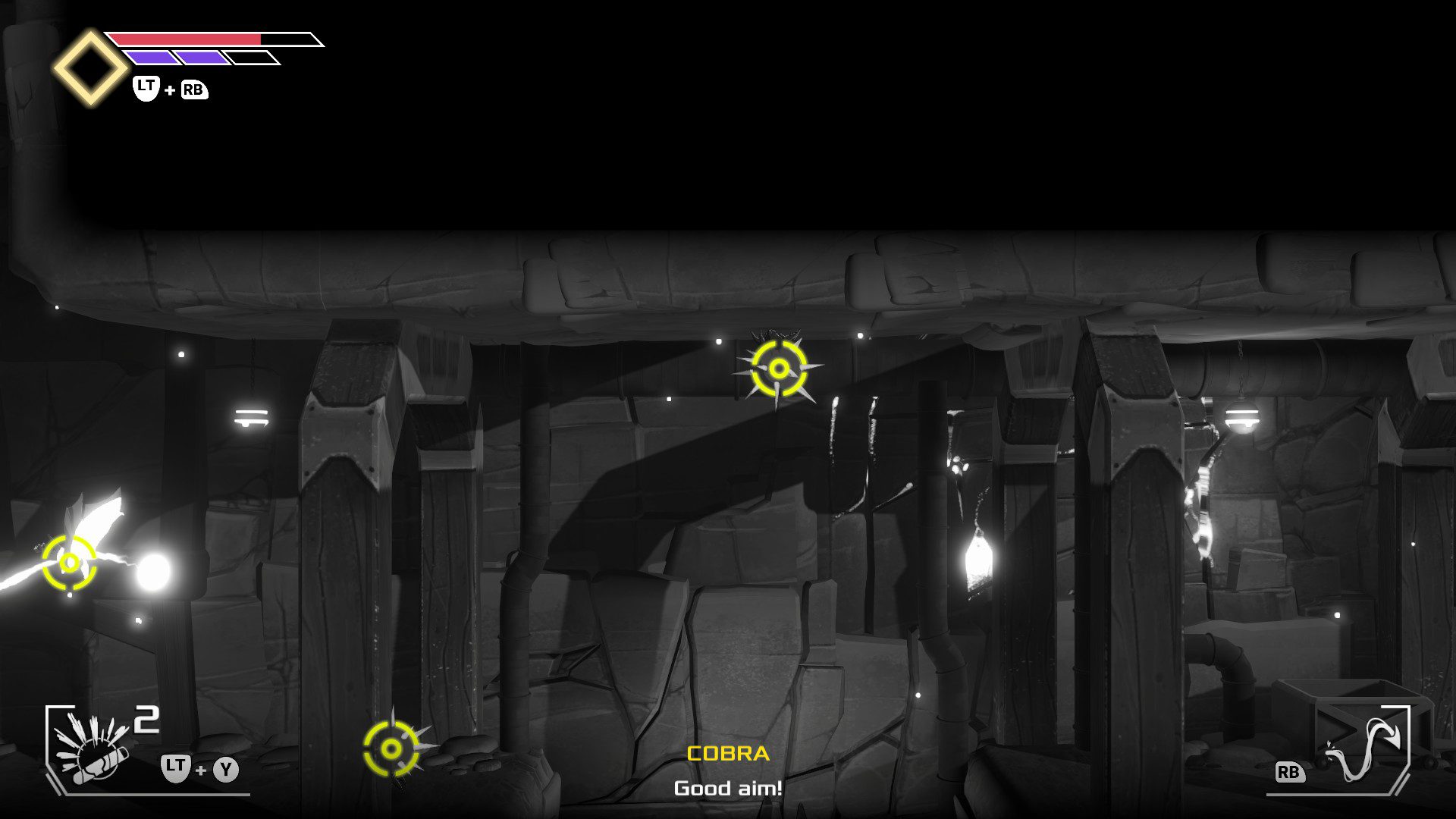
His guided shot, requiring a replenishing purple bar governed by the mind attribute, is the best part of the game, yet simultaneously also far from ideal. Using it stops time and lets you target multiple enemies on a controlled, forward path. It is used both for puzzles and as an incredibly strong attack tool that trivializes select encounters. Some shields may block it, requiring one of your other tools, but when dealing with standard grunts and small animals, it is doubtlessly the strongest tool in your arsenal.
Autoaim, however, sometimes ruins its usability to the point where I wish it were wholly removed. There is an option to do that in the menu; it is off by default on the hardest difficulty setting, but it does not seem to always work, and shots still curve to enemies—in the case of the guided shot, very forcefully so. Even if you pull into the opposite direction, the shot will sometimes take a mind of its own and swerve onto a harmless bat instead of the enemy shooting you with a shotgun.
I cannot complain about the enemy variety; the game does introduce new ones steadily, but some are far more annoying than others. A late-game special mummy can seemingly only be harmed with special shots, making you wait for a few seconds before they recharge. The minigun wielders are incredibly annoying, with a tracking ability that spreads out bullets into near-inescapable patterns, on top of being the tankiest enemy in the game with a replenishable shield.
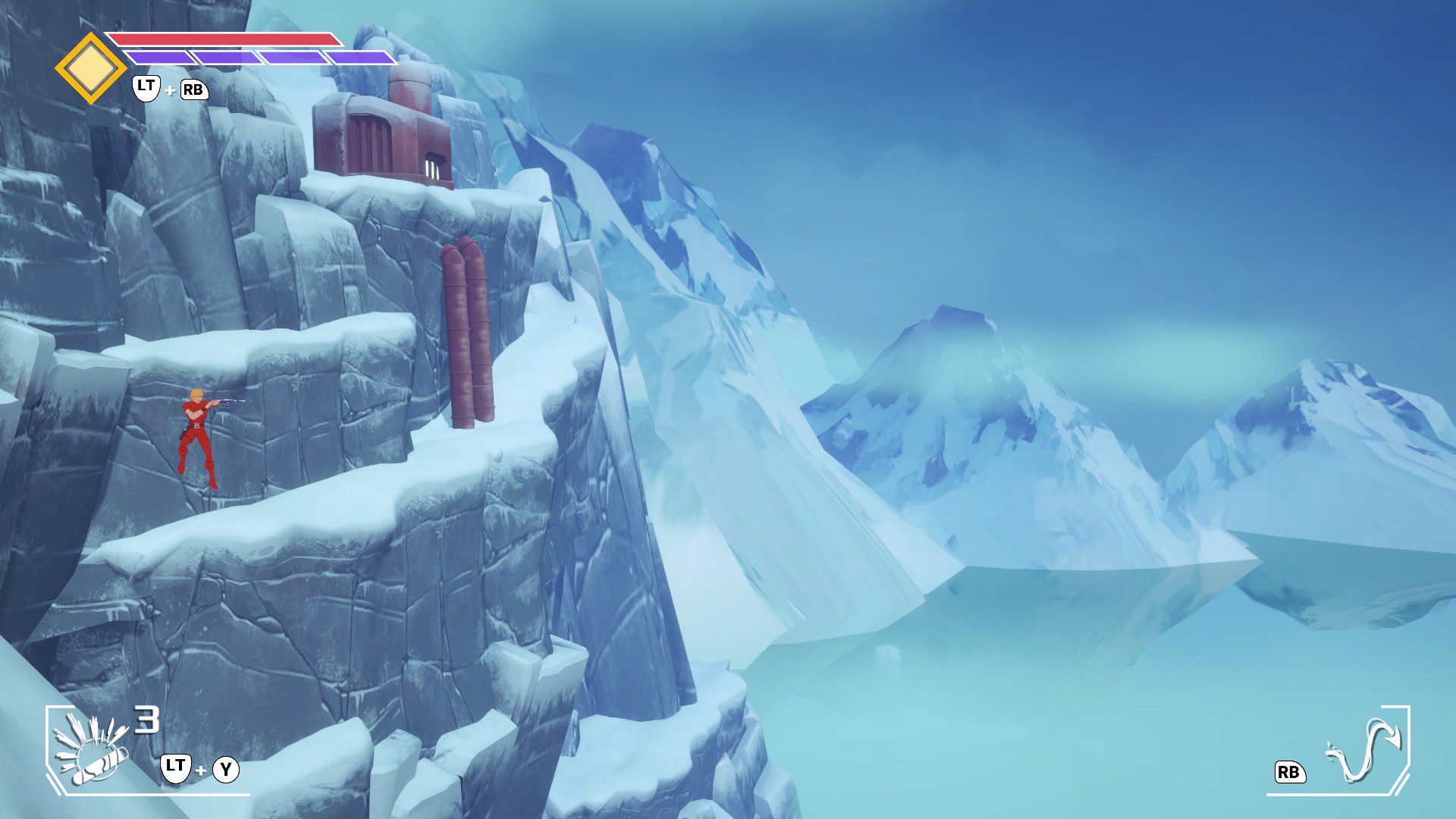
The more you play, the worse their animations become as well. The game starts with minimal movement required, mostly zoomed out and gun-based, but when we start introducing bigger animals and other, more agile enemies, it starts becoming more noticeable. It generally does not feel great to feel so distant from the characters, but it is still preferable as up close the models look lackluster. Lighting generated from level conditions or flashes of the Psycho-Gun also looks off. The art quality is very hit or miss; sometimes it can capture a scene from the show properly, other times it feels empty or basic.
Though all the soundtracks come from the anime, with some great groovy tunes and a few more mysterious tracks, it really does not jive with the length of the game. Tons of repeats, and the more low-down moments are still too loud for the calmer pieces. Some obstacles lack sound, while others, like the big lasers, are way louder than everything else, often muffling lines spoken by Cobra mid-level. Even some of Cobra’s own shots, though sounding pleasantly, nostalgically zappy, can be a bit much for the soundscape.
Close to a successful revival, The Awakening feels too groggy to really shake things up. It would need a proper restructuring or more freedom from the source material, as well as polishing the many rough edges. For now, Space Adventure Cobra is likely to fall back into slumber once more, awaiting another makeover.
Mateusz reviewed Space Adventure Cobra – The Awakening on PC with a provided review copy.