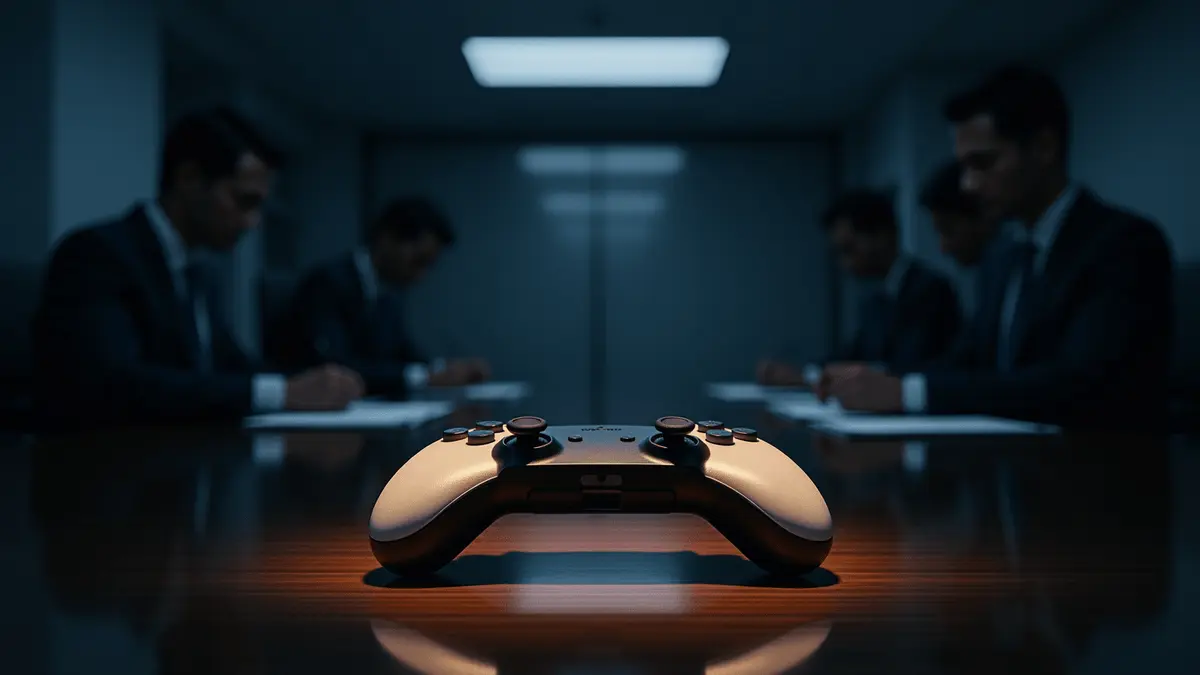
Microsoft allowed Ninja Theory to announce a new Senua game at Xbox Games Showcase 2026 after already deciding to divest from the studio, using the reveal as a deliberate tool to attract potential buyers, as reported by Game File journalist Stephen Totilo. The announcement – which landed as a genuine surprise to audiences and positioned Ninja Theory as a studio with a clear creative future – was, according to a source familiar with Microsoft‘s plans, engineered to make the studio a more appealing acquisition target, not to celebrate its ongoing place within Xbox.
Here’s the context: Microsoft acquired Ninja Theory in 2018, folding the studio behind Heavenly Sword and Hellblade: Senua’s Sacrifice into its first-party portfolio as a flagship of the prestige, auteur-driven game development it wanted to signal. Senua’s Saga: Hellblade II, released in 2024, reinforced that identity – technically extraordinary, critically respected, and commercially modest in the way that cinematic showcase titles almost always are. That tension between artistic ambition and subscription-era scale economics has been visible across Xbox‘s first-party slate for years, and it is the context that makes the current situation legible. Totilo reported that Microsoft had already planned to either sunset or split with Ninja Theory before the new Senua game was revealed, stating that “the thinking was that the promise of a newly announced game would help draw investor interest in the studio.” Ninja Theory is not alone: Bloomberg‘s Jason Schreier separately reported that Compulsion Games and Double Fine Productions are also in discussions about potential independence, with Microsoft reportedly open to buyout arrangements rather than outright closures. This broader shakeout fits with the picture painted by reporting on Microsoft’s internal discussions about restructuring or spinning off its Xbox division entirely.
Honestly, using a game announcement as a shop window for a studio sale is not standard practice – and calling it anything else would be corporate-speak for something genuinely cynical. The audience watching Xbox Games Showcase 2026 understood the Senua reveal as a signal that Ninja Theory had a future inside Microsoft‘s ecosystem; the actual signal being sent, according to Totilo‘s source, was directed at prospective buyers, not players. That distinction matters. The new Senua – confirmed for a 2027 release on Xbox Series X|S, PC, PS5, Steam, cloud, and Game Pass – is being framed by Ninja Theory as a genuine creative evolution, set in Purgatory after the events of both prior entries and designed with deeper gameplay after community feedback. None of that framing is necessarily false. But it was packaged and timed to serve a transaction, and audiences who cheered the reveal were not the intended recipients of the message. The comparison to studios whose game announcements were used to signal business momentum rather than creative stability is uncomfortable but accurate. It is also worth noting that Totilo flagged explicitly that it is unclear whether anyone at the top of Ninja Theory was involved in or aware of this strategy – which means the developers who made the announcement may have done so in good faith while the institutional context around them was already resolved.
What remains unclear is whether any credible buyer has emerged for Ninja Theory, Double Fine, or Compulsion Games, and whether Microsoft‘s preference for managed buyouts rather than closures will translate into actual deals or simply extend the uncertainty. It is also not confirmed whether the Senua project survives a change of ownership intact – a 2027 release window is achievable under the right conditions, but studio transitions mid-production carry real risk. The next signal to watch is any formal announcement of a sale or independence agreement for any of the three studios; absent that, the 2027 release date for Senua should be treated as contingent. Microsoft has not publicly commented on the divestment plans for any of the three studios.
Does knowing the Senua reveal was staged to attract buyers change how you feel about the game itself – or does the project’s creative merit stand regardless of the business circumstances around it? And should Ninja Theory, Double Fine, and Compulsion be pursuing full independence rather than waiting on Microsoft to find them a buyer? Sound off in the comments below, and keep your eyes on GameLuster for more Xbox and Ninja Theory coverage.