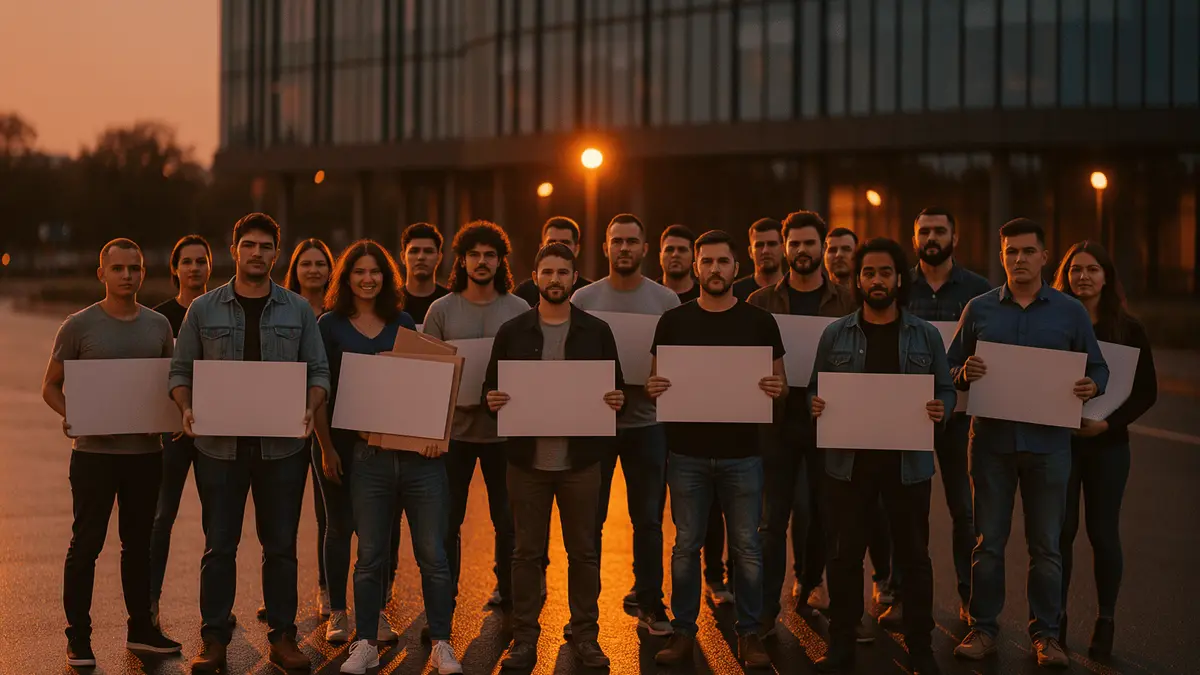
The Independent Workers’ Union of Great Britain (IWGB) has filed formal legal claims against Rockstar Games seeking union recognition and alleging trade union victimization, following the dismissal of 34 workers – 31 across UK studios in Edinburgh, Dundee, and Lincoln, plus 3 in Canada including Toronto – on October 30 and 31, 2025, all of whom were connected to a private Discord server used for union organizing, as reported by Bloomberg, The Guardian, and BBC.
Here’s the context: IWGB says its members at Rockstar have been actively organizing since 2019, with the union now representing a “significant proportion” of staff across Edinburgh, Dundee, Lincoln, Leeds, and London – making this a multi-year campaign, not a reactive flare-up. As we covered in our initial breakdown of the Rockstar union announcement, the organizing effort predates the current crisis by years and had already extracted meaningful concessions from the studio. The October 2025 firings came just days before Rockstar and parent company Take-Two Interactive confirmed that GTA VI had been delayed to November 19, 2026 – a timeline collision that sharpened the political stakes considerably.
The firings also landed in the same month that ZA/UM, developer of Disco Elysium, became the first UK game studio to formally grant union recognition – a precedent the IWGB has explicitly cited as the template it is pursuing at Rockstar. That precedent matters legally: UK statutory recognition under the Employment Relations Act 1999 requires a union to demonstrate majority support among an appropriate bargaining unit, and the IWGB‘s claim that it represents a significant proportion of workers across all major UK sites is the foundation of that route. A Glasgow employment tribunal has already heard an interim application; as we detailed in our coverage of the blacklisting claims trial, that tribunal denied interim pay relief, stating it could not assess the likelihood of success before a full hearing.
The full hearing is now scheduled for September 2026 – a date that sits uncomfortably close to GTA VI‘s November 19 launch window. The IWGB is seeking reinstatement of the dismissed workers, back pay, and formal union recognition across Rockstar‘s UK studios. On top of the recognition bid, the union has filed separate legal claims alleging blacklisting – that Rockstar actively worked to impede future employment prospects for workers identified as union members – which is a distinct and more serious allegation than the wrongful dismissal claim alone.
Rockstar‘s stated position is that the 34 workers were dismissed for “gross misconduct” – specifically, distributing confidential information and unreleased game features on a public Discord server – and the studio has denied any connection between the dismissals and union activity. IWGB president Alex Marshall called that framing “plain and simple union busting,” and at protests in Edinburgh and London, organizer Fred Carter described the dismissals as “the most blatant, ruthless act of union busting in the history of the games industry,” arguing workers were fired without warning and without justification. The union notes that the organizing effort had already produced results before the firings: Rockstar introduced “unprecedented average pay rises” and financial incentives for crunch for the first time ever as the union’s membership grew – which is either evidence that collective organizing works, or, depending on your read, a motive for management to shut it down before formal recognition locked those obligations in permanently.
Honestly, Rockstar‘s “gross misconduct” framing is doing a lot of work here – corporate-speak for: we have a legal rationale that sounds clean, so let’s use it. The timing, the targets, and the scale of the dismissals all point in one direction: a studio that identified who was organizing, found a pretext rooted in a Discord leak, and moved decisively to remove the problem before a recognition application could be filed. That pattern fits the broader AAA labor playbook we have seen across the industry – the same calculus that drove the action at Quantic Dream, as we noted in our coverage of the Star Wars Eclipse strike. What makes the Rockstar case different in scale is that GTA VI is the single most commercially anticipated release in the industry, which means every development affecting the studio carries outsized scrutiny. The fact that the IWGB‘s organizing had already forced pay rises and crunch compensation out of Rockstar without formal recognition makes the blacklisting allegation the one to watch – because if proven, it suggests this was not a reactive security decision but a coordinated effort to dismantle the bargaining unit before it could be legally protected.
What remains unclear is whether the Canadian workers – the 3 dismissed from Toronto – are pursuing parallel action under Ontario labor law, and whether the IWGB has formally submitted a statutory recognition application to the Central Arbitration Committee (CAC) or is pursuing recognition as relief through the tribunal route alone. It is also unconfirmed how many of the 34 dismissed workers have agreed to participate in the full hearing, and whether Take-Two as the parent company is named in any of the filings alongside Rockstar directly. What to watch: the September 2026 tribunal start date is the hard deadline – any settlement, CAC recognition application, or public statement from Take-Two ahead of that date will signal which way the legal wind is blowing before GTA VI ships. Take-Two‘s next earnings call is also worth monitoring for any language around the dispute, given that an adverse ruling landing within weeks of launch would be materially significant for the studio’s public positioning.
Do you think the timing and targeting of the October 2025 dismissals constitutes union busting, or does Rockstar‘s confidential-information rationale hold up as a legitimate separate ground for termination? And does a labor dispute of this scale – at the studio behind GTA VI, in the lead-up to the biggest launch in gaming – change how you think publishers will approach union organizing across the rest of the industry? Sound off in the comments below, and keep your eyes on GameLuster for more Rockstar and labour-in-games coverage.