
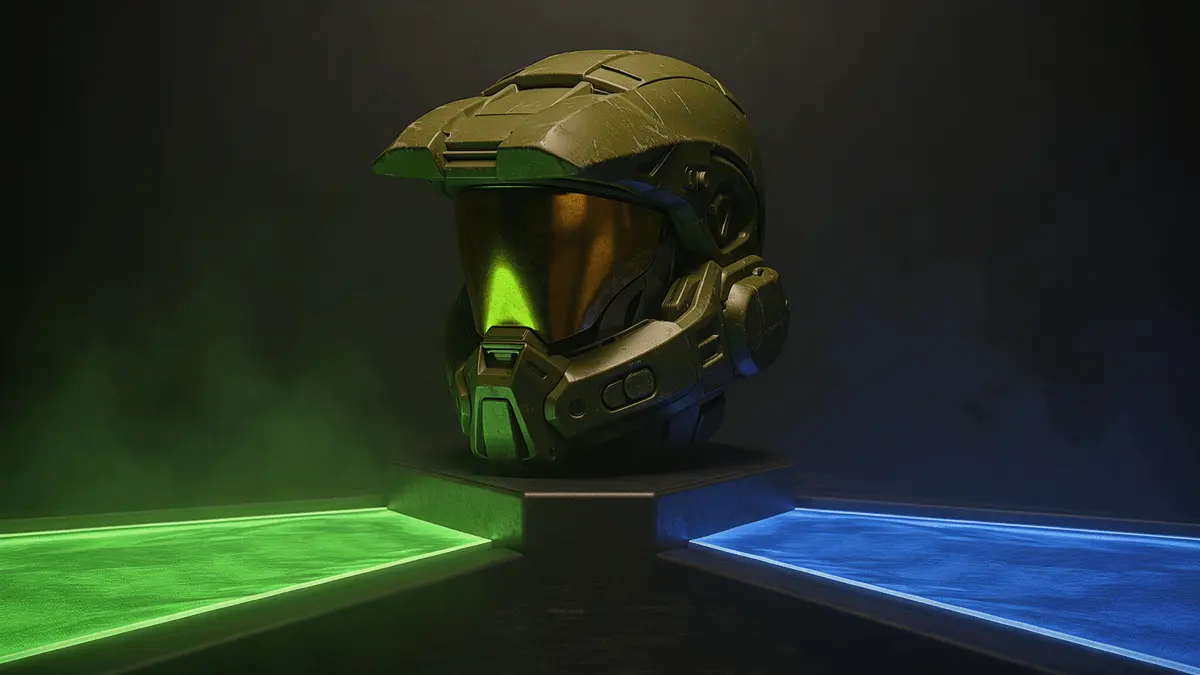
Xbox is conducting a significant internal evaluation of how the Halo franchise is managed – including whether the series continues on a multiplatform path or pivots back toward exclusivity – as reported by Push Square, citing Xbox insider Jez Corden, arriving weeks before Halo: Campaign Evolved makes the franchise’s first-ever appearance on a PlayStation system on July 28, 2026, and at a moment when Microsoft is simultaneously conducting mass layoffs across its studio network.
Here’s the context: Halo has been in structural flux since Halo Infinite launched in late 2021 to a reception that was warm enough to avoid immediate crisis but troubled enough to trigger years of feature cancellations, live-service course corrections, and a leadership overhaul at 343 Industries. In October 2024, Microsoft formally rebranded 343 Industries as Halo Studios, announced a full engine migration to Unreal Engine 5, and confirmed that multiple Halo titles are in active development – none of them imminent at the time of that announcement. Then in November 2025, Halo Studios confirmed that the “Operation: Infinite” update would be Halo Infinite‘s last major content drop, shifting the game into maintenance mode and effectively freeing the team’s resources for those next-generation projects. That sequence – rebrand, engine switch, live-service sunset – is the backdrop against which this evaluation is reportedly taking place, and as we covered in our breakdown of Microsoft’s ongoing Xbox studio restructuring, the broader cuts across Xbox‘s first-party network make any internal franchise review carry more weight than it might in a stable environment.
Corden characterises Xbox as being “very, very, very heavily evaluating how Halo is run” and states that “Halo is a key part of Xbox’s reset plan.” Critically, Corden also clarifies that Halo Studios itself is not believed to be in danger of closure – the suggestion is the inverse: that Microsoft may actually be directing additional resources toward Halo even as it cuts elsewhere. Corden is one of the most consistently reliable sources on Xbox internal matters, with a track record of accurate early reporting on platform strategy and studio decisions, which puts this rumour in a different category from community speculation. The recent leadership changes inside Xbox Game Studios, which we detailed in our coverage of the Duncan O’Connor exit from Xbox Game Studios, add further credibility to the idea that franchise-level strategic reviews are actively underway at the top of the organisation right now.
The most consequential variable embedded in Corden‘s report is whether this evaluation encompasses the multiplatform question specifically. Halo: Campaign Evolved – confirmed to launch on PS5 on July 28, 2026, as detailed in our coverage of the game’s confirmed PS5 release date – is the first Halo title ever to appear on a Sony platform. If it performs strongly there, the commercial logic for keeping Halo multiplatform becomes harder to argue against. If it underperforms, or if Xbox‘s internal reset plan re-centres console exclusivity as the primary differentiator for Xbox Series X, the calculus flips. Xbox Game Studios head Matt Booty has previously stated publicly that the team is actively discussing the “future of Halo” as a franchise – broad enough to mean almost anything, specific enough to confirm that the conversation is real and ongoing.
Honestly, “heavily evaluating how Halo is run” is corporate-speak for: the current arrangement isn’t working and someone senior enough to trigger a formal review has said so out loud. The question is what exactly isn’t working. The multiplatform pivot is new enough that it hasn’t had time to prove or disprove itself commercially – Campaign Evolved hasn’t launched yet. So the evaluation almost certainly isn’t primarily about platform strategy; it’s about the franchise’s internal creative and operational health after years of Halo Infinite‘s troubled live-service arc, the rebrand to Halo Studios, and the ongoing resource allocation questions that come with running multiple Unreal Engine 5 projects simultaneously during a company-wide cost reduction. The framing of Halo as “a key part of Xbox’s reset plan” is worth taking seriously rather than dismissing as PR boosterism – it implies Halo is being positioned as a load-bearing pillar for whatever Xbox‘s identity becomes post-restructuring, which is a significant bet to place on a franchise that hasn’t delivered a universally praised mainline entry since Halo 5: Guardians in 2015, and even that is a contested claim among the fanbase.
What remains unclear is the specific scope of the evaluation – whether it is a routine franchise health check elevated in urgency by the broader restructuring, or a genuine strategic inflection point that could result in leadership changes at Halo Studios, revised project scopes, or a formal reversal of the multiplatform commitment for future titles beyond Campaign Evolved. It is also unclear whether Phil Spencer‘s previously reported suggestion of a new Halo game potentially arriving as early as 2026 remains on the table, or whether that window has shifted given the evaluation currently underway. The headcount and resource allocation picture inside Halo Studios specifically – as opposed to the broader Xbox cuts – has not been confirmed either way.
What to watch: Halo Studios was confirmed to be hosting a deep dive into its in-development projects at Halo World Championship 2025, which will be the clearest public signal yet of how far along those Unreal Engine 5 projects actually are. The commercial performance of Halo: Campaign Evolved on PS5 from July 28 onward will functionally determine whether the multiplatform path stays open. And any further official communication from Matt Booty or Phil Spencer on franchise direction – particularly if it comes after Campaign Evolved‘s launch window – will tell you whether the evaluation produced a decision or more deliberate ambiguity.
Does the framing of Halo as central to Xbox‘s reset plan actually give the franchise the runway it needs to deliver something that justifies that positioning, or does it raise the stakes to a level that increases the likelihood of another overcorrection? And if Halo: Campaign Evolved performs well on PS5, does Microsoft have the discipline to follow the data rather than the brand mythology around Xbox exclusivity? Sound off in the comments below, and keep your eyes on GameLuster for more Halo and Xbox coverage.