
Diablo 4: Lord of Hatred launched on April 28, 2026, introducing two brand-new classes and a sweeping balance overhaul that reset the entire competitive landscape. Choosing the right build now matters more than ever, and the Lord of Hatred expansion has made that decision considerably harder. This guide covers the best diablo 4 lord of hatred builds for every class, explaining what each one does, why it works in Season 13 content, and which player types will get the most out of it.
Best Diablo 4 Lord of Hatred Builds Ranked
The entries below cover all playable classes in Season 13, ordered by overall power and endgame value. The current meta is less stable than usual because of the two new classes, Paladin and Warlock, and multiple hotfix patches that rolled out within the first week of launch. Each entry includes the build name, a playstyle summary, core strengths, and an ideal player fit. Use this list as a starting point, then adjust as further balance updates refine the picture.
#1: Barbarian, Whirlwind Dust Devil
The Whirlwind Dust Devil build converts every spin of Whirlwind into a constant stream of Dust Devils, stacking multiplicative bonuses through Dire Whirlwind, Edgemaster’s, and Earthquakes simultaneously. The result is a loop that rarely needs to stop, giving the build unmatched uptime compared to virtually every other option in Season 13. Layered scaling means each individual bonus amplifies the others rather than simply adding to a flat total, which is what separates this from simpler Barbarian alternatives.

In practice, the Whirlwind Dust Devil build handles both dense mob clear and single-target Pit content without significant gear swaps. Survivability comes naturally from the constant spin state, which keeps defensive procs active and limits the windows where the Barbarian stands still and takes full damage. This is one of the cleanest examples of the current diablo 4 lord of hatred builds philosophy, where offense and defense reinforce each other rather than compete for stat budget.
Best for: Players who want dominant endgame clearing with low mechanical overhead and strong survivability out of the box.
#2: Rogue, Dance of Knives
Dance of Knives takes what is normally a mobility skill and converts it into a full Core Skill through Grenade Jumper synergies and Freeze interactions. The result is explosive burst damage combined with full-screen crowd control, creating fast clear loops that reward players who enjoy aggressive, high-movement playstyles. This rogue build diablo 4 players have gravitated toward sits comfortably at the top of the Season 13 rankings alongside Barbarian.
The Freeze component is particularly important for the build’s identity. Locking down elite packs before they can respond keeps the Rogue safe without relying on traditional defensive stats, and it allows for extremely fast progression through density-heavy Pit content. The build scales well into high tiers because crowd control becomes more valuable, not less, as enemy health pools grow. Rogue, Sorcerer, and Barbarian were confirmed as the top three classes overall, and Dance of Knives is a core reason Rogue earns that placement.
Best for: Aggressive players who enjoy fast clear speeds, full-screen impact, and a high-movement playstyle.
#3: Warlock, Dread Claws
The Warlock is one of the two classes introduced in Season 13, and Dread Claws immediately establishes itself as one of the strongest d4 builds in the entire game. The build uses double-cast mechanics through the Summon Laalish demon, which effectively doubles output on every activation while benefiting from massive damage amplification on top of that baseline efficiency.

Warlock as a class was designed to feel powerful at launch to encourage exploration of new content, and Dread Claws delivers on that intent without relying on exploits. The resource flow is smooth, Shadowform generation integrates naturally into the rotation, and the scaling synergies between the demon companion and the player’s own abilities create a feedback loop that remains satisfying well into endgame. Blizzard addressed a number of launch-day interactions via hotfix, but Dread Claws remained intact through those patches.
Best for: Players wanting to experience the new Warlock class at peak performance with strong scaling and minimal resource friction.
#4: Paladin, Wing Strike Arbiter
The other new Season 13 class, the Paladin, has multiple strong builds, and Wing Strike Arbiter is the most mechanically distinct. It removes resource constraints entirely by generating Faith through its core loop, allowing Blessed Hammer to orbit passively in the background while Arbiter form stays permanently active through cooldown resets triggered by Vulnerable kills.
Permanent Arbiter uptime is the defining feature here. Most builds with a powerful transformation form are limited by cooldown timers, but this one sidesteps that restriction through smart kill-trigger engineering. The build rewards players who understand how to set up Vulnerable consistently, which means it has a slightly higher skill floor than Whirlwind Dust Devil but offers exceptional returns for players willing to master the setup.
Best for: Players who enjoy permanent-form mechanics and want a technically rewarding endgame build with high uptime potential.
#5: Paladin, Hammerdin
Hammerdin is a hybrid build that leans on constant uptime, strong mobility, and multiplicative scaling, using Light’s Epiphany as its key foundational set. It combines the best attributes of a traditional Blessed Hammer build with the mobility tools the Paladin’s kit provides, making it one of the more versatile options available to the class in Season 13.
Where Wing Strike Arbiter is mechanically demanding, Hammerdin sits in a comfortable middle ground. The build handles both leveling transitions and endgame Pit content without requiring specific stat thresholds that only drop at very high gear levels. Light’s Epiphany provides the scaling backbone, so players who invest early in the set see consistent returns rather than a dramatic power spike that only activates late in progression.
Best for: Paladin players who want a well-rounded build that handles both progression and endgame without significant gear barriers.
#6: Necromancer, Pure Golem Summoner
The Pure Golem Summoner is a competitive S-tier setup that represents one of the cleanest diablo 4 necromancer builds in Season 13. Unlike minion-heavy builds that spread investment across multiple summon types, this version concentrates everything into Golem scaling, producing a single overwhelmingly powerful companion that handles most of the heavy lifting in endgame content.

Survivability is a standout strength. The Golem absorbs aggression while the Necromancer operates from a distance, keeping the risk-to-reward ratio favorable across a wide range of content types. The build does not demand constant player input, which makes it accessible to players who prefer a more deliberate pace without sacrificing competitive performance.
Best for: Players who prefer a durable, lower-intensity playstyle with strong endgame output and minimal mechanical complexity.
#7: Necromancer, Minion Summoner
Where Pure Golem concentrates power, the Minion Summoner spreads it across an entire army. The build’s core strength is a stat double-dip mechanic: every point invested in relevant stats boosts both the Necromancer player and the full summoned army simultaneously, producing exponential scaling that accelerates dramatically as gear improves.
This necromancer build diablo 4 veterans will recognize as a classic archetype, but the Season 13 version benefits from improved convert scaling and better survivability tools introduced alongside the expansion. The endgame loop is described as effortless once the army reaches sufficient power, with damage uptime staying near-constant because the minions continue attacking independently of the player’s direct input.
Best for: Summoner fans who want maximum army scaling and a forgiving playstyle that improves dramatically with gear investment.
#8: Sorcerer, Static Field Blizzard
The best sorcerer build diablo 4 players are running right now is Static Field Blizzard, though it carries an asterisk. An April 29 hotfix addressed a scaling issue where Blizzard was interacting with skill points “far more than intended,” and the correction adjusted the build’s output ceiling. Despite the nerf, the build remains A-tier and is still the leading Sorcerer option in Season 13.
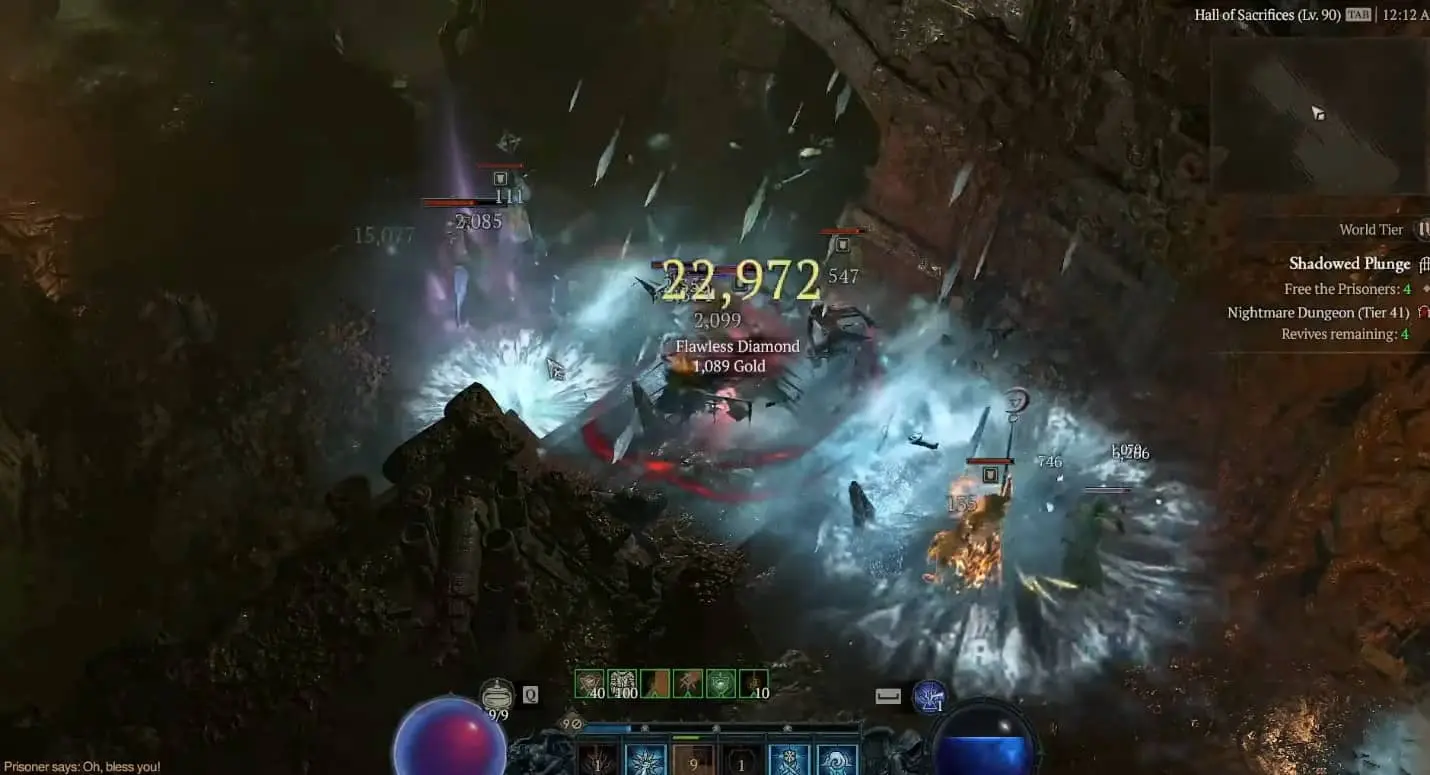
The build’s strength is its consistent area denial. Blizzard’s wide coverage pairs naturally with Static Field’s electrical interactions to create prolonged damage zones that are particularly effective in dense mob scenarios and structured Pit layouts. Sorcerer is confirmed as one of the top three classes overall, and Static Field Blizzard carries a significant portion of that classification.
Best for: Area-control players who want consistent large-scale damage output and are comfortable managing the post-patch version of the build.
#9: Druid, Lightning Storm
Lightning Storm is the strongest of the available druid builds diablo 4 has in Season 13, sitting in high A-tier. It is a high-tier elemental casting option that delivers strong damage through sustained storm coverage, rewarding players who position carefully to maximize overlap between lightning strikes and clustered enemy groups.
The April 29 hotfix also addressed certain Druid Lightning Storm interactions, indicating the build was performing above baseline expectations at launch. Even after adjustment, it remains the go-to option for Druid players who want a competitive endgame path. The build transitions reasonably well from leveling into endgame content, which makes it one of the more accessible high-performance options covered in this guide.
Best for: Druid players who want a reliable elemental casting build with solid endgame performance and a smooth leveling-to-endgame transition.
Key takeaway: Season 13 offers genuine build diversity across all classes, with Paladin and Warlock arriving with exceptional launch-state power and established classes like Barbarian, Rogue, and Necromancer holding firmly in the top tier.
Diablo 4 Lord of Hatred Builds at a Glance
The table below summarizes every build covered in this guide for quick comparison. Use it to identify the right starting point based on your preferred class and play style before diving into full build details.
| Class | Build | Best Use Case | Difficulty | Standout Strength |
|---|---|---|---|---|
| Barbarian | Whirlwind Dust Devil | All-around endgame | Low | Multiplicative scaling, near-constant uptime |
| Rogue | Dance of Knives | Speed farming, Pit clear | Medium | Full-screen CC, explosive burst damage |
| Warlock | Dread Claws | Endgame scaling | Medium | Double-cast output, demon synergy |
| Paladin | Wing Strike Arbiter | High-end Pit pushing | High | Permanent Arbiter uptime via kill resets |
| Paladin | Hammerdin | Versatile progression | Medium | Mobility, Light’s Epiphany scaling |
| Necromancer | Pure Golem Summoner | Durable endgame | Low | Concentrated Golem power, passive survivability |
| Necromancer | Minion Summoner | Gear scaling, bossing | Low | Stat double-dip, exponential army scaling |
| Sorcerer | Static Field Blizzard | Area denial, mob clear | Medium | Large-scale sustained damage zones |
| Druid | Lightning Storm | Elemental endgame | Medium | Storm coverage, accessible leveling transition |
How We Picked the Best Diablo 4 Lord of Hatred Builds
The current Season 13 meta is explicitly less stable than a typical seasonal update. The tier list framework used here is hybrid, accounting for both progression performance and endgame efficiency, covering builds that either transition smoothly from leveling or excel strongly enough in high-tier content to justify slower early starts. The following criteria shaped every selection in this guide.
- Endgame performance: Each build must perform competitively in high-tier Pit content and sustained endgame loops, not only in early leveling.
- Patch relevance: Builds were evaluated against post-hotfix states. Entries note where the April 29 and May 1-2 patches adjusted performance meaningfully.
- Consistency: A build that performs well on average clears matters more than one that spikes on optimal pulls but fails in awkward layouts.
- Gear dependence: Builds requiring rare or heavily RNG-dependent unique items were rated lower unless their power floor without that gear remains competitive.
- Ease of execution: Mechanical complexity is noted for each entry, and beginner accessibility influenced placement when two builds were otherwise comparable.
- Survivability: Builds that generate their own defenses through the gameplay loop scored higher than those requiring dedicated defensive stat stacking.
- Mobility: Speed farming viability and movement capability factor into overall rankings, particularly for content where fast map traversal matters.
Which Diablo 4 Lord of Hatred Build Is Best for You?
Tier rankings answer the question of what is strongest. This section answers the more personal question of what is right for your situation. Use the labels below to find a starting point based on how you actually play.
- Best for beginners: Necromancer Pure Golem Summoner. Low mechanical complexity, strong passive survivability, and consistent output without requiring tight rotations make this the most forgiving path into endgame.
- Best for solo players: Barbarian Whirlwind Dust Devil. Self-sufficient, naturally tanky through constant spin state, and capable of handling all solo content without group support or coordination requirements.
- Best for pushing endgame Pit: Paladin Wing Strike Arbiter. Permanent Arbiter uptime provides the sustained high-end output needed for deep Pit progression, rewarding players who invest in mastering the Vulnerable setup.
- Best for boss damage: Warlock Dread Claws. Double-cast mechanics and massive damage amplification make single-target output a defining feature of this build, particularly effective against bosses with long exposure windows.
- Best for speed farming: Rogue Dance of Knives. Full-screen crowd control and fast clear loops mean this build covers ground faster than nearly anything else in Season 13.
- Best for low-gear starts: Paladin Hammerdin. Light’s Epiphany provides a reliable scaling foundation early, and the build does not require specific high-rarity drops to function well during the progression phase.
- Best for trying something new: Warlock Dread Claws or any Paladin build. Both classes are entirely new to Season 13 and were designed to feel rewarding at launch, making them ideal for players who want a fresh experience.
Frequently Asked Questions
What is the strongest overall build in Diablo 4 Season 13?
The Barbarian Whirlwind Dust Devil build holds the top position in the current Season 13 meta, combining unmatched uptime with multiplicative scaling through Dire Whirlwind, Edgemaster’s, and Earthquakes. Warlock Dread Claws and Rogue Dance of Knives are close competitors, and all three sit in the top tier of the current diablo 4 build tier list. The meta is still evolving following multiple hotfixes, so rankings may shift as players discover new optimization paths.
Which class is best for beginners in Lord of Hatred?
Necromancer is the most beginner-friendly class in Season 13, particularly through the Pure Golem Summoner build. It requires minimal active management, the Golem handles most direct combat engagement, and the build scales naturally with gear improvements without demanding tight mechanical execution. Both Necromancer options covered in this guide, Pure Golem and Minion Summoner, offer forgiving playstyles that still produce competitive endgame results.
Are the new Paladin and Warlock classes viable?
Both classes are fully viable and rank among the strongest options available in Season 13. Paladin has at least three confirmed S-tier builds, including Wing Strike Arbiter, Hammerdin, and Holy Light Auradin. Warlock has multiple top-tier paths as well, with Dread Claws, Summoner, and Hell Fracture all placing at S-tier. Both classes were designed to feel powerful at launch to encourage exploration of the new Lord of Hatred content.
How often do Diablo 4 builds change in Season 13?
More frequently than usual in the early weeks of this expansion. Two hotfix patches launched within 48 hours of the April 28 release date, with additional patches following on May 1 and 2, 2026. The April 29 hotfix specifically adjusted Sorcerer Blizzard scaling, Druid Lightning Storm interactions, and Rogue Poison Imbuement. Because the meta is described as far less stable than a typical seasonal update, players should expect continued adjustments as the season progresses and more builds are stress-tested at high tiers.
Do the top builds require unique or hard-to-find gear?
Several top builds have key foundational items, most notably the Paladin’s Light’s Epiphany set for both Hammerdin and Holy Light Auradin. The Necromancer Minion Summoner and Barbarian Whirlwind Dust Devil builds also benefit substantially from specific gear pieces that amplify their core loops. The Talisman system introduced in Season 13 is noted as a critical component of build optimization, so players should factor it into their gear progression planning. Builds like Hammerdin and Pure Golem Summoner function reasonably well before acquiring full best-in-slot gear.
What are the top three classes in Season 13?
Rogue, Sorcerer, and Barbarian are confirmed as the top three classes for Season 13. That ranking reflects both endgame performance and overall class viability across multiple build paths, not just a single standout option. However, Paladin and Warlock are both new and performing at a very high level at launch, and the meta is still developing. Players choosing between classes should consider that the established top-three classification may shift as balance patches continue rolling out through the season.
The Bottom Line on Diablo 4 Lord of Hatred Builds
Season 13 is one of the most varied and dynamic metas Diablo 4 has seen, driven by two powerful new classes and a round of early balance adjustments that are still settling. If you want the safest top-tier pick right now, Barbarian Whirlwind Dust Devil is the most consistently dominant option. If you want to experience something genuinely new, the Warlock Dread Claws build delivers exceptional results while showcasing what the expansion adds. Every class covered here has at least one competitive endgame path, so no choice locks you out of high-end content. Check back after future balance patches, as the best diablo 4 lord of hatred builds will continue evolving as the season matures.