
Marisa of Liartop Mountain is a fantasy tabletop RPG developed and published by Alliance Arts. You guide a fictional character in their search for a lost friend, bound by the rules of a tabletop RPG. Four characters outside the story act as players, able to influence the story by offering suggestions. Guide your character through various worlds as you roll dice and deal with uncertain outcomes.
This game is based off of the Touhou Project fighting series, but isn’t tied to the main storyline. The story begins when Patchouli recommends a game for her friends Remilia, Sakuya, and Flan. It involves their friend, Reimu, going on a tabletop adventure to find another friend, Marisa. The four girls influence the story and see how Reimu pursues variations of Marisa across different chapters.
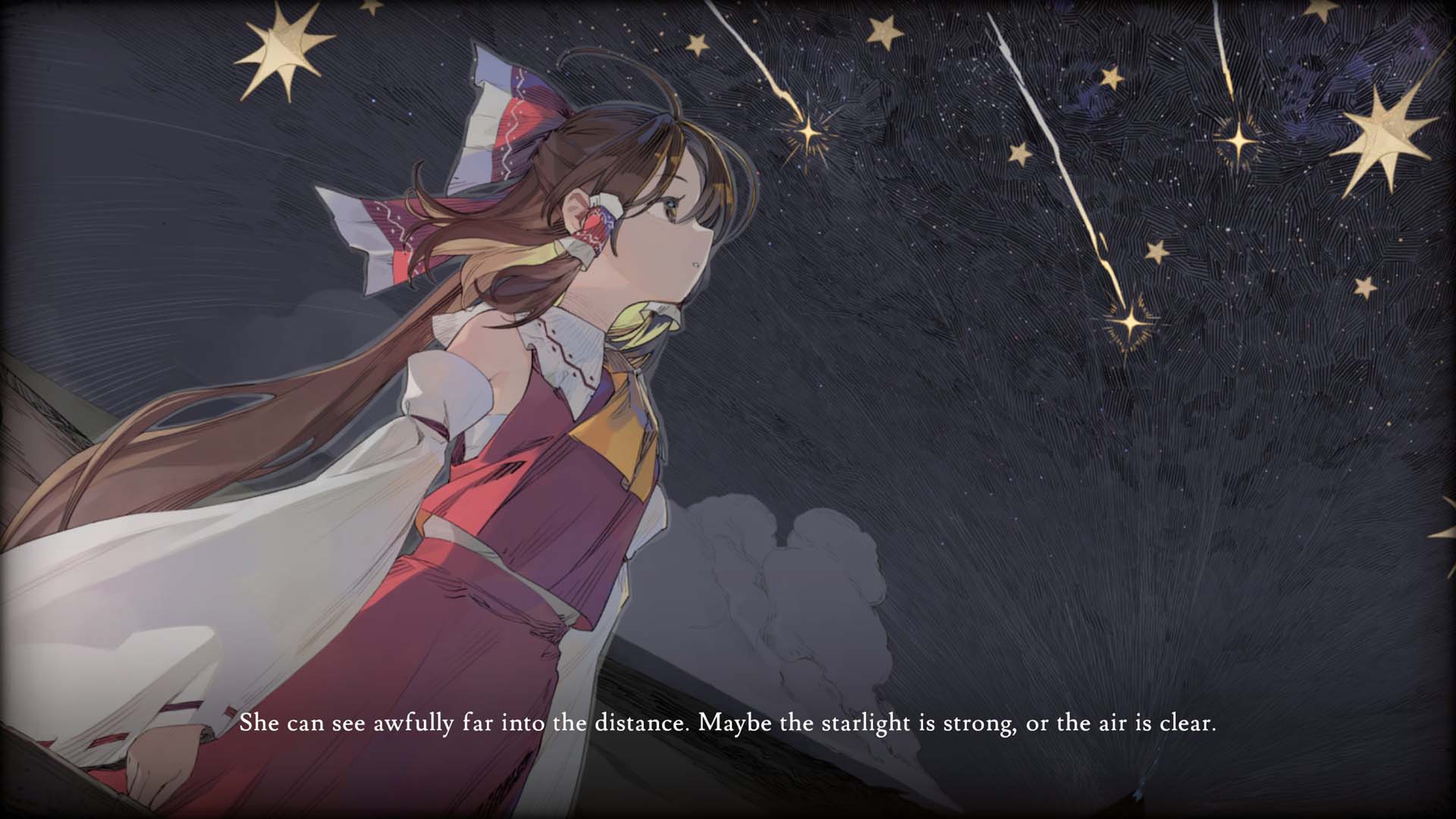
You do not need to be a fan of the Touhou Project to understand the story. However, you may feel left out of character discussions if you aren’t familiar with the series. Each of the girls comments on the fictional versions of Reimu and Marisa, pointing out obvious differences. It’s minor because the story adventure doesn’t reflect the real versions at all, nor does it impact the Touhou Project world. But unfortunately, playing without some familiarity makes it hard to ignore the feeling of being locked out of the loop.
You explore the world similar to a visual novel, though you view maps in a 3D third-person perspective. Characters appear as 2D cut-outs except for Reimu who appears as a 3D figure. Based on the textbox on the right side of your screen, you can move around maps and perform actions. It’s similar to text-based adventure games though the 3D maps help you track your location. If you must fight or make a decision, you often use dice rolls to decide the outcome.
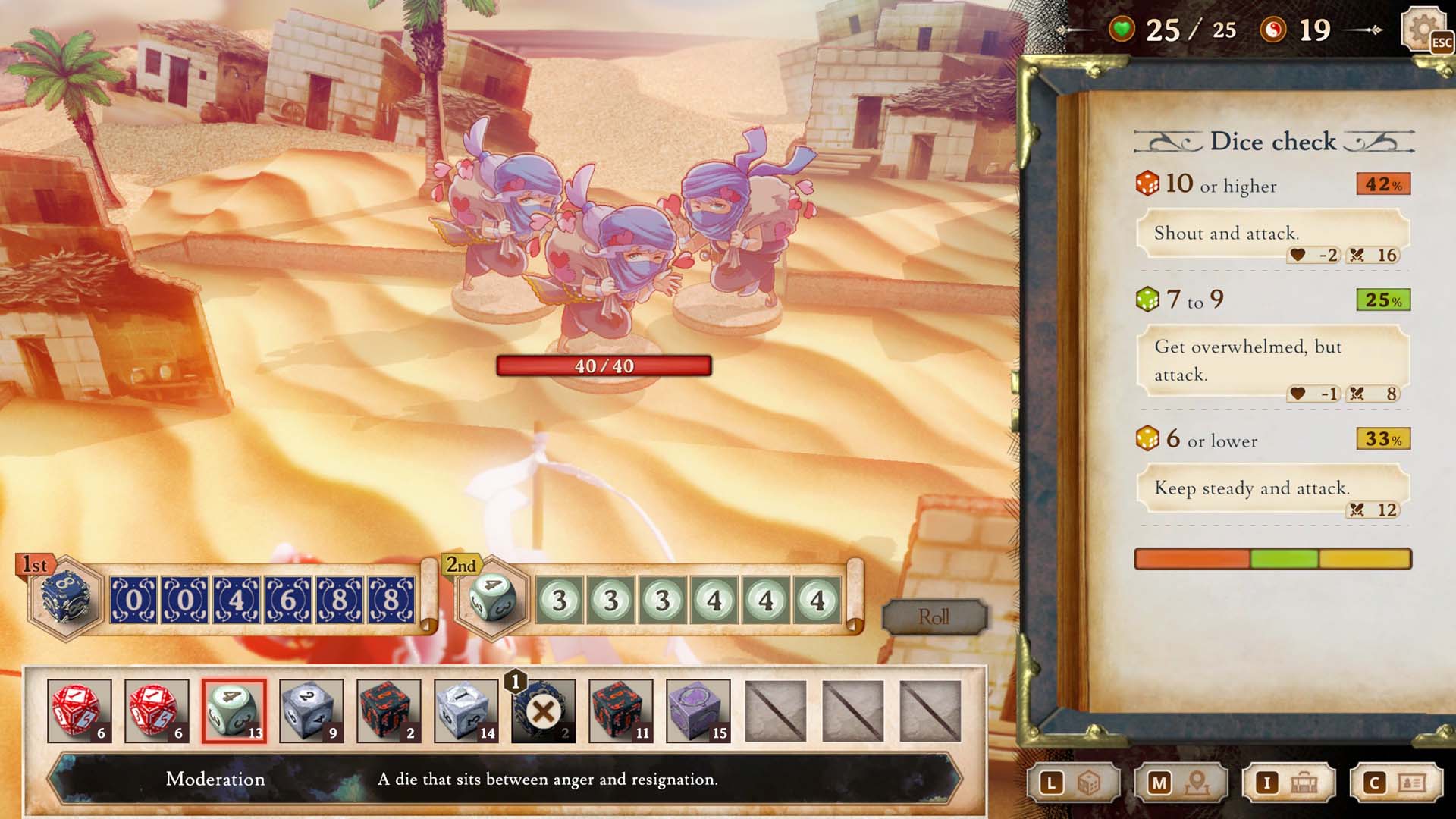
A unique part of Marisa of Liartop Mountain is that the four “players” (Patchouli, Remilia, Sakuya, Flan) can influence the game’s outcomes. Certain decisions allow each of the girls to suggest an action, giving you a reward if you select it. For example, choosing Patchouli’s choice may give you a special dice while Flan’s lets you hold one extra dice. Remilia’s option may heal you while Sakuya’s boosts your rerolls. These decisions empower you to tackle situations and strengthen Reimu like an actual tabletop game. You choose benefits relevant to your strategy, whether you think a short or long term investment will pay off. Sometimes your strategy works because your dice rolls are good and sometimes they aren’t. Rerolling dice consumes a different currency that you can rarely replenish. This makes you consider the tradeoff of leveling up against accessing rerolls.
Adding an extra layer of strategy is the fact that you don’t know if a decision is beneficial or not. It may seem great to fight everyone you meet but it may work against you later on. Some decisions might also look risky on the surface but are safer than they look. It makes you think carefully and encourages you to pick options that feel right to you. There won’t be an “optimal path” per se, only multiple paths to the same destination. Like a regular tabletop RPG, not every decision reveals its consequences up front and the game captures this perfectly.
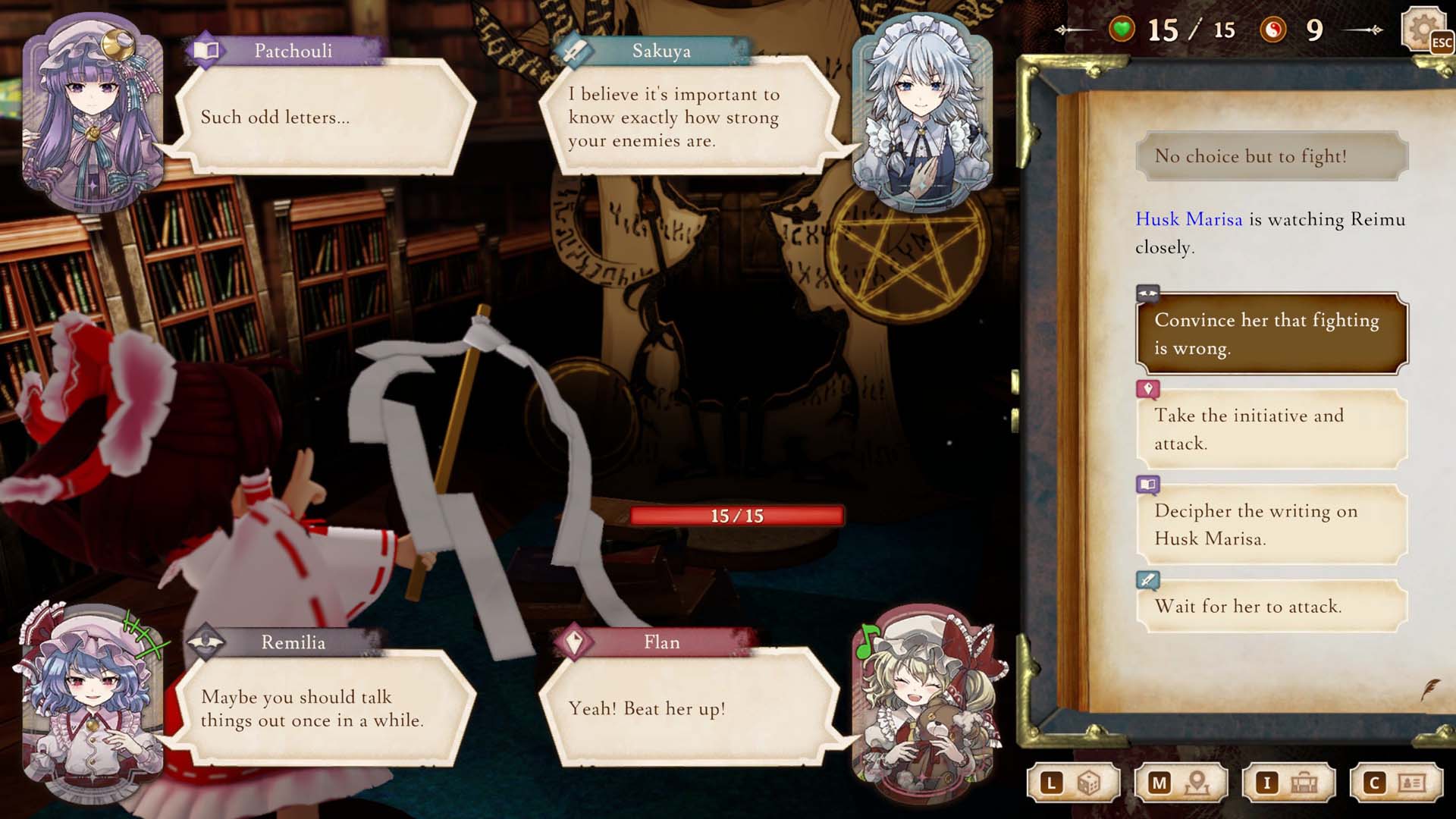
Despite the story staying largely the same, your progression is similar to a roguelike. Even if you know what to do or how to win a fight, dice rolls dictate your successes. Based on the dice you gain on your travels, you can shift the odds in your favor. Unless your dice are a perfect match for the situation, it’s still possible to fail. Retaining the unpredictability of a tabletop adventure makes every dice roll a nerve wracking encounter, providing great immersion.
Your ability to view the map also makes it hard to get lost. While the cardinal directions aren’t always intuitive, you can easily see locations you haven’t explored. Before committing to a direction, you see Reimu hover over your next destination. It’s as if you are telling your tabletop RPG master that you are committing to this location and accepting what you find. You also don’t feel like you traveled in a circle multiple times.
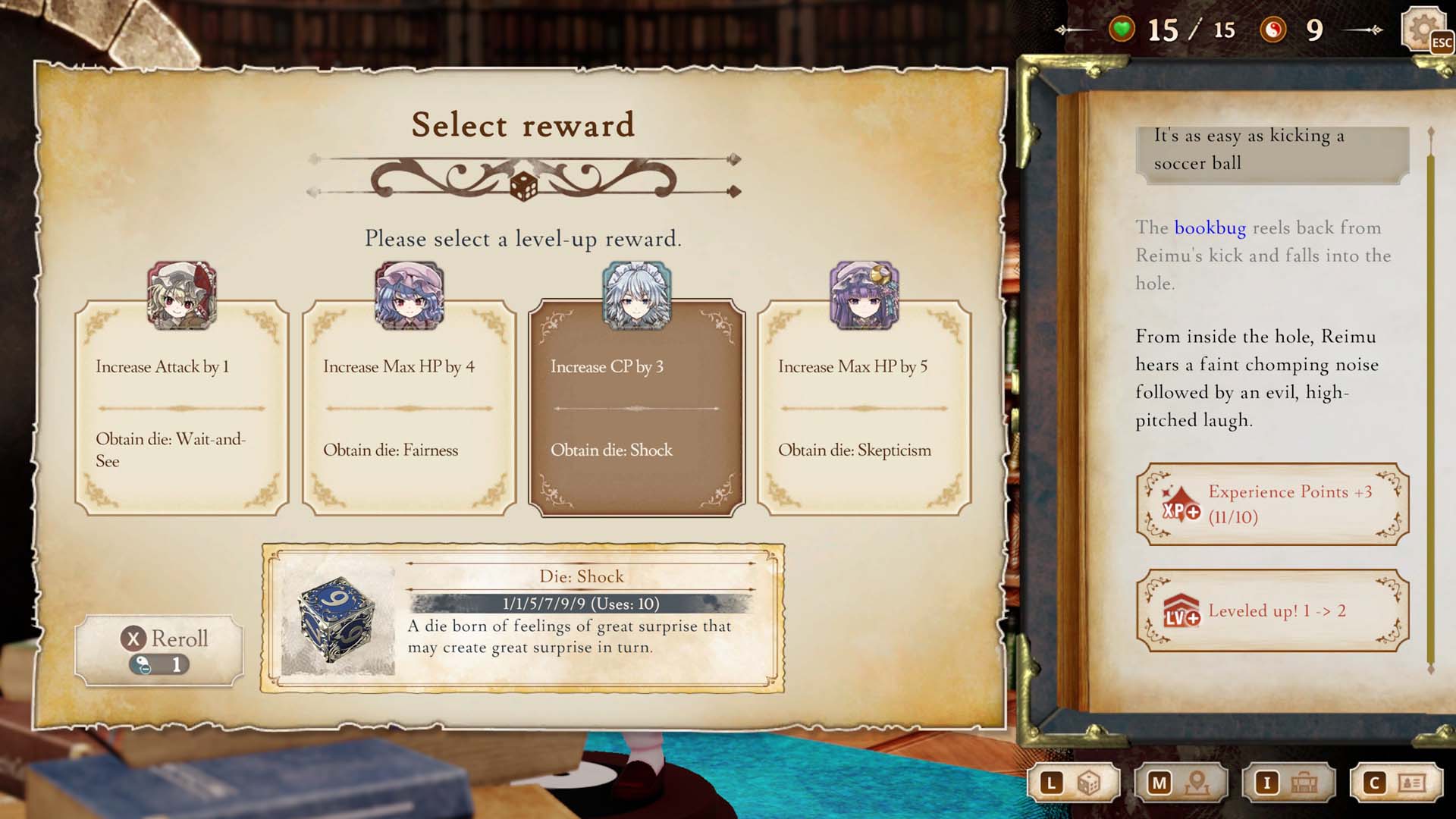
However, you still progress like an old adventure game. You must read through text and then select a direction. This process is slow and becomes repetitive after a while, not helped by mandatory backtracking. Even if you can see where you are going and know the destination, the text loses its appeal and becomes annoying. You already know what’s in the room after a while but you can’t fast-forward and must read everything.
Marisa of Liartop Mountain gives you a simple tabletop adventure that provides excitement even if you know what’s coming. The unpredictability of the dice and the maps make you feel like you are playing in a tabletop RPG. However, you can’t fully appreciate the story without some knowledge of Touhou Project and progression feels like an old adventure game. If you want a different spin on a tabletop RPG or you are a Touhou Project fan, don’t miss out on this game.
Victor reviewed Marisa of Liartop Mountain on PC with a provided review copy.