
If there’s one detective in literature at least as recognizable as Sherlock Holmes or Sam Spade, it would have to be Hercule Poirot. Appearing in thirty-three novels, fifty-one short stories, and two stage plays all written by Christie herself, not to mention the various film and television adaptations, it’s hard not to know who the character is. He is a creation of a certain time and place, and as such, there are unspoken yet firmly established rules for the character. Transporting him to a later era (much as has happened with Sherlock Holmes) is a scenario fraught with peril, a distinct likelihood that something will get lost or (more likely) extraneously added in an effort to “improve” the character. And French studio Microids has tossed themselves over the side of the boat, flying headlong into that exact scenario.
If you’ve read the novel, or more likely seen the recent film with Kenneth Branagh, then the basic plot of Agatha Christie – Death on the Nile will not be much of a surprise. Hercule Poirot is vacationing in the city of Aswan, planning to visit the temple ruins of Abu Simbel, when he is unexpectedly caught up in the bizarre love triangle of Linnet Ridgeway, her new husband Simon Doyle, and his ex-fiance Jacqueline de Bellefort. Cruising down the Nile in a luxury paddle-wheel steamship, Poirot must solve a number of mysteries and attempt to deduce who’s behind the pile of bodies that grows with alarming speed aboard ship the further it goes down the river. And then, there’s the B-plot.

Microids has undoubtedly gone to a good deal of trouble to soak their version of Death On The Nile in the swinging 70’s. Polyester suits, bell-bottoms, disco, the flowing lines and often curved geometric appliances and home furnishings, it’s like looking at old pictures of your parents’ and grandparents’ houses (if you’re older than about 40). Yet for all the period accurate details, there remains a striking amount of blocky meshes and flat textures on virtually any non-character related model. Granted, some are supposed to look blocky, such as the statuary bases at Abu Simbel. But even the statues themselves looked excessively low on the polygon count, which isn’t as encouraging. Various animations for puzzle elements and character movements are smooth, which is something, but certain sequences are very obviously canned loops which don’t seem quite as well executed. About the only consistently even thing is the UI, simple, contextual, and somehow uninspired despite its general clarity. The overall visual quality just feels highly inconsistent. You’ll find the polished and the coarse in equal measure here.
The same mixture of rough and polished is equally apparent in the audio elements of Death On The Nile. It’s just the proportions are weighted more towards the rough. Sound effects are okay, but not terribly impressive. The musical score covers a variety of genres, but doesn’t quite seem to capture the spirit of the period. By far, the greatest failings come from the voice actors. Their enunciation is clear enough, the quality of the recordings is good, but the actual performances start at middling and rapidly plunge downward from there. Far too many of the performances sound like they’re coming from the same person, and all too often they grate upon the ear due to bad writing and poor direction.
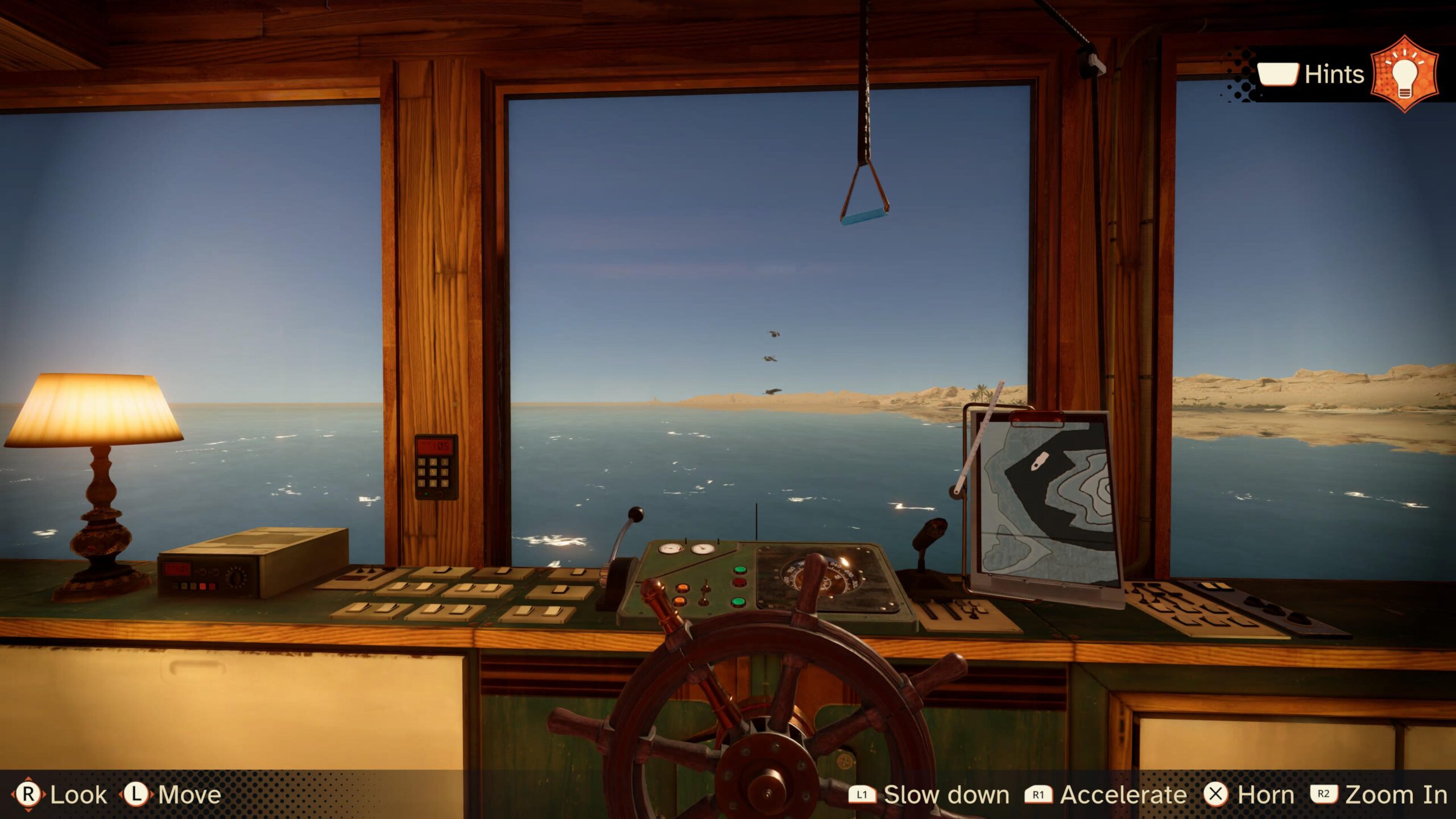
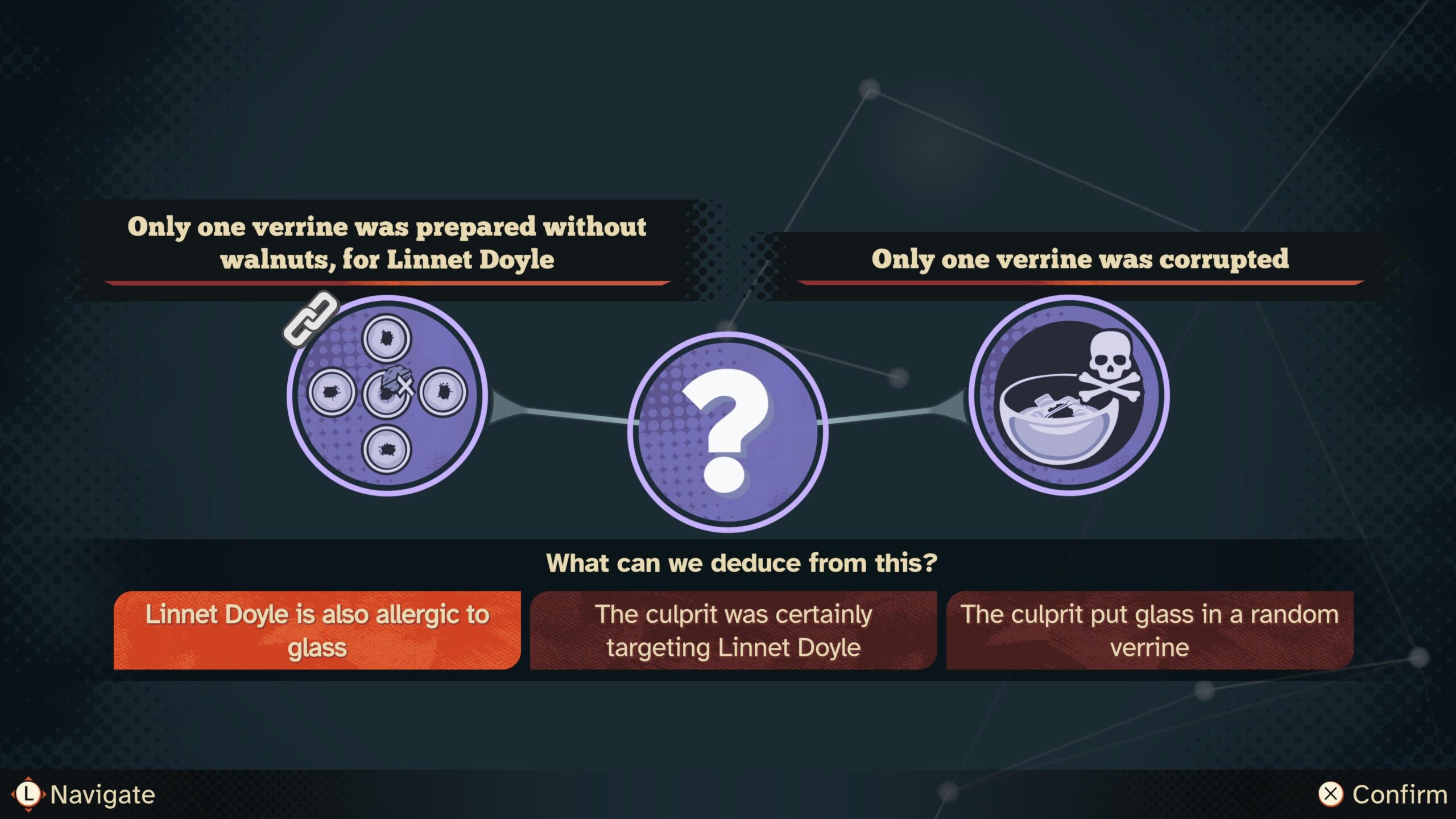
When it comes to gameplay in Death On The Nile, I’m torn between the fact that walking around is easy enough, but the overabundance of puzzle elements diminishes the actual mystery elements. The story is broken up into chapters. Within each chapter, you are faced with a primary mystery, though there may be some additional objectives thrown in. There’s a lot of conversation with different characters, though you’ve only got a few topics to cover. The puzzles range from tedious but notionally consistent with the situation you’re in to painfully placed “we’re making you kill time” events which neither advance the story nor reveal anything about the characters.
Various other mechanics are equally parts useful and frustrating. Working out a timeline of events for the central crime of the chapter isn’t terrible, but still feels like a Rube Goldberg machine. Trying to position yourself for the right spot to “eavesdrop” on conversations is by turns obnoxious and uninspiring. And to really kick you in the teeth, Microids apparently thought, “Hey! Let’s lock a bunch of concept art and musical tracks behind anachronistic and ludonarratively dissonant collectibles that have no purpose than to make the player waste more time!” The whole thing feels like a “hidden object” game for mobile devices that got pumped up with steroids and kicked out the door. I’m honestly surprised I wasn’t pestered by ads for the PlayStation Store during conversations or cutscenes.
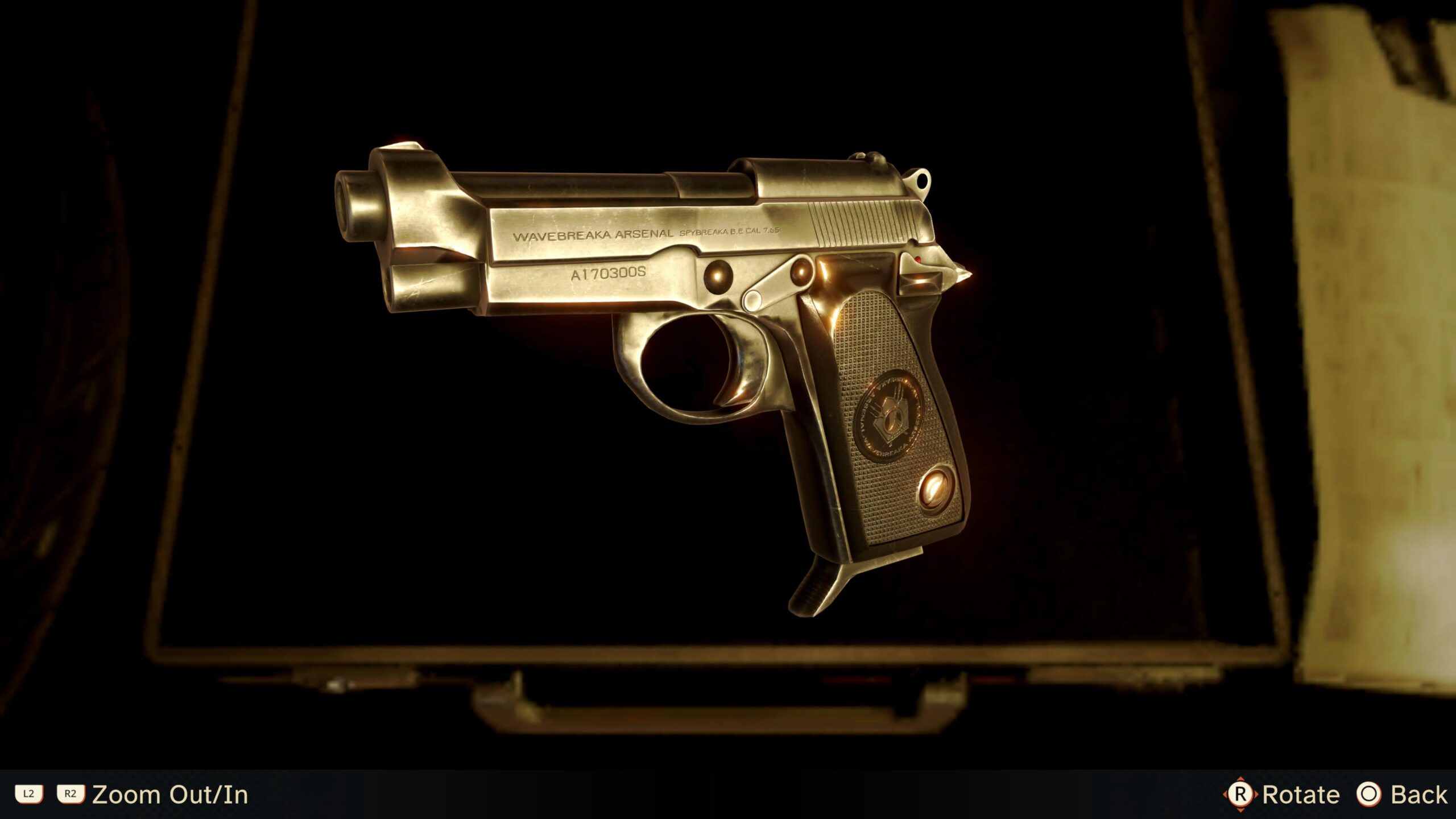
Earlier, I mentioned “the B-plot” for Death On The Nile. I can almost hear the Peanut Gallery asking, “What B-plot?! I saw the Branagh movie, there wasn’t a B-plot in there!” And you would be be correct. In the movies and in the original novel, there’s no B-plot. Here, however, there is such an intrusion into the story. Players are introduced in the prologue to Jane Royce, a character created by Microids for this game and given an entire secondary plotline which is conveniently supposed to converge with Poirot’s investigation on the Nile. I was somewhat surprised to learn that this is not the first time Microids has done something like this, having released a previous title based on Murder On The Orient Express. Similar mechanics, a “secondary protagonist,” the whole bit. It takes Death On The Nile from “dissonant” to “dissociative” in very short order.
There’s a part of me that might charitably be seeing possibilities with the character, envisioning where one could have done a mashup of British crime dramas like Parker and blaxploitation films such as Foxy Brown to good effect. But watching that possibility get squandered by shamelessly (if not thoughtlessly) attaching that character and that plot on to a classic Christie novel isn’t “groundbreaking.” It’s not offering “a fresh twist.” It’s blatant and shambolic design-by-committee that diminishes one of the great novels in mystery fiction and wastes the possibility of creating new properties in such a ham-fisted fashion as to render one almost incoherent with outrage. Or, put more simply, if you’re going to make a game focusing on Hercule Poirot, make it focus on Poirot. If you’re going to make a game featuring your own creation, make if feature your own creation. Never the twain should meet.
In her later years, Agatha Christie grew to despise her own creation. She felt Poirot was a “detestable, bombastic, tiresome, ego-centric little creep.” I cannot imagine that she would feel particularly enthused about Agatha Christie – Death On The Nile, either in its portrayal of her most popular character or the shameless trading. Spare your little gray cells the indignity of slogging through this terrible excuse for a mystery game.
Axel reviewed Agatha Christie’s Death On The Nile on PlayStation 5 with a provided review copy.