
Ale Abbey is a casual management simulator developed by Hammer & Ravens and published by Shiro Unlimited. You are in charge of an abbey that produces alcohol and your goal is to be as profitable as possible. Devise different brew recipes and craft your beers to sell to different markets. Upgrade the abbey and hire more staff to manage demand and boost your profits. You must also analyze market trends, haggle contracts, and bribe bandits to stay safe.
The premise is simple; support an abbey by selling alcoholic beverages. While you have guidance early on, it’s all about profit later on. Your goals are mainly keeping the abbey well-maintained, creating new brew recipes, and selling to different markets. Several events affect your brewing process and abbey maintenance but none of them are actual story challenges. You can take your time and build your abbey the way you want as there’s no pressure other than keeping it afloat. Create as many recipes as you like, decorate the abbey, and sell as much alcohol as you want. While running the abbey doesn’t seem cozy early on, you eventually grasp the basics and the cozy atmosphere kicks in. You decide how the abbey grows, if it does. And while completing objectives does unlock access to more brews, you decide if that’s something you want.
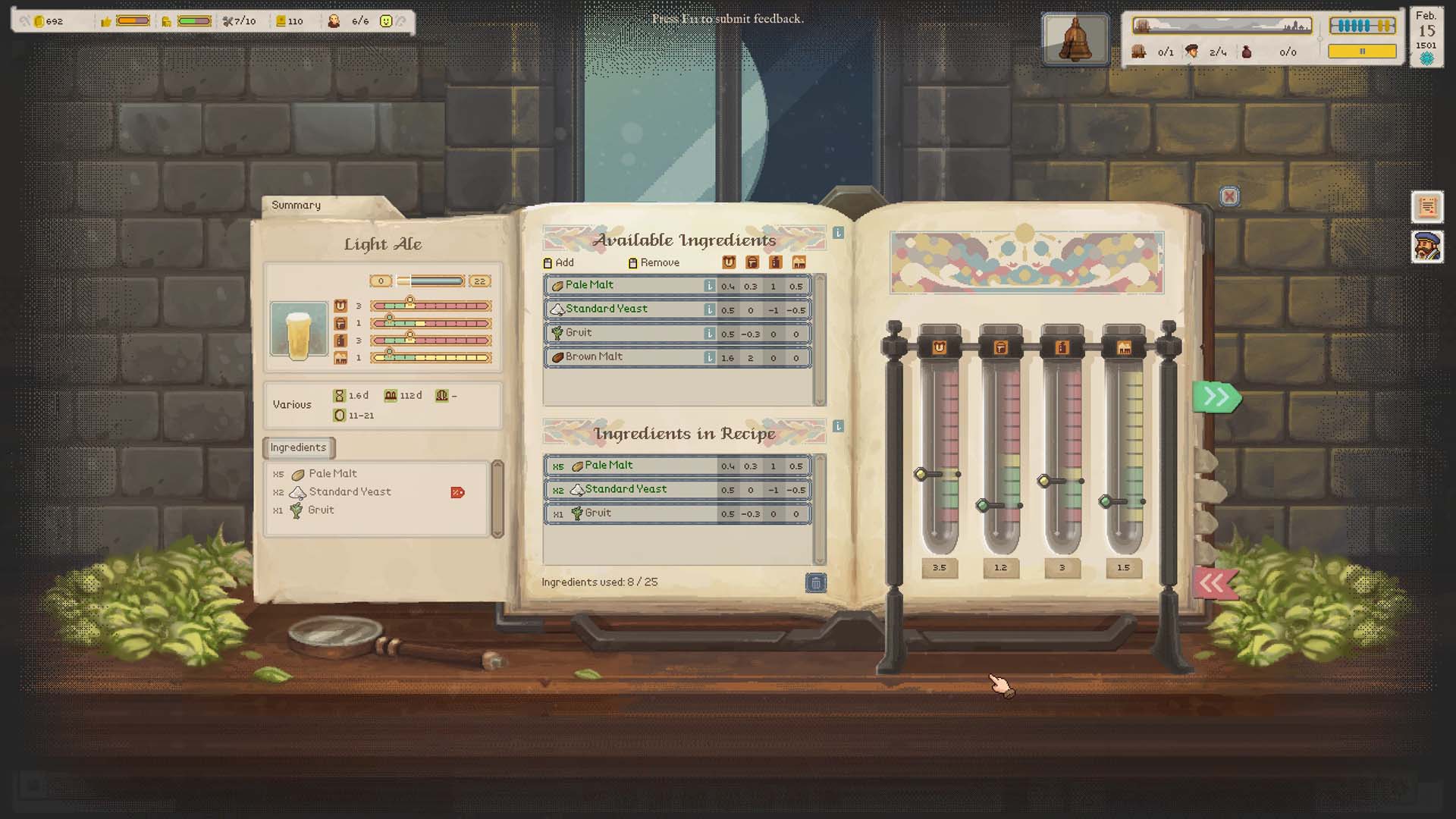
Creating your own brews is where the coziness ends as it’s a complex process. You must decide what type of ale to create, what ingredients go in, and the qualities you want it to possess. This also affects its sale price and the final quality is affected by the brewer crafting the beer. Lots of factors go into the final result and there’s lots of experimenting to do. As the game progresses, you unlock more ingredients and ale types. This in-depth recipe creation immerses you in the role as you get more control over your beverages. Deciding which ingredients to use, what qualities to focus on, and even the intended purpose makes a difference. It’s a complicated process but the level of control helps you feel proud of each recipe; even if it isn’t a success, you are inspired to keep tinkering until you come up with the perfect brew. More ingredients come later to help boost your precision.
However, introducing those variables makes Ale Abbey feel less casual. It’s not actually explained what makes an optimal combination and some objectives ask you to push the boundaries. If you get your mix wrong, you can’t sell it for decent money to fund your operations. While it does encourage experimentation, there’s no recourse other than trial-and-error or sharing results. That makes it less casual and more intimidating since many things can go wrong.
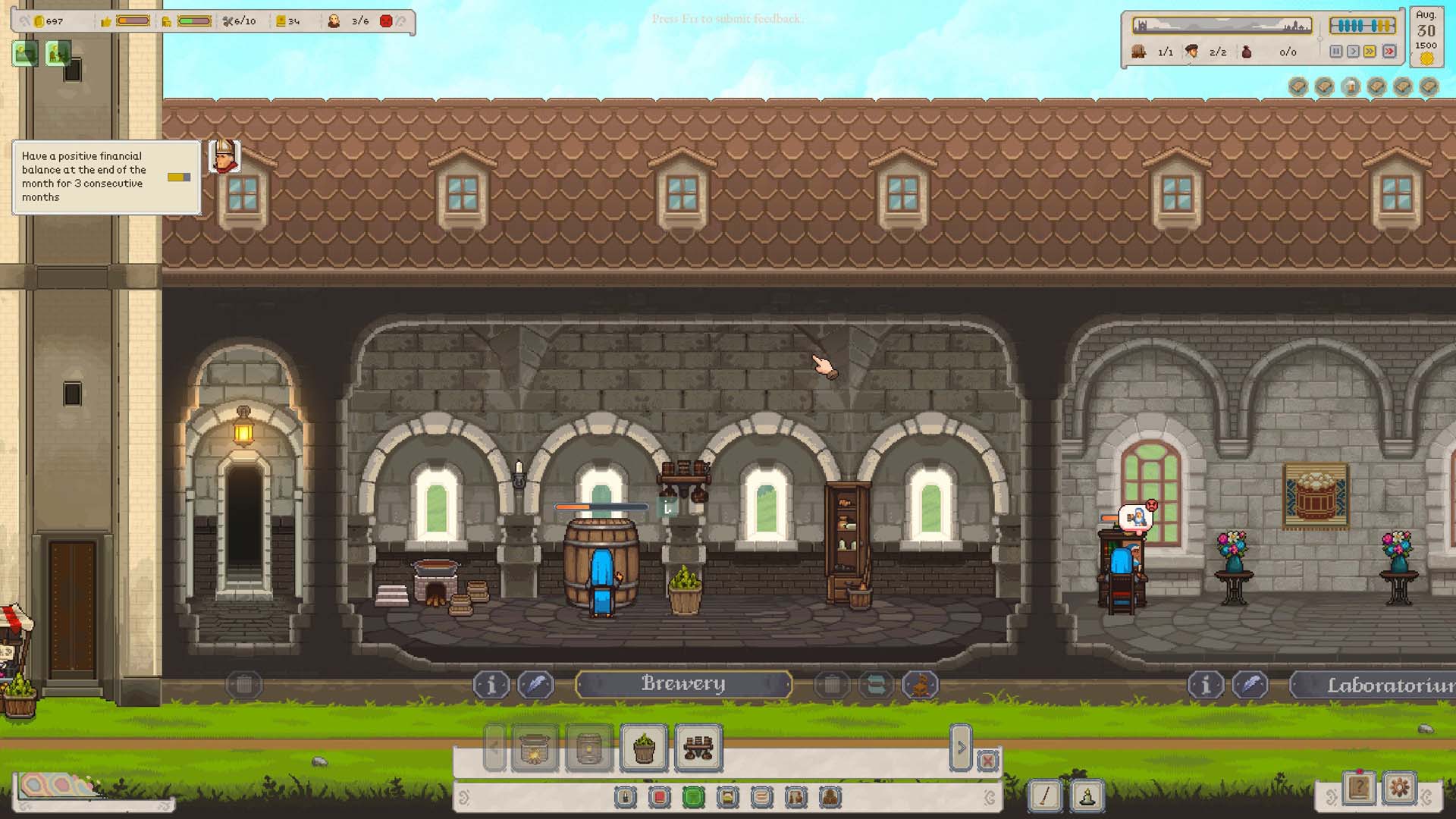
Your early years are also difficult because the tutorial is sparse. Once the basics are taught, you hold the reins to the business and many early-game benefits disappear. There’s a steep learning curve that the tutorial glosses over, throwing you in the deep end. You don’t learn about the importance of decorating, market trends, price adjustment, or unlocking research. This has improved since Early Access, but the difficulty hasn’t changed. With many variables to control, it’s intimidating to play because failure is just around the corner.
Everything comes together to create a management simulator that feels like a roguelike. You experiment with staff numbers, boosting skills, different brew recipes, seeing what works and what doesn’t. If you fail, you can take a loan but if you still haven’t grasped the game, it won’t help. Ale Abbey has a steep learning curve and it can take several in-game years before you grasp the basics.
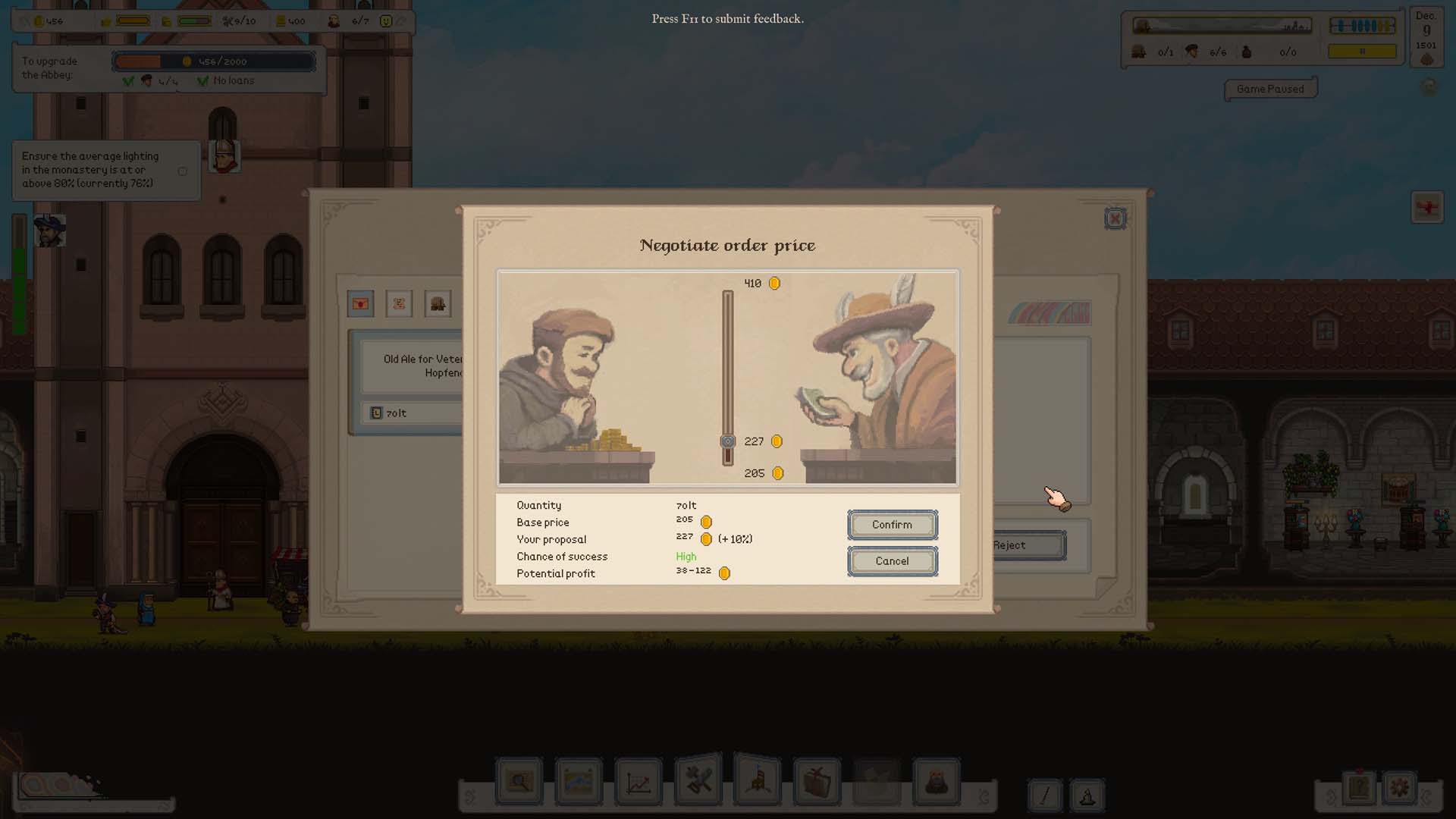
Those in-game years feel slow because your progress is bound by in-game missions. After finishing the tutorial, you are told that you can freely do what you want. But many brews, ingredients, and markets are locked behind progression. If you don’t complete certain objectives, you spend much of the game with the same resources as the tutorial. There’s no actual freedom to discover new brews or experiment as you wish.
Ale Abbey offers a management simulation experience that is good but also complex. It breaks the mold when it comes to crafting your own beverage, but blunts its advantage by having a long early game. By the time you unlock new features, you might be too tired to continue. I recommend Ale Abbey to those who are interested in a beverage simulator. However, you should be prepared to invest lots of time to get started.
Victor reviewed Ale Abbey on PC with a provided review copy.