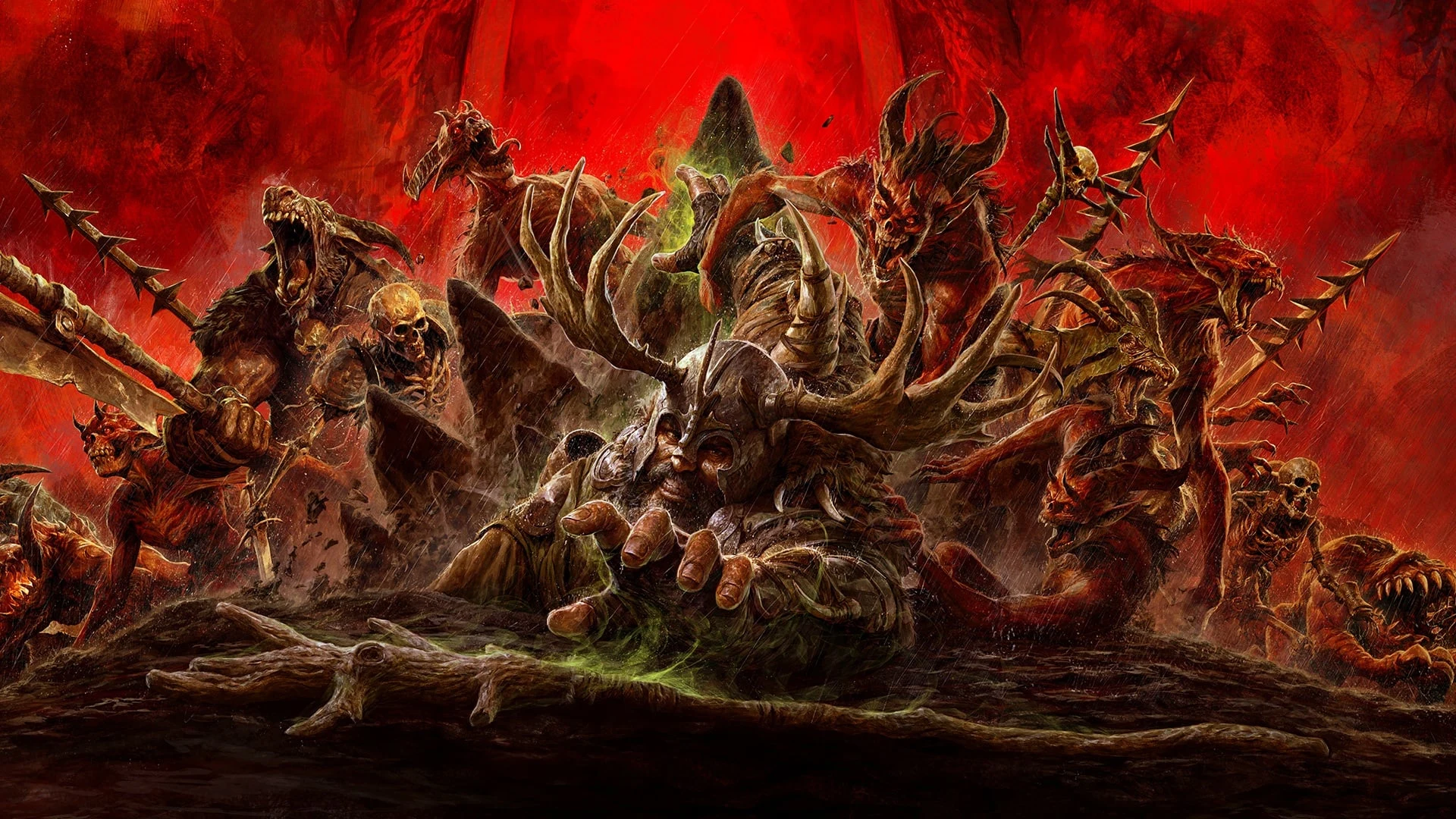

Soulframe is Digital Extremes’ newest venture, a co-op fantasy action RPG with some of Warframe’s original developers leading its development, including CEO Steve Sinclair. There are some slight similarities between the two games, and Soulframe does run on the same game engine as Warframe, but it’s clear even this early on that Soulframe has a burgeoning identity all its own. Soulframe is currently in a closed pre-alpha state, but those interested in joining can sign up for a chance to receive a code on Soulframe’s website.
You play as an Envoy—a spiritual intermediary between the human realm and the natural world (oh, and one of your arms is blue). The game begins with your character breaking free from the influence of the Ode, a sinister regime of interstellar imperialists who enslave, pollute, and consume the natural resources of every world they encounter. Like Warframe’s Orokin, the Ode sow tyranny through their technological superiority, but there’s an even greater contrast between their cold metal influence and the living, breathing world of Alca. You, once taken at birth and indoctrinated into their system, awaken to your true purpose and begin your journey of resistance and restoration in the land of Midrath. Time will tell how well Digital Extremes will be able to differentiate between the themes already present in Warframe and those just beginning to sprout in Soulframe.
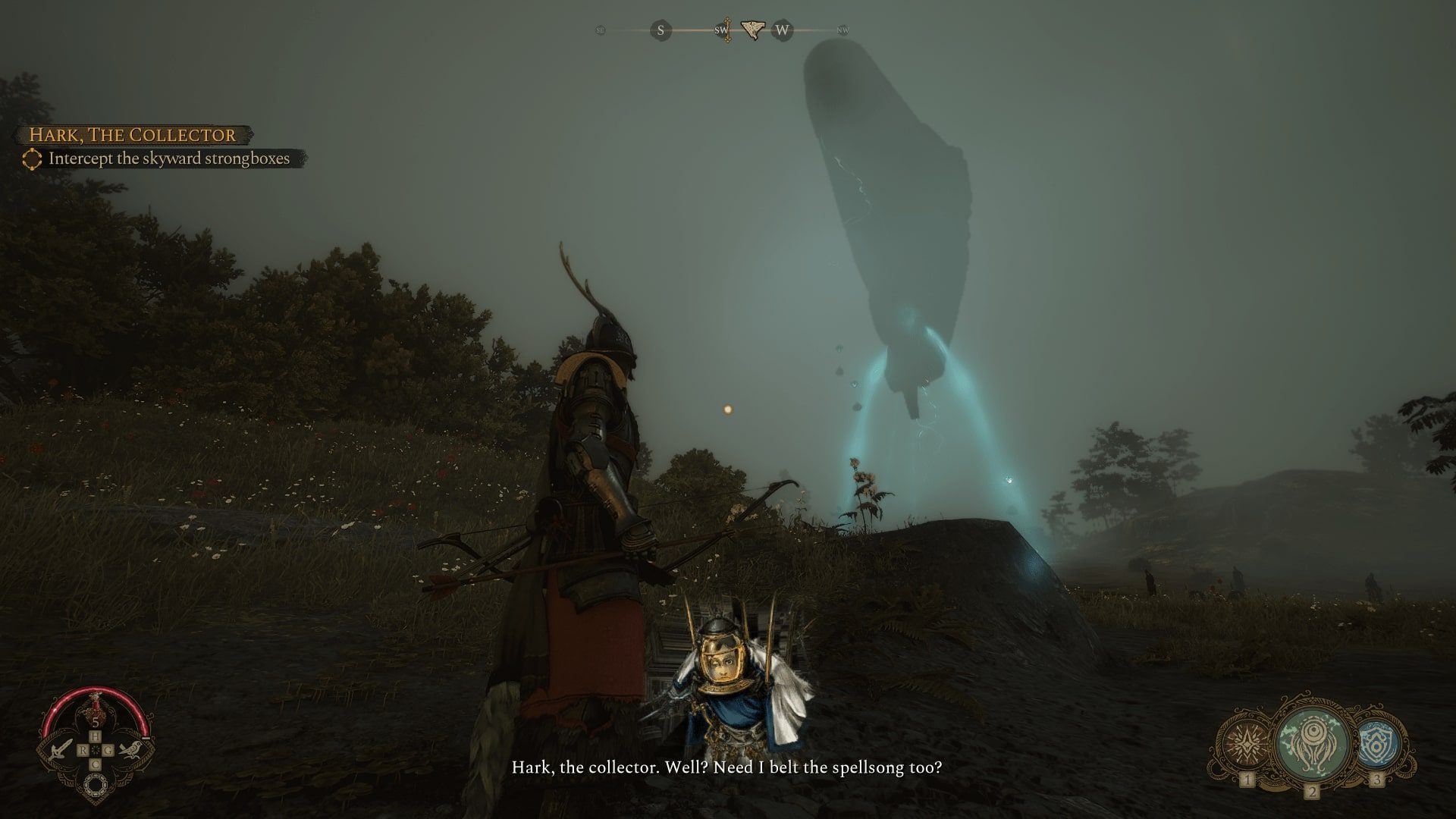
You can play Soulframe solo or in three-player co-op, but only the host retains story progression. Whether this is a temporary limitation or an intended design constraint is unclear, though it makes it impossible for friends to seamlessly progress the story together. Like Warframe, Soulframe operates on a peer-to-peer connection model, meaning that when the host leaves or disconnects, there’s a risk of losing progress. I’ve personally lost crafting materials and weapon fragments after a host disconnect, and other players have reported bugs where items collected in someone else’s world didn’t register in their own. Still, that’s the point of a testing phase, after all.
You’ll choose between one of three factions at the start of the game, each representing a core attribute: spirit, courage, and grace. Beyond mere symbolism, these attributes represent the methods each faction uses to resist the Ode. Alca’s children, aligned with spirit, focus on restoration and healing. The Kith of Kings, rooted in courage, act as defiant warriors striking directly at Ode’n forces. The Silent Rose, devoted to grace, take a more cunning route, undermining the Ode through espionage and sabotage.
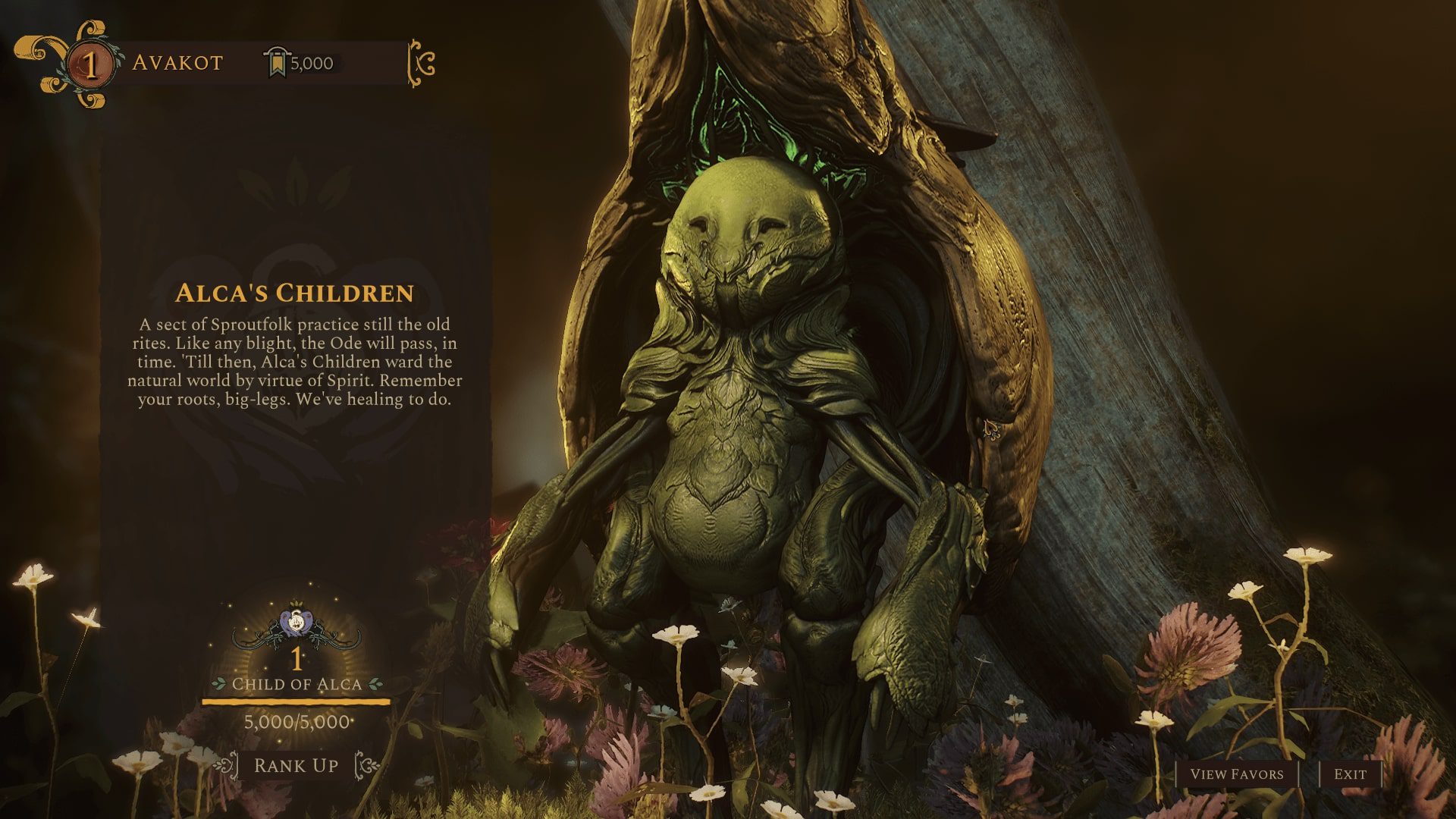
While your choice of faction doesn’t lock you out of any content, since you can switch factions later, it does determine your starting pact. Each pact has three unique abilities that you unlock as you level, along with a branching skill tree of passive abilities, although each skill tree only has two unique passives per pact at the moment. There are more pacts that you can unlock by leveling up your reputation with each faction, or by completing certain story quests.
When it comes to combat, Soulframe is a bit more grounded compared to the fast-paced gunplay and screen-blurring acrobatics of Warframe. Instead, you’ll engage in tactical, methodical combat, timing your strikes, blocks, and dodges carefully. Enemies don’t come in overwhelming hordes—encounters are typically against small groups, where positioning and awareness make the difference between victory and a quick death.
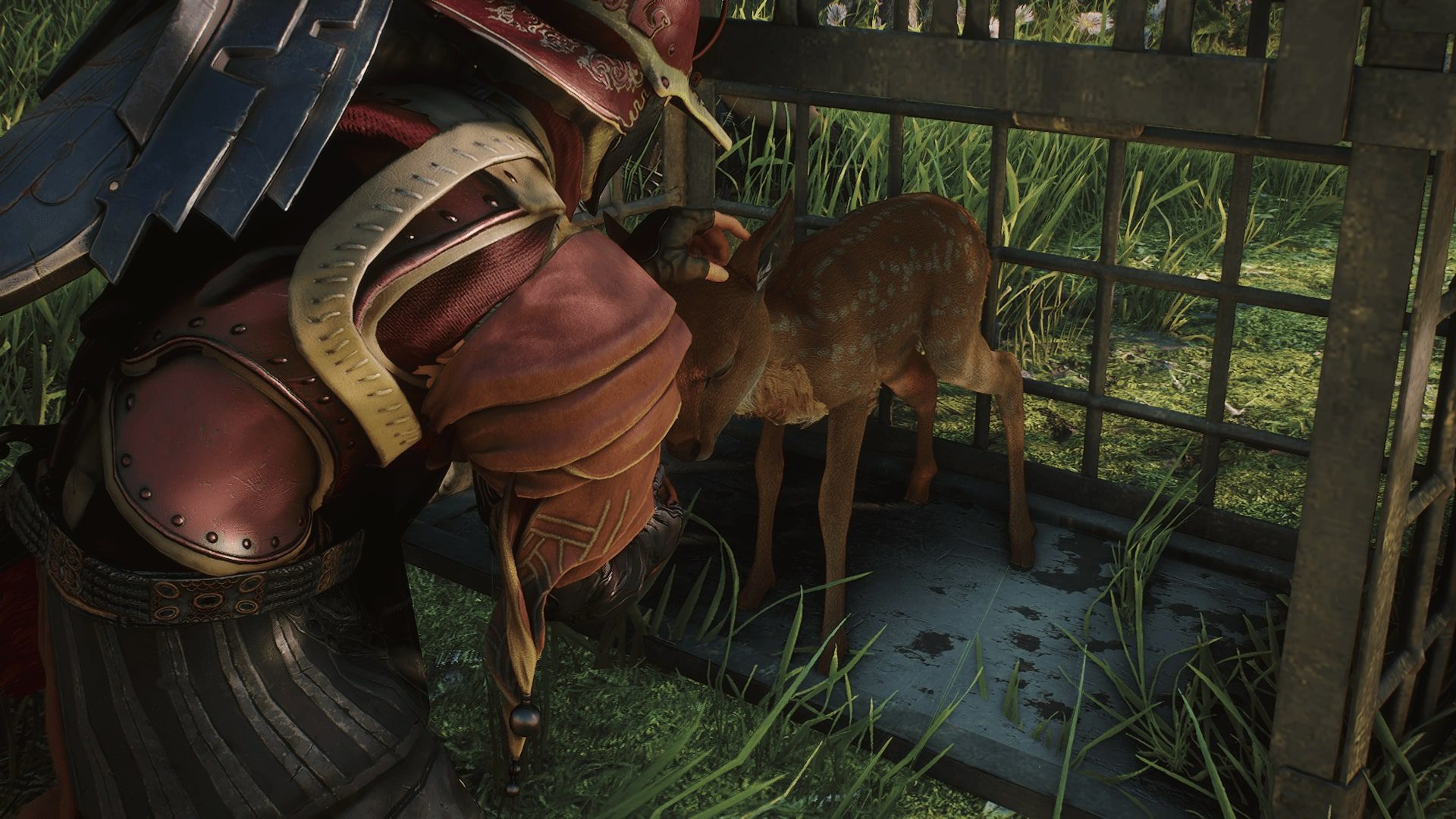
Animations are deliberate and attacks don’t auto-track, so dodging feels intuitive and satisfying. That said, Soulframe’s soft target-lock system is inconsistent. Your character may unexpectedly swing at an enemy who’s farther away but more aligned with your camera tracking, resulting in awkward misses. Currently, there’s no way to manually cycle targets, but a fully fleshed out lock-on system or quick-swap target mechanic would be a welcome quality-of-life addition.
If you find melee imprecise, you’ve got options. Bows feel smooth and satisfying, with options to perform trick shots while aim-gliding midair or bombard a group of enemies from afar with a rain of arrows. Flyblades let you turn enemies into a pincushion, or you can whirl them around yourself in a cyclone of death. And even if you are running a melee weapon, it’s perfectly viable to simply throw it at enemies; the game lets you call weapons back at any time, damaging enemies along the way. Layered on top of this are your pact abilities, which can radically change how you approach encounters. These powers range from healing allies to blasting enemies with elemental damage or turning foes to stone.
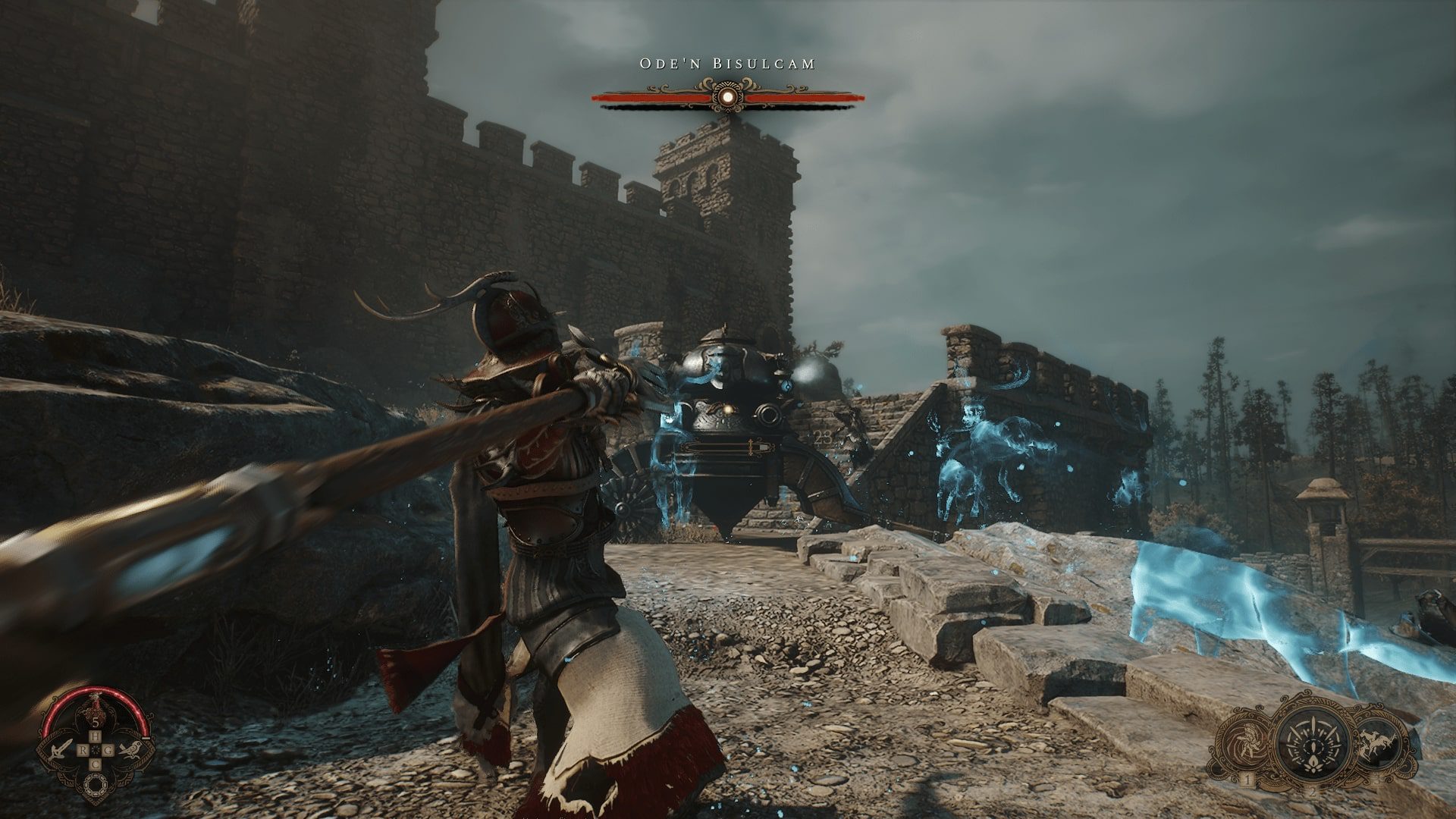
Some pacts are certainly better than others, as they don’t seem to be quite balanced yet. The Ode Tempest pact, for example, features a suite of abilities that synergize beautifully, allowing for devastating combos. You can lay down a voltaic AOE attack that, when coupled with your voltaic barrier ability, sends out damaging shockwaves when you’re struck. Other pacts are somewhat lackluster at the moment, such as Mora’s hand, which focuses on burning down enemies with DoT effects but feels like it would struggle to even toast a marshmallow with its current damage output. These imbalances are expected at this stage, but it will be interesting to see how Digital Extremes approaches tuning over time, given the profound lack of balance in Warframe.
Exploration plays a central role in Soulframe. The world of Alca is a beautiful, sometimes bizarre landscape full of secrets. From ancient forests to crumbling ruins half-swallowed by nature (or corruption), there’s always something just off the beaten path. Puzzle-solving is common, often rewarding players with rare crafting resources, and occasionally you’ll find some unique gear hidden away in a dusty tomb or such. There are various locations with lost lore to find, although the eastern side of the map is currently less developed than the western starting area. That’s not to say there’s nothing to find, but many of the eastern locations have copy-pasted buildings, strange geometry, or simply incomplete lore entries.
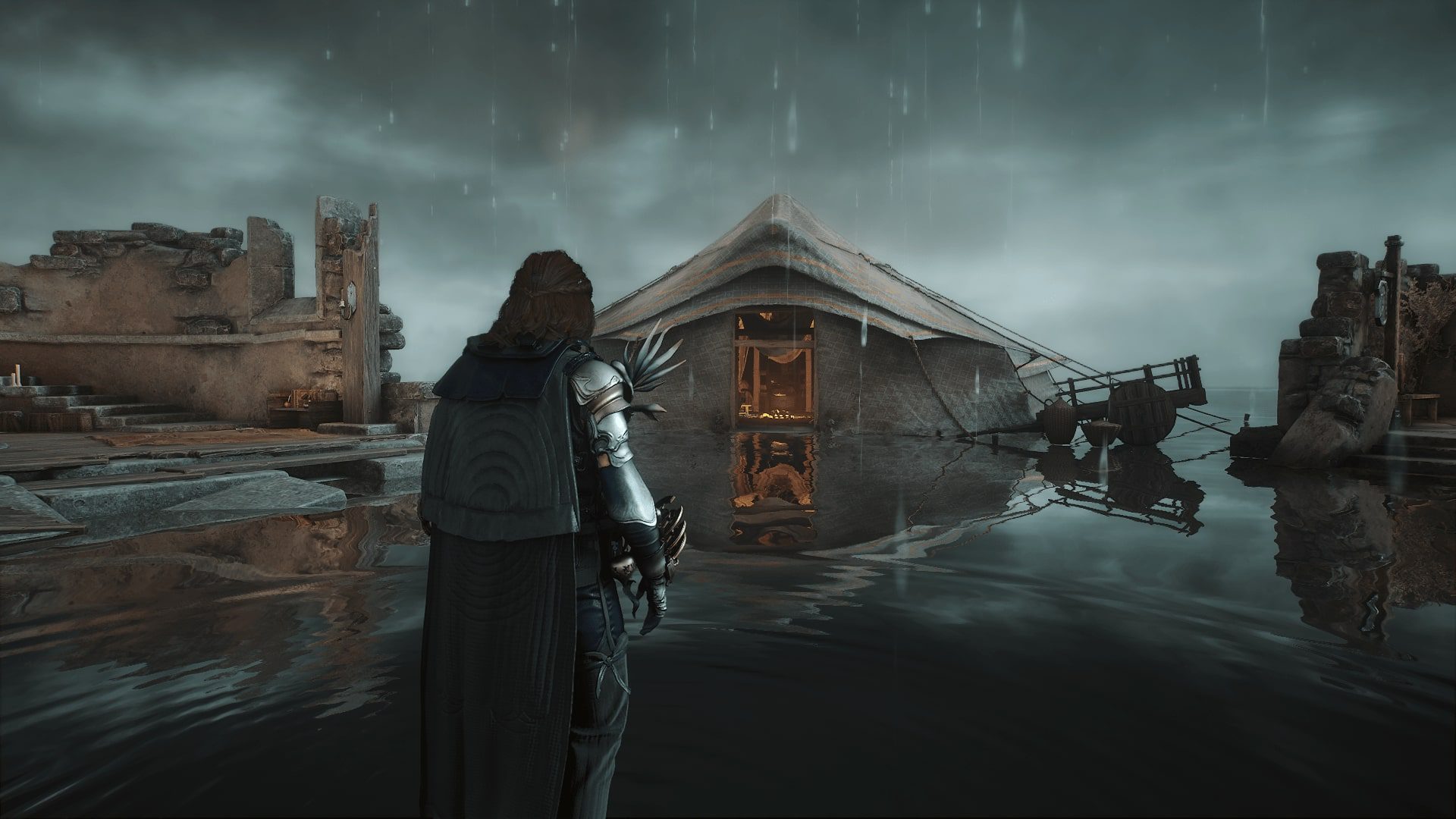
One of my favorite aspects of Soulframe is how you can pop into your base of operations any time so long as you’re not actively in combat. The Nightfold is your home away from Midrath, where you can swap weapons and armor, change your pact, and even reset skill points and perk allocations. You’ll also gradually populate the Nightfold with ancestors, such as the blacksmith and lorekeeper, who assist you as your journey progresses. These characters have their own personalities and storylines, offering services like crafting, enchanting, or dyeing your armor. Most importantly, when you leave the Nightfold, you return exactly to the spot you left in the open world, helping you get right back into the action.
There are plenty of weapons and armor sets to uncover, but you’ll need to collect the right number of fragments before your blacksmith ancestor, Tuvalkane, can forge them. These fragments are often hidden in chests, dropped from bosses, or found through solving puzzles. Once you have a full set, your blacksmith ancestor, Tuvalkane, can forge them into powerful gear. She’s easily the most important ancestor so far, though she’s got a bit of a confidence problem. It’s charming at first, but hearing her say “I’ll try not to ruin it” every time you gather a full set of fragments—even ones you’ve already crafted—can start to wear thin. Maybe Digital Extremes will listen to player feedback and provide an option to mute dialogue barks, but for now, it’s a small price to pay for such finely made gear.
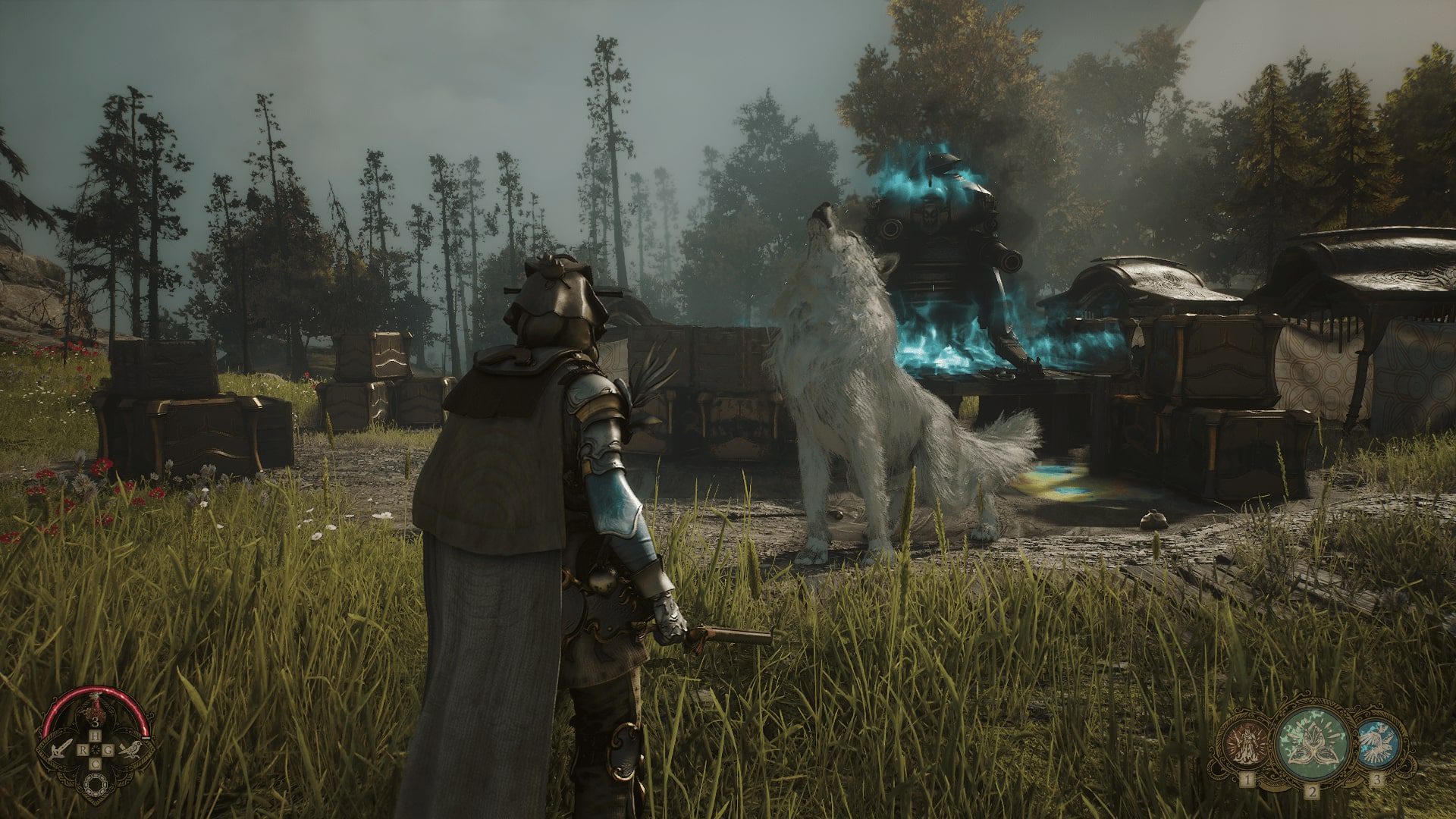
The number of story quests available in pre-alpha is understandably limited, but what’s there is already compelling. The quests that do exist lean heavily into the game’s themes of rebirth and rebellion. Dialogues are well-written, cinematic pacing is surprisingly strong, and there’s a clear focus on tone and atmosphere over pure exposition. If Digital Extremes can continue to build on this foundation, then I’m excited to see what the future has in store.
Soulframe is visually stunning, even in pre-alpha. The art direction is top-notch, with truly scenic nature getaways, crumbling ruins adorned with ancient motifs, and creatures that feel both mythical and alien. Every location truly feels as if it was curated with care, minus a few sketchy areas along the outer bounds of the map. There’s a deep sense of pride and purpose baked into the world design that makes exploring feel like uncovering a forgotten history rather than just ticking boxes on a map.
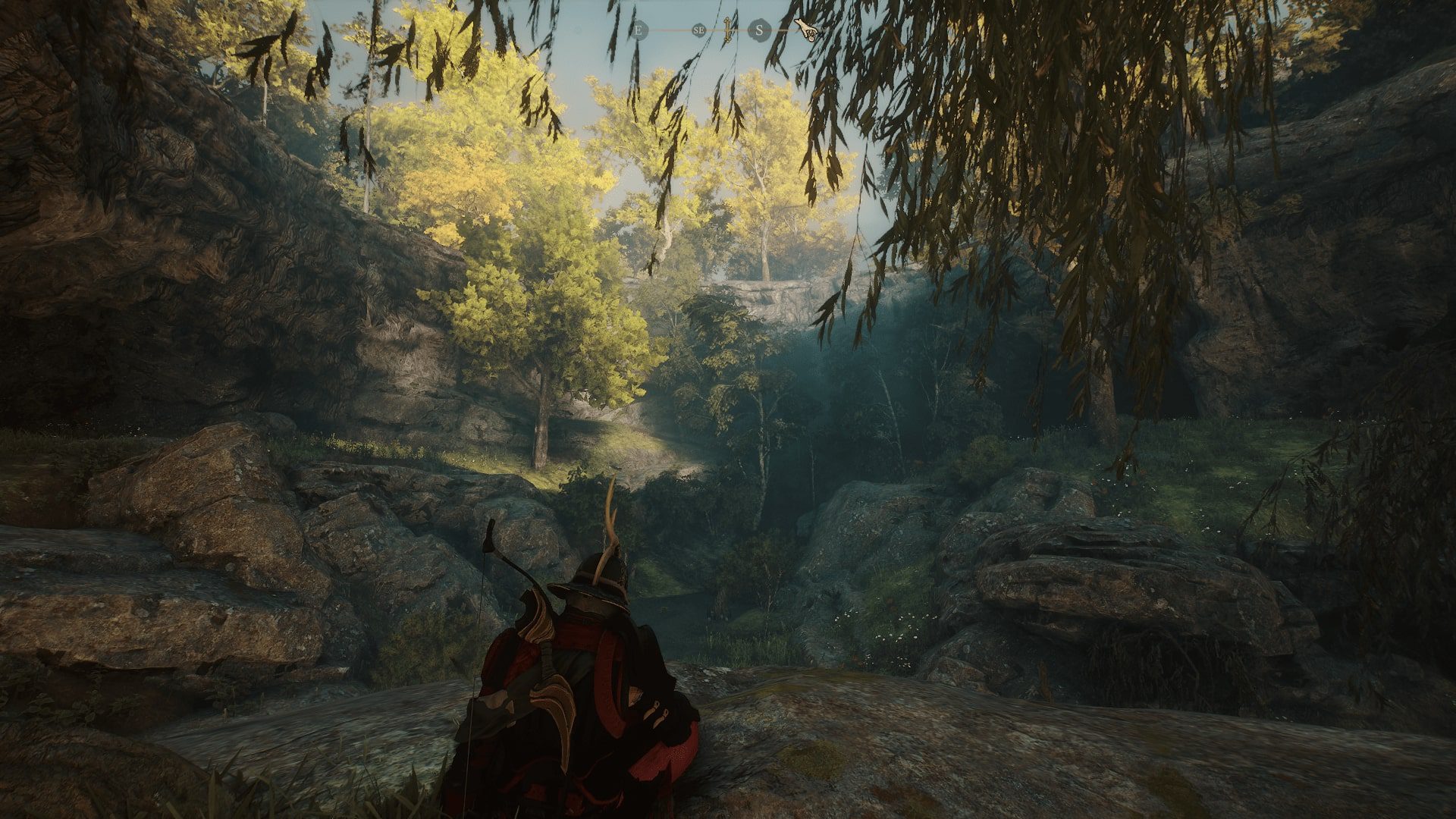
Soulframe already shows incredible promise, even with a few rough edges. Its slower, more deliberate gameplay, focus on nature and mysticism, and emphasis on exploration tick all the right boxes. There’s a thoughtful foundation here, a willingness to build something that values mood, meaning, and immersion over instant gratification, something that feels distinctly lacking in an era where game developers feel that everything needs to be live-service. If Digital Extremes continues to nurture this direction and expand on what’s already working, Soulframe could grow into a truly standout experience.
This preview was written based on a pre-alpha code provided by the developers. Alpha access is currently closed, but can be requested by signing up on Soulframe‘s website.