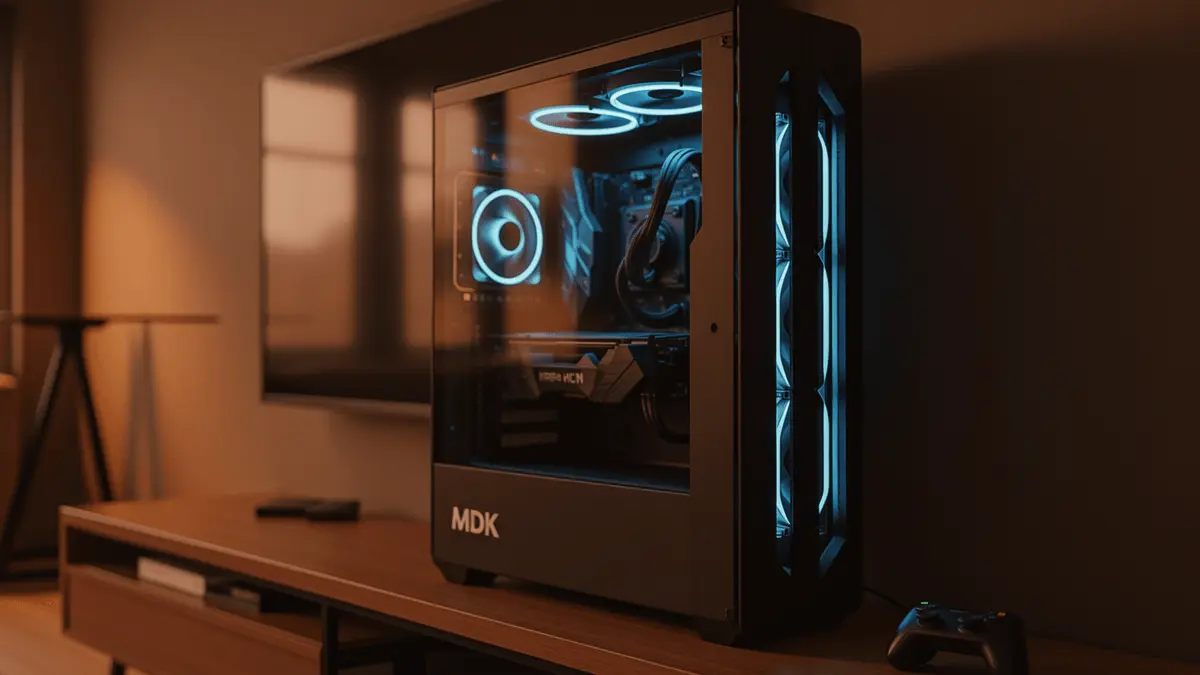
Valve has officially sanctioned DIY Steam Machine builds with SteamOS 3.8, confirming via developer Pierre-Loup Griffais that “starting with the SteamOS 3.8 release, you can put together your own Steam Machine using whatever PC parts you want” – a policy shift that transforms SteamOS from a handheld-first operating system into an openly supported living room PC platform, years before Valve‘s own first-party Steam Machine hardware arrives in 2026, per reporting by The Verge and Tom’s Guide.
Here’s the context: Valve‘s original Steam Machines, launched with OEM partners including Alienware and Zotac in 2015, failed on nearly every axis – SteamOS 1 was underpowered as a platform, native Linux game support was thin, and the hardware lineup was a confusing mess of SKUs at wildly different price points. Valve quietly delisted the category from Steam‘s hardware pages by 2018 and redirected its energy toward what eventually became the Steam Deck. The years spent building Proton compatibility, refining a controller-centric interface layer, and maturing the Arch Linux-based SteamOS 3 stack for the Deck are exactly what makes this moment different – the platform infrastructure that was missing in 2015 now exists, and SteamOS 3.8 is the first build explicitly inviting desktop builders to use it.
The 3.8 update itself is substantive beyond the policy announcement. It ships with Linux kernel 6.16, updated Mesa graphics drivers, improved HDR and VRR handling, and better frame pacing for variable refresh rate displays – changes aimed squarely at desktop GPUs and modern monitors rather than the Steam Deck‘s fixed panel. There are also BIOS-related fixes, improved sleep/wake behaviour with a Steam Controller, and better Bluetooth and Wi-Fi handling on desktop hardware, all of which reduce the friction points that would have made a living room build feel half-supported. The update also extends compatibility to third-party handhelds including the ASUS ROG Ally and Lenovo Legion Go 2, which signals that Valve is deliberately positioning SteamOS as an x86 gaming platform rather than a Steam Deck-exclusive operating system.
Honestly, what Valve is doing here is smarter than the headline makes it look. By releasing official DIY support before its own Steam Machine hardware ships – that first-party box is confirmed to use a Zen 4 CPU and semi-custom RDNA GPU, with no price or firm release date beyond 2026 – Valve lets the enthusiast community do the real-world hardware validation across hundreds of configurations it couldn’t possibly test internally. Every build guide, compatibility thread, and forum report that surfaces between now and launch is free QA. It also sidesteps the SKU fragmentation problem that killed the original Steam Machines: there is now one OS, one experience, and whoever builds the box picks the specs. The comparison to Sony‘s tightly controlled platform approach – where exclusivity branding and ecosystem lock-in do the heavy lifting – is instructive; Valve is betting that openness and Proton compatibility are a stronger long-term proposition than walled-garden curation, and SteamOS 3.8 is that bet made explicit. For builders who want to know which titles are already well-optimised for this kind of hardware, our breakdown of the best-optimized PC games of 2026 is a reasonable starting point.
What remains unclear is how complete the hardware support picture actually is at launch. Nvidia GPU compatibility remains an open question – current SteamOS 3 builds have historically favoured AMD graphics, and there’s no confirmed timeline for broader Nvidia support on desktop. Suspend/resume behaviour on non-validated desktop configurations is also still being refined, and the absence of a formal hardware compatibility list means builders are currently working from community reports rather than Valve-certified specs. Watch for subsequent SteamOS 3.x releases to address Nvidia explicitly, and for Valve‘s own 2026 hardware reveal to anchor a reference configuration that third-party builders can validate against. It’s also worth noting that Valve recently adjusted its Steam Deck pricing strategy – our coverage of the Steam Deck price increase has context on how Valve is positioning its hardware lineup heading into that launch window.
Are you already planning a DIY Steam Machine build around SteamOS 3.8, or does the missing Nvidia support put you on hold? And does Valve officially blessing self-built rigs before its own hardware ships feel like a smart platform play, or does it risk fragmenting the SteamOS experience before it has a chance to establish itself? Sound off in the comments below, and keep your eyes on GameLuster for more SteamOS and Steam Machine coverage.