
I was drawn to Sword of the Sea the moment it was announced because of its ties and similarities to 2012’s Journey, which was largely thanks to Sword of the Sea‘s director, Matt Nava, being the art director of the earlier game, and the incomparable Austin Wintory composing the score for both games. I was geared up for a spiritual sequel to the previous work, and while Sword of the Sea scratches a similar itch, it’s also wild and experimental in ways that were surprising and very fun.
Right off the bat, Sword of the Sea is a game about exploration and saving the world – but it’s also literally a surfing/skating game. Your main character, the Wraith, travels the world by riding on a hovering sword (not the titular sword, at least not initially) like a flying skateboard, surfing over the dunes and bringing the spirit of the ocean and life back to lifeless areas like the desert, a necropolis, a frozen mountain, and beyond.
You can surf down slopes to pick up speed, jump off ramps, grind along chains and use half pipes to build speed. And like any good skating game, you can pull off tricks with your hover sword, which the game keeps track of and scores you on and gives you a grand total at the end. Several of Sword of the Sea‘s various achievements are about getting high scores, but that’s not what the game is about.
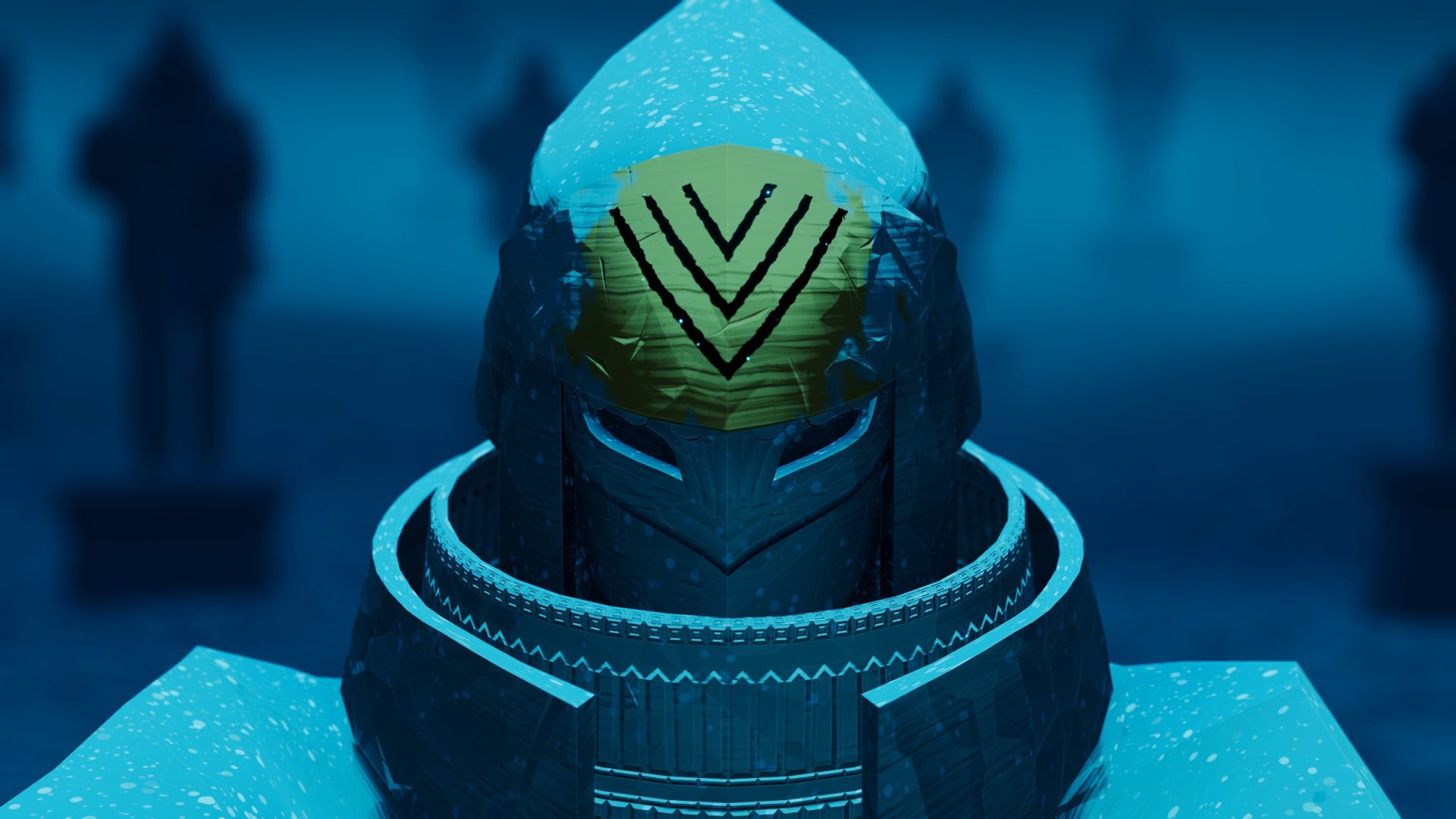
In a lifeless world, a single drop of water falls from a stalactite onto a weathered statue, infusing it with the spirit of life and sea. That’s you. You are the Wraith. You take your sword and surf out from the chamber you were housed in and explore the world, looking for places – almost all marked by groups of unlit lamps – to bring forth the spirit of the sea, transforming sand into seawater, and bringing signs of life, plants, floating fish, giant bouncing jellyfish etc. back into the world.
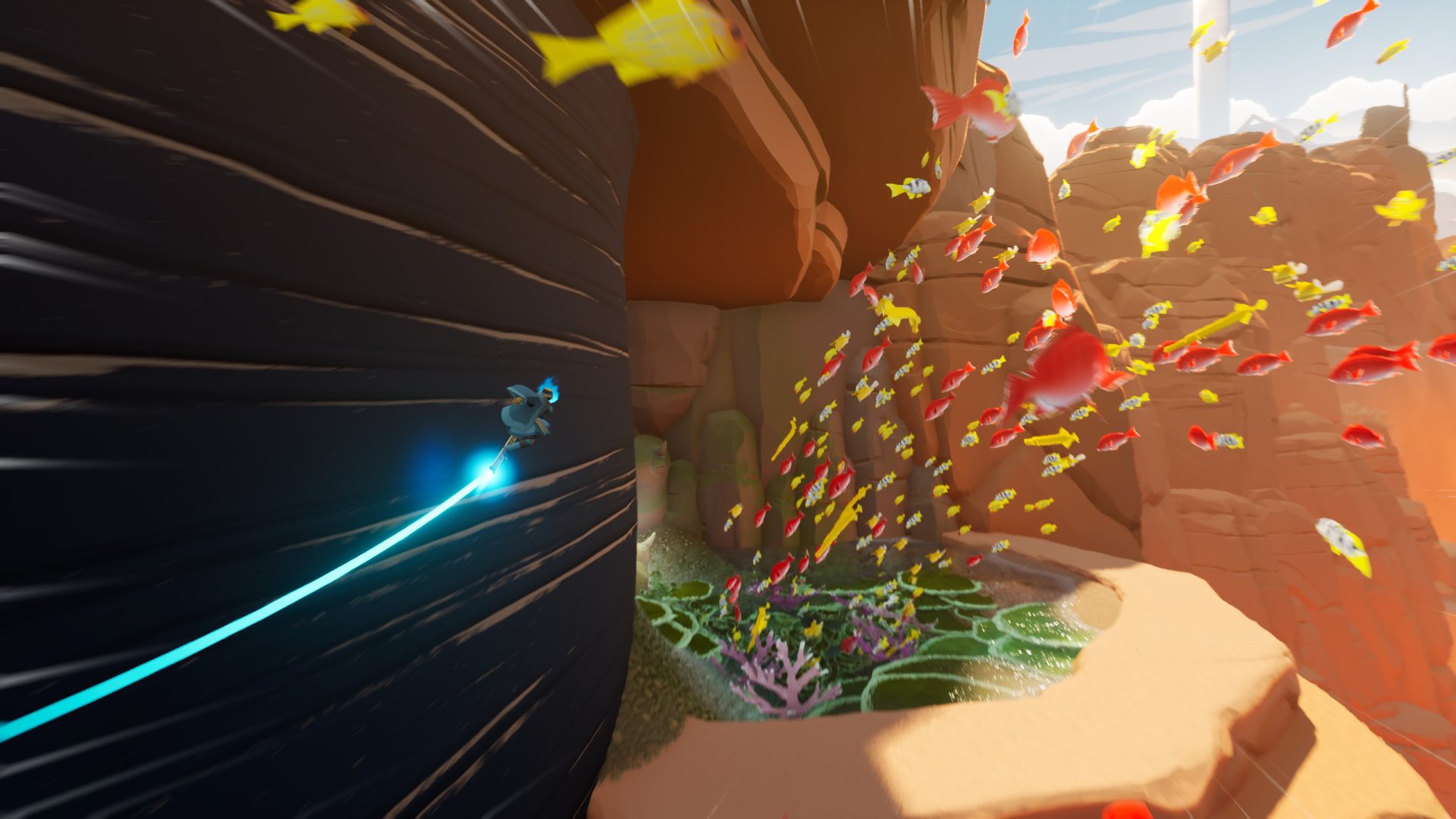
Of course, these things are not merely there for vibes; many of the fish can be ridden upon, and the jellyfish bounced off of to reach new places, and certain kinds of plants can be ridden up, which is especially useful for backtracking to search an area for challenge areas, steles bearing records of the past and the nature of the world, tiles of fish and other puzzles to collect Tetra, and other collectibles. Tetra is essentially like XP, in that it can be traded to a shaman-like vendor to unlock additional skills, like doing tricks, double and super jumps, and more. Each new skill takes an increasing amount of Tetra, but you can keep skills and your progress to a new skill in New Game Plus, so don’t worry about collecting enough to get every skill in one go.
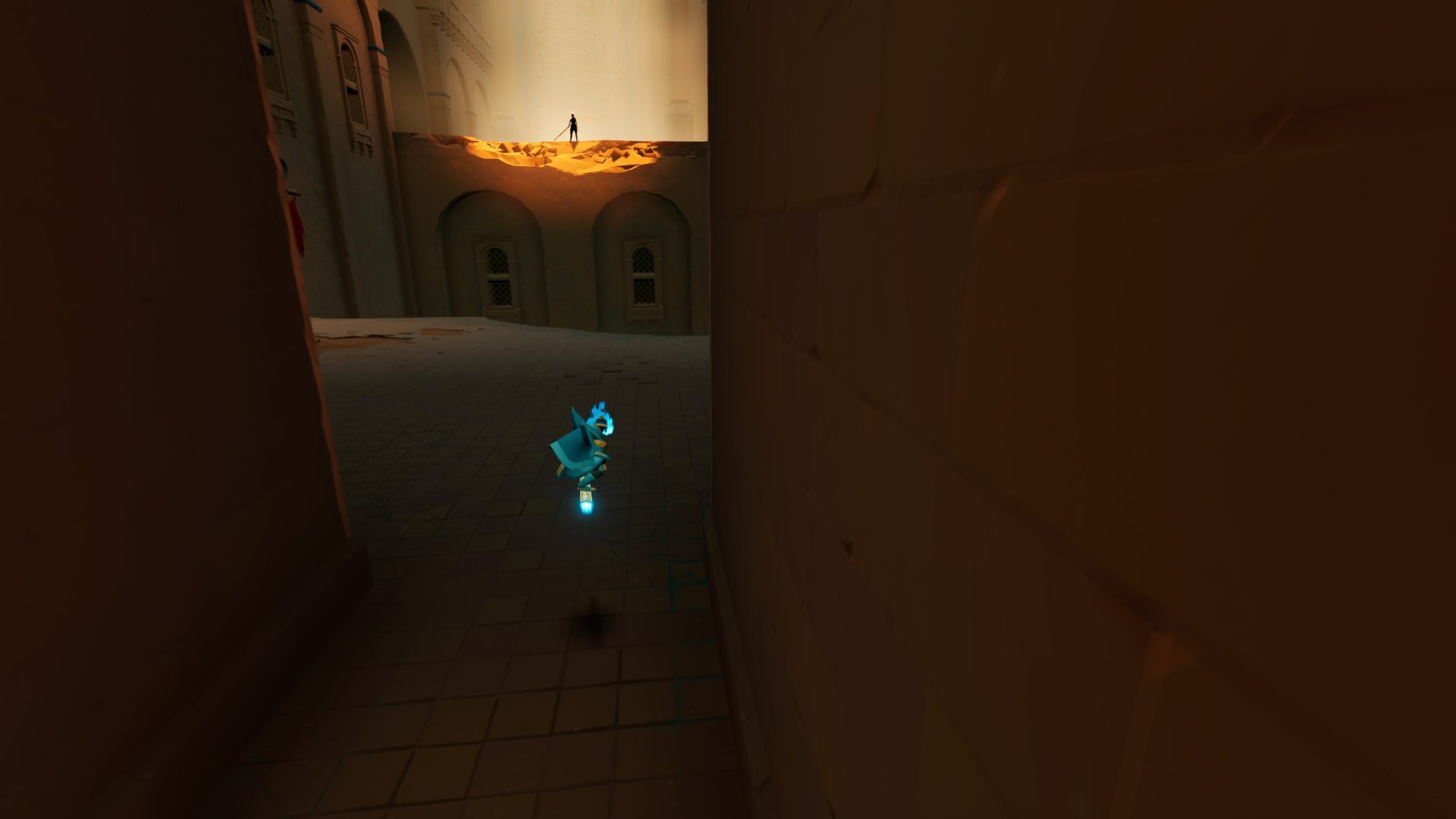
The Wraith’s journey goes from a barren desert over several mountaintops, towards a tower that stretches into the very heavens themselves, all the while restoring water and life to the land, and discovering ancient ocean spirits like the dolphin, the shark, and encountering a mysterious figure, also travelling atop a hover sword, the Wanderer, who joins you for a time in your quest to restore the sea. The story is one that is made to be scene and experienced, not felt, and it does an absolutely wonderful job of conveying small details without any words and getting across the feelings of each moment, thanks in no small part to Austin’s amazing soundtrack.
Sword of the Sea makes no secret of having a New Game Plus, offering multiple unhidden achievements for completing it and beating your score. Starting New Game Plus keeps all skills and Tetra from a previous run, and unlocks three new abilities: the speedometer to see how fast you’re going, the trick counter to make this visible at all times, and an ability to receive consumable speed booster orbs in exchange for doing tricks while exploring. The latter helps make tricks something worth doing all the time, which gets you into the different ways of playing the game, all of which are encouraged by its designs and achievements. It wants you to play once just normally, taking as much in as you can find. It then wants you to play again, this time very quickly, then doing it with a focus on beating your own score, then beating a high score, then on finding the hidden collectables, and then on fighting the final boss flawlessly. Fortunately, chapter select is also unlocked in New Game Plus to make it easier to find the hidden nooks and crannies you might have missed. Sword of the Sea is a game about the experience, and it wants you to enjoy that experience. This is why it checkpoints regularly so you can save and quit without consequence, why individual playthroughs can be done in a two to four hour range, and why it encourages everything from completionist runs to blisteringly fast speed runs and score max runs, and even just vibing.
Sword of the Sea is an excellent game. If you have PlayStation Plus Extra, there’s no reason not to get it right now. But even if you’re a PC player, the price point won’t break the bank and the game is an enjoyable, emotional and cathartic experience. It’s simultaneously bombastic and subtle. The writing is deliberately spartan, but conveyed excellently in its medium and the ending is especially moving, so go play it yourself.
Tim reviewed Sword of the Sea on PlayStation 5 on PlayStation Plus Extra.