
Tower defense has been a stale genre for too long, and it’s only recently that some indie games have started to experiment and improve upon the established formula. With various sub-genres, unique systems, and the number of high-quality tower defense games released in recent years, the genre is thriving and promoting healthy competition for new titles.
Thronefall, developed and published by GrizzlyGames, combines the tower defense genre with real-time strategy elements, where we as a king mounted on our trusty steed, have to build and manage our economy, army, and defensive structures during the day, and help fight and defend our minimalistic kingdom against waves of enemies during the night.
One of the biggest changes Thronefall makes to the genre is introducing a controllable protagonist. We are not just an intangible god building and commanding our towers and armies, we are a king, and we can, and should, join the fight and attack the enemies with one of many weapons and abilities that we unlock throughout the game. We can upgrade our combat effectiveness both defensively and offensively, to either tank a lot of damage while our towers and units deal with the enemies, or even do enough damage to defeat the easier waves completely on our own. This adds an extra layer of strategy in addition to building units, towers, and walls. We now have the option of investing our upgrades into ourselves, and this is actually the way I defeated the game’s very difficult final boss.
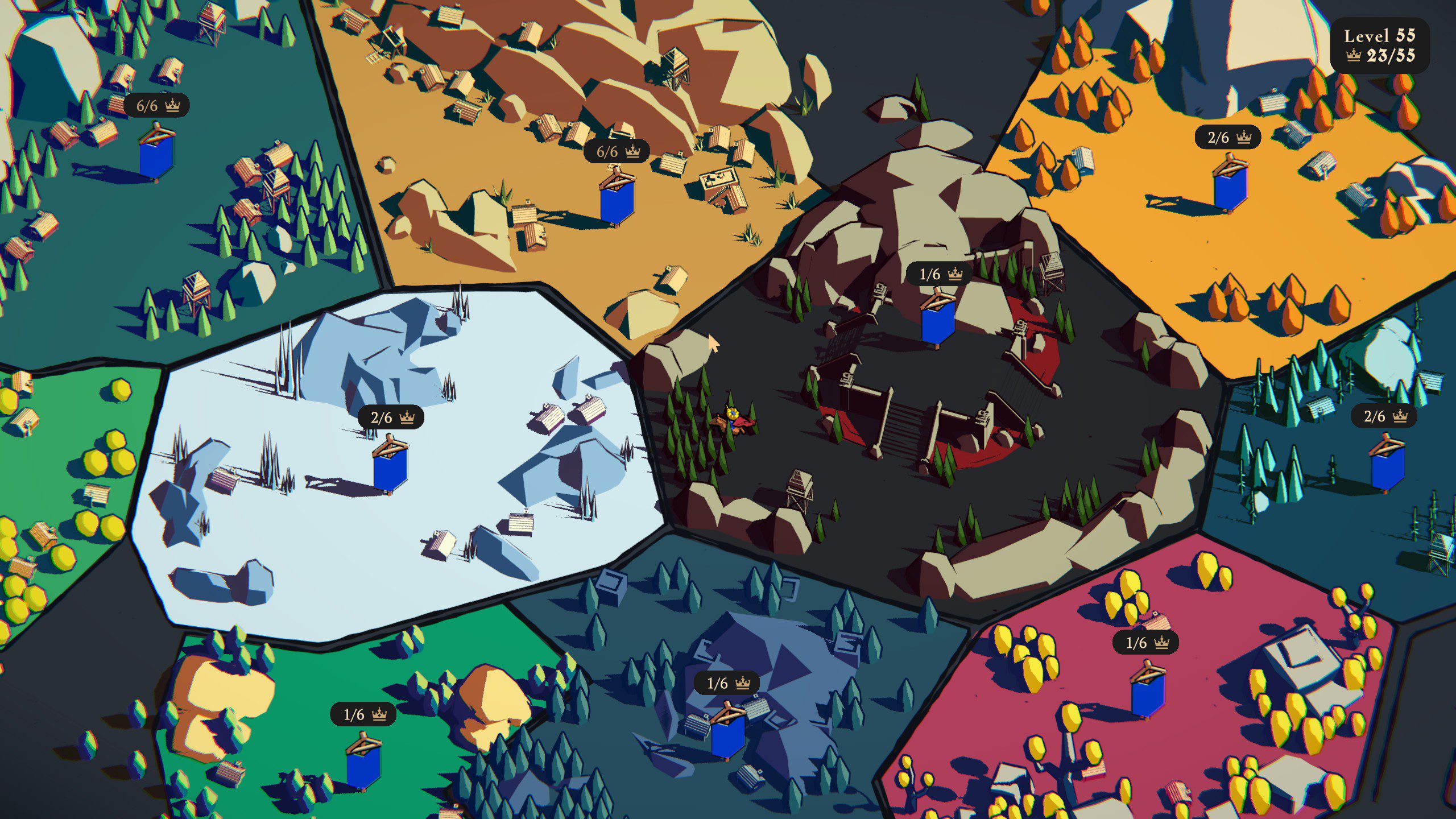
Another noticeable change to the game mechanics is a lack of modular map expansions and endless waves. Thronefall has 10 hand-crafted maps with preset blueprints and a limited number of waves. On the one hand, this design limits the endless replayability of some other popular tower defense games. On the other hand, it offers a carefully designed and balanced experience throughout each level. It also brings back some of the replayability by introducing extra challenges and mutations that can increase the difficulty of the game before you start on a new map.
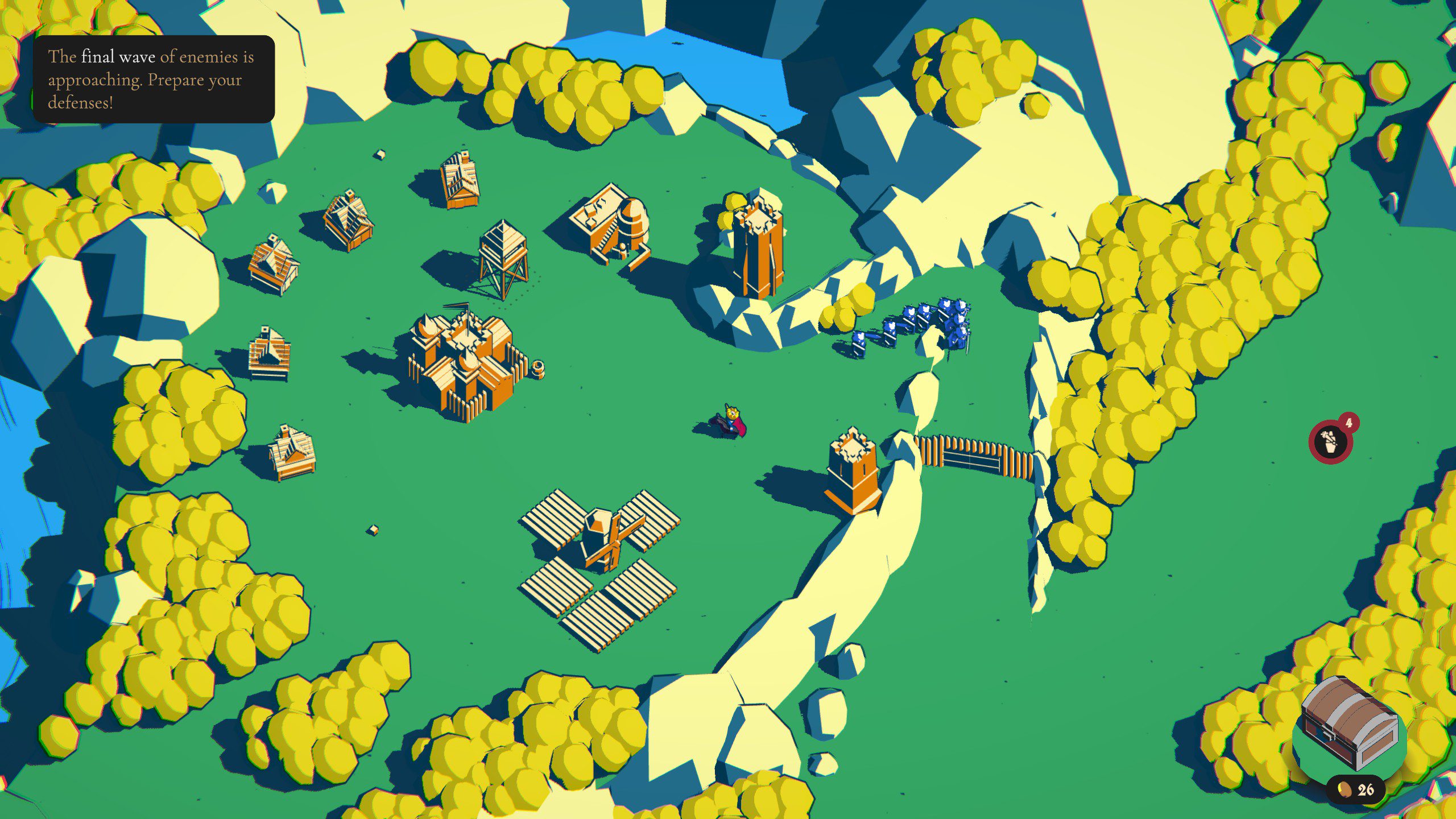
The difficulty curve as we progressed through the game, without adding the extra challenge of mutations, was smooth and appropriate to the progress I made as I played the game. But the subtle increase in difficulty was completely thrown out of the window with the very last boss of the game. This boss was so unimaginably strong and impossible to defeat when I first encountered it that I thought it must’ve been a bug. I had to go back and finish more challenge runs on previous maps to unlock new perks and weapons, and I finally defeated the boss after failing with multiple different setups. This was not a satisfying victory, and the difficulty spike from dealing with waves of reasonably tough enemies with fully upgraded towers and units to an almost untouchable boss who one-shots every unit and tower was a frustrating experience.
But other than this one inconvenience, Thronefall‘s overall progression system and upgrades are quite decent. There are a lot of unique upgrades and perks that allow for an almost endless combination of different strategies each time you start a new map. The enemy variety and unique features of each map also encourage experimenting with different builds to overcome the specific challenges of each level. One thing that limits our input, however, is the predesigned blueprints of each map. In traditional tower defense games, we build towers whenever we want them. But in Thronefall, the building placements are fixed, and there is a limited number of buildings we can have on each map. This is not a bad thing, but a feature that goes hand-in-hand with the hand-designed maps, and is just a different approach to the more common procedural generation of endless tower defense games.
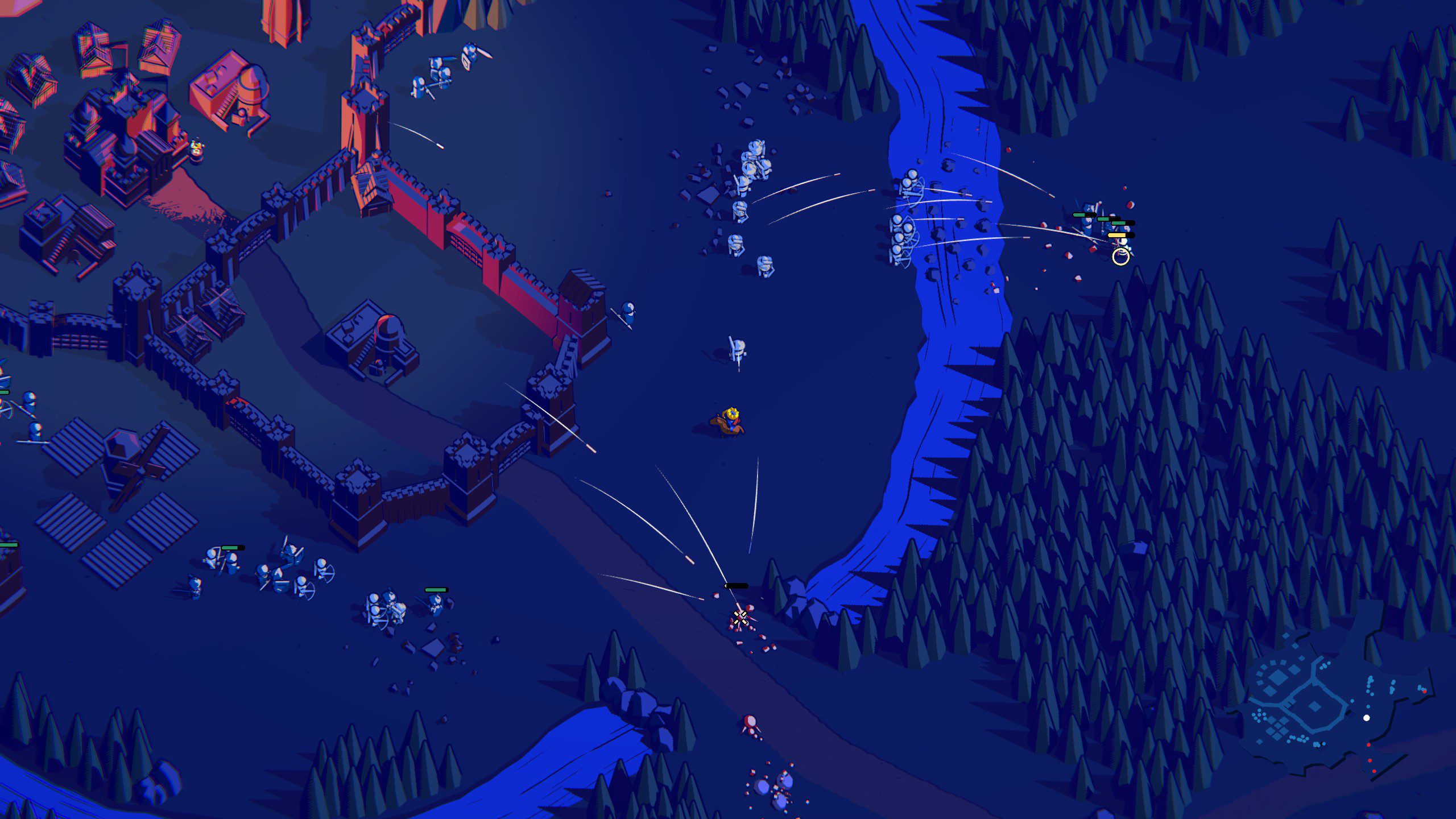
I especially appreciate the tower upgrade system in Thronefall. There are two levels of upgrades for each tower, with four different upgrades at each level. You can combine these options to create the perfect tower for each location. The approach to troops was less exciting. Even though there were four different types of melee and ranged units, there weren’t any exciting upgrades for them other than just making more of them or upgrading their damage. The troops’ management does add an interesting layer of strategy, but it’s an unpolished one. It’s not easy to select and command certain types or groups of troops, and I either had to command everyone together, rely on the clunky locations and movements to select smaller groups, or have them stay at their predesignated location and deal with whatever comes near them.
The most apparent RTS influence in Thronefall gameplay is its economy. Managing and balancing the economy, knowing when and how to prioritize economical upgrades over defensive upgrades, and perks that affect gold generation create an engaging and dynamic gameplay loop. With multiple gold-generating buildings and even some map-specific features, I had to adapt my plans for building up my income at each level. There’s even a challenge run at the end where there are no enemies and you just have to maximize your gold generation, and it was one of my favorite challenge runs.
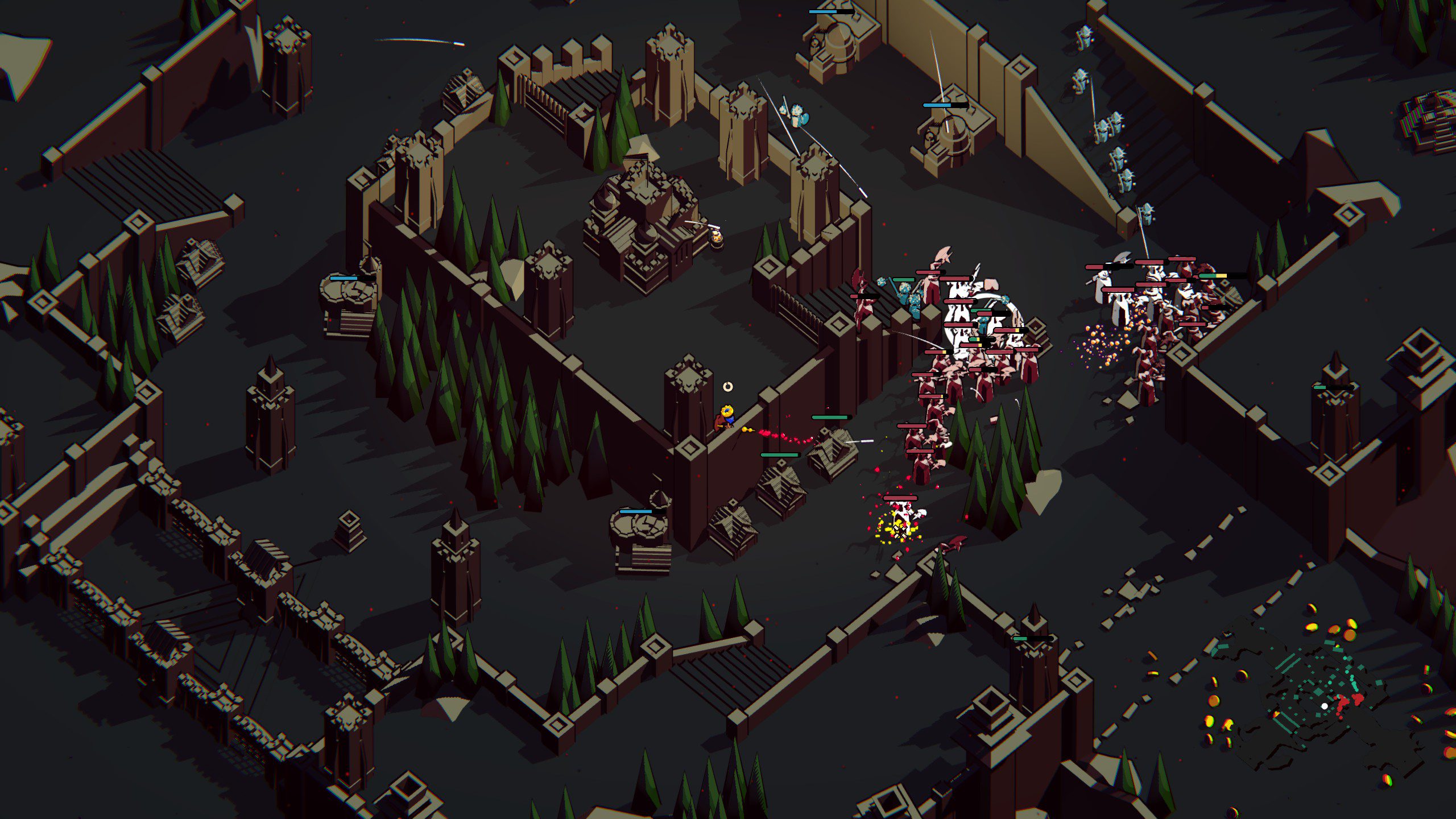
The UI and visual design of Thronefall are very stylish and minimalistic. The minimalistic UI is especially useful due to the chaotic nature of tower defense games. I never lost my way during crowded battles and I could always see the information I needed clearly, whether through tooltips or visual cues. The art style also gives the game a very distinct and charming personality, and the minimalistic design stays fresh between levels since the color pallets and map designs change between each level. The only complaint I had about the visual design of Thronefall was that some of the enemy types looked too similar, and I couldn’t tell them apart unless I paused the game and saw the enemy information in the pause menu.
Overall, I really enjoyed the refreshing approach of Thronefall in the tower defense genre. It took me about eight hours to finish the game and finally beat that one pesky boss fight, and I played a little bit after that. But dozens of challenge runs and quests remain left for me to tackle. and I can imagine myself returning to the game once in a while to try and beat my previous scores. It doesn’t have the endless possibilities and replayability of some other popular tower defense games, but it is a worthy experience nonetheless.
Nima played Thronefall on PC with a review code