
Simon Lukasik’s psychological horror game, Bad Cheese, is based on 1920s rubber hose animation, such as Steamboat Willie (which became public domain in 2024), but tells a darker story of a mouse living in an abusive household.
In terms of visuals, Bad Cheese perfectly encapsulates a nightmarish twist on 1920s children’s cartoons. It’s filled with whimsical dialogue styles, gameplay surrounding tasks simple enough for a child, and a wide variety of critters inhabiting the house. Only the dialogue surrounds violent themes, the chores that the mouse is set to are to cover for his father, who neglects them due to his alcohol abuse, and those critters are actually disgusting rodents who have infested the house due to how dirty it’s become.
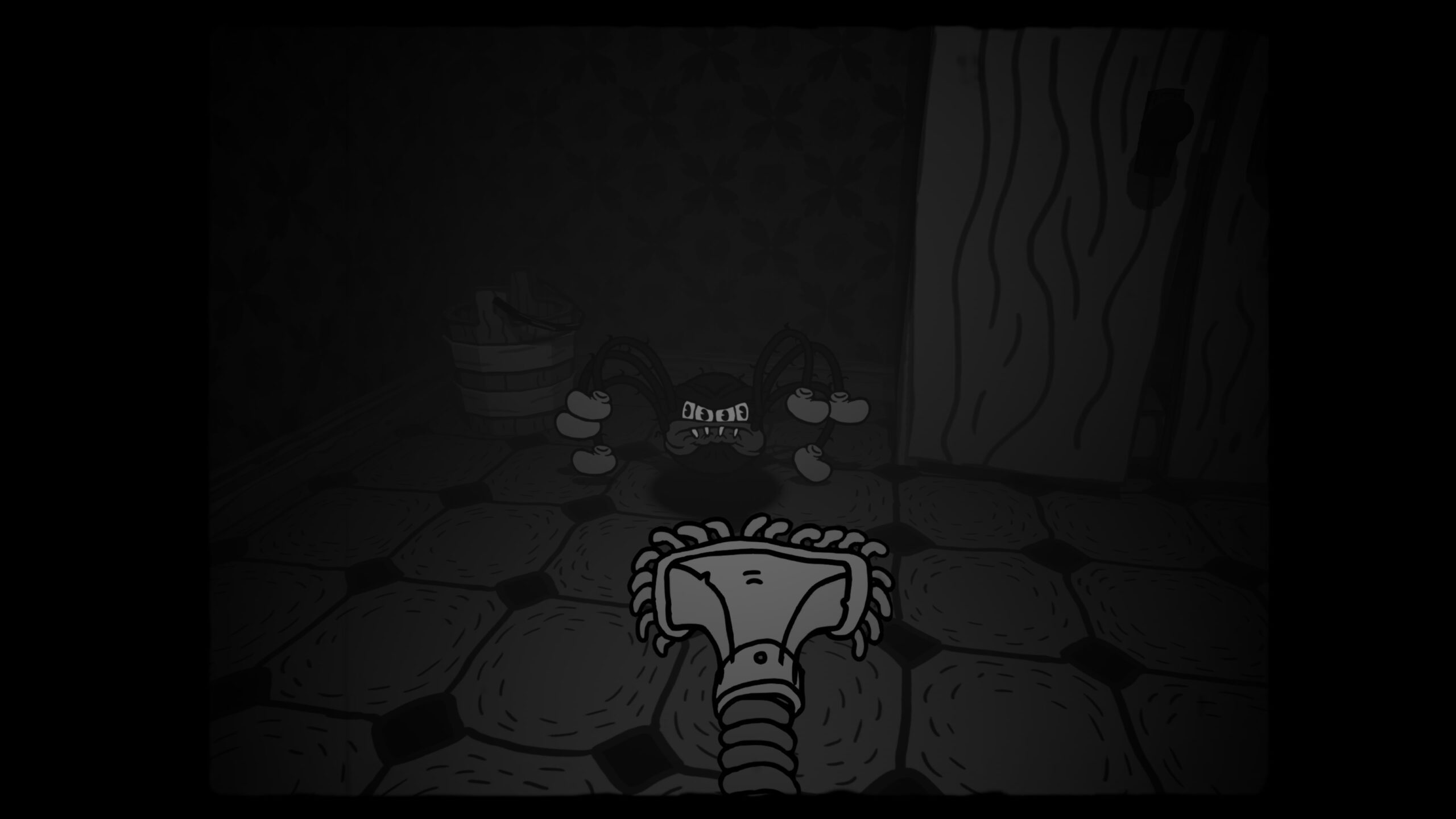
While his mother is away, the mouse is left under his father’s rule, and has been given a series of chores to do to keep the house spick and span. Unfortunately, this is hard to do when our father has been having friends over, leaving the floor littered with bottles and vomit each morning. As the mouse, we must clean up after him, put the washing on, and find his painkillers before he gets too cross.
Unfortunately, because the gameplay revolves widely around chores, it’s not exactly a riveting experience. While it does build up to more combat encounters towards the latter half of the game, the first half did drag quite a bit, and especially will do so for players looking for more of a horror experience. That being said, it only took me around three hours to complete Bad Cheese, so by the time I felt as though the pace had picked up and I was settling into the game more, it was over.
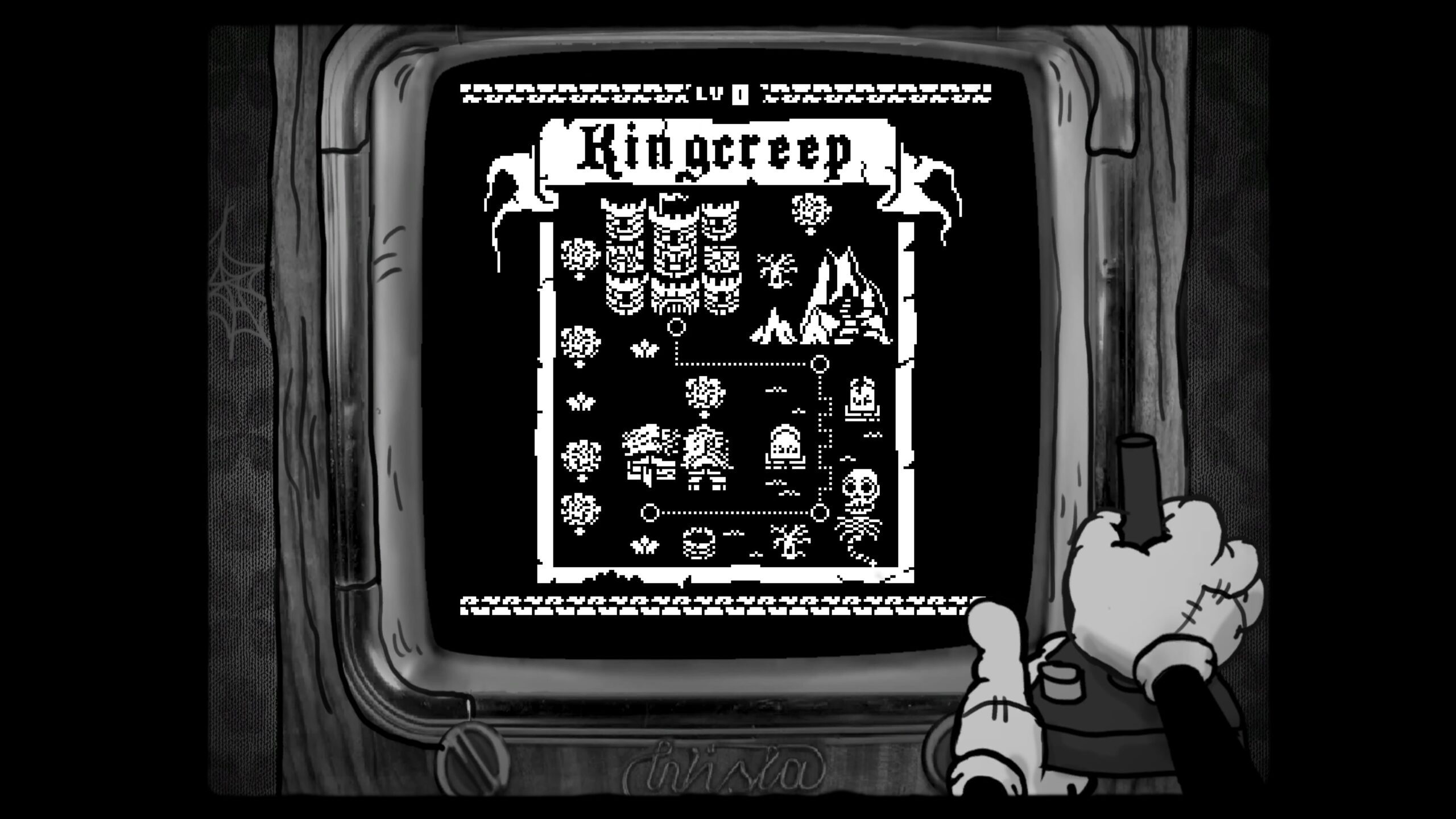
Each level in Bad Cheese evolves around a new chore and will usually introduce a new combat mechanic to try out on that level’s enemy. This is usually in the form of some kind of ranged weapon, and some of the levels feature a puzzle element too. Unfortunately, combat doesn’t feel satisfying at all. There’s a lack of feedback when we hit an enemy, and a lot of their attacks involve covering the screen so that we can barely see anything, which makes it harder to back off and take a breather. One enemy would latch onto the screen and flash white when attacking, which made the encounter actually physically painful for me to continue – and I’m not usually sensitive to flashing lights. Unfortunately, this made a lot of the enemy encounters just downright irritating rather than tense, whereas Bad Cheese thrived more on its very limited stealth element – especially considering we are supposed to be a helpless mouse, and this section really added to the feeling of being under threat by our father.
There’s some platforming required, especially if you want to grab the collectables present in each level. Unfortunately, the platforming is just as bad as the combat, with jumping feeling floaty and no grab button when trying to land on a ledge. Sometimes the platforming felt so out of place that I wondered whether it was the right thing to do or not to progress, as some of the ledges involved jumping through small gaps and just barely being able to gain the height to catch it.
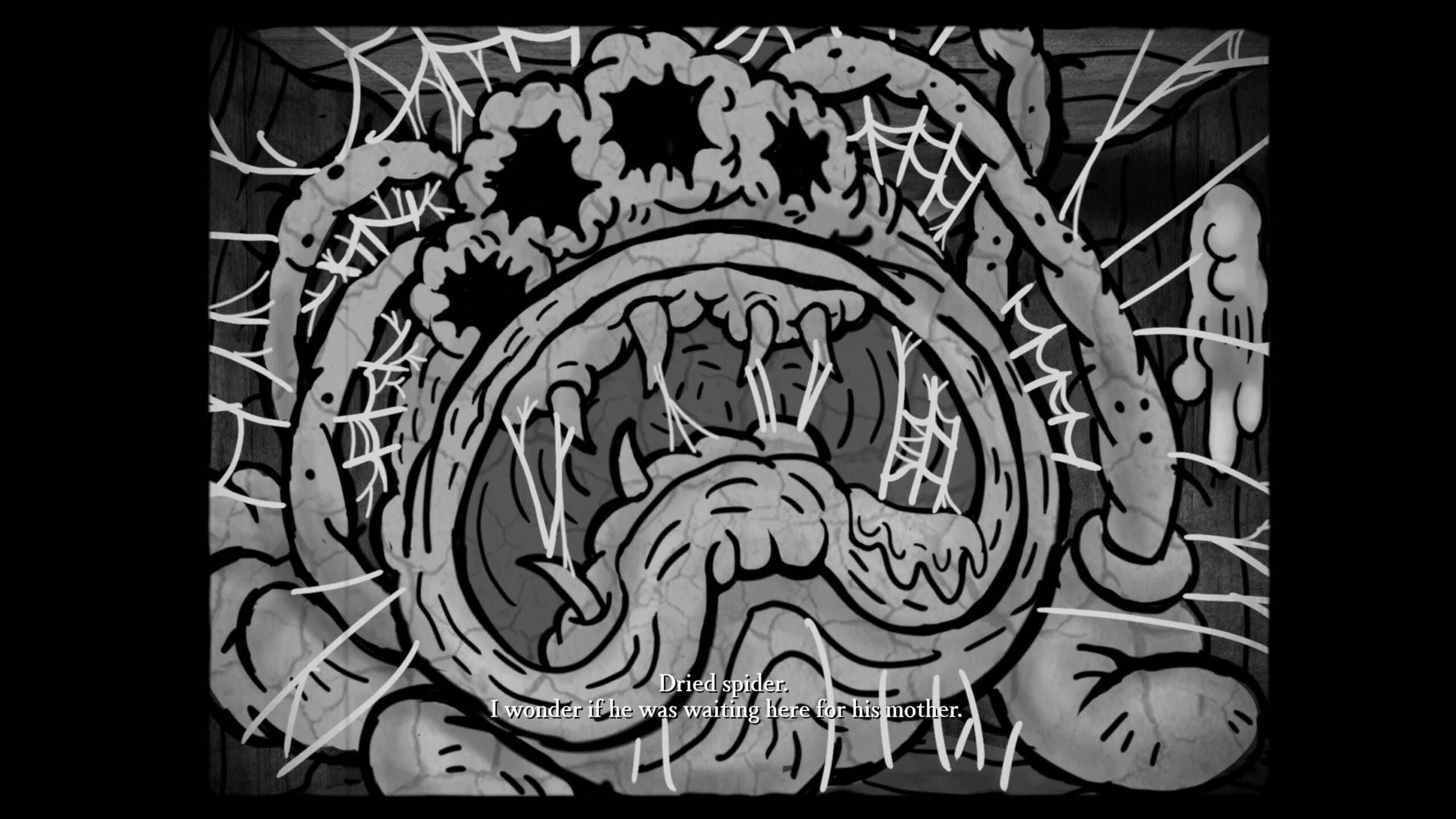
Despite being only three hours long, I believe I could have finished Bad Cheese quicker had there not been such a lack of direction in certain levels due to unclear objectives or explanations. There was one section where I was walking down an endless series of corridors for what felt like ten minutes. While I think there was a knack to making the corridors progress rather than repeat, I’m not sure what it was, if there even was one, as I seem to have just randomly found the pattern to move on.
In terms of audio, Bad Cheese also succeeds here in creating an unnerving atmosphere, especially in the voice acting. While some of the idiolect could get annoying, especially hearing the word ‘mummsy’ over and over, it was incredibly uncomfortable to hear cartoon-style speech used in such a disturbing environment. That being said, the audio could also get very repetitive. On top of the reused critter sound effects, certain voiced enemy encounters would often only have one or two lines, which would be repeated throughout the fight. But I think the biggest drawback in Bad Cheese’s sound is its lack of a soundtrack. This was the perfect game to utilise a creepy 1920s cartoon-style soundtrack, but unfortunately, the majority of it is completely silent, with only the sound effects to build on the atmosphere. A soundtrack would have really helped build on some of the emotional moments while also drawing in the horror, which Bad Cheese lacks in most departments besides the visuals.
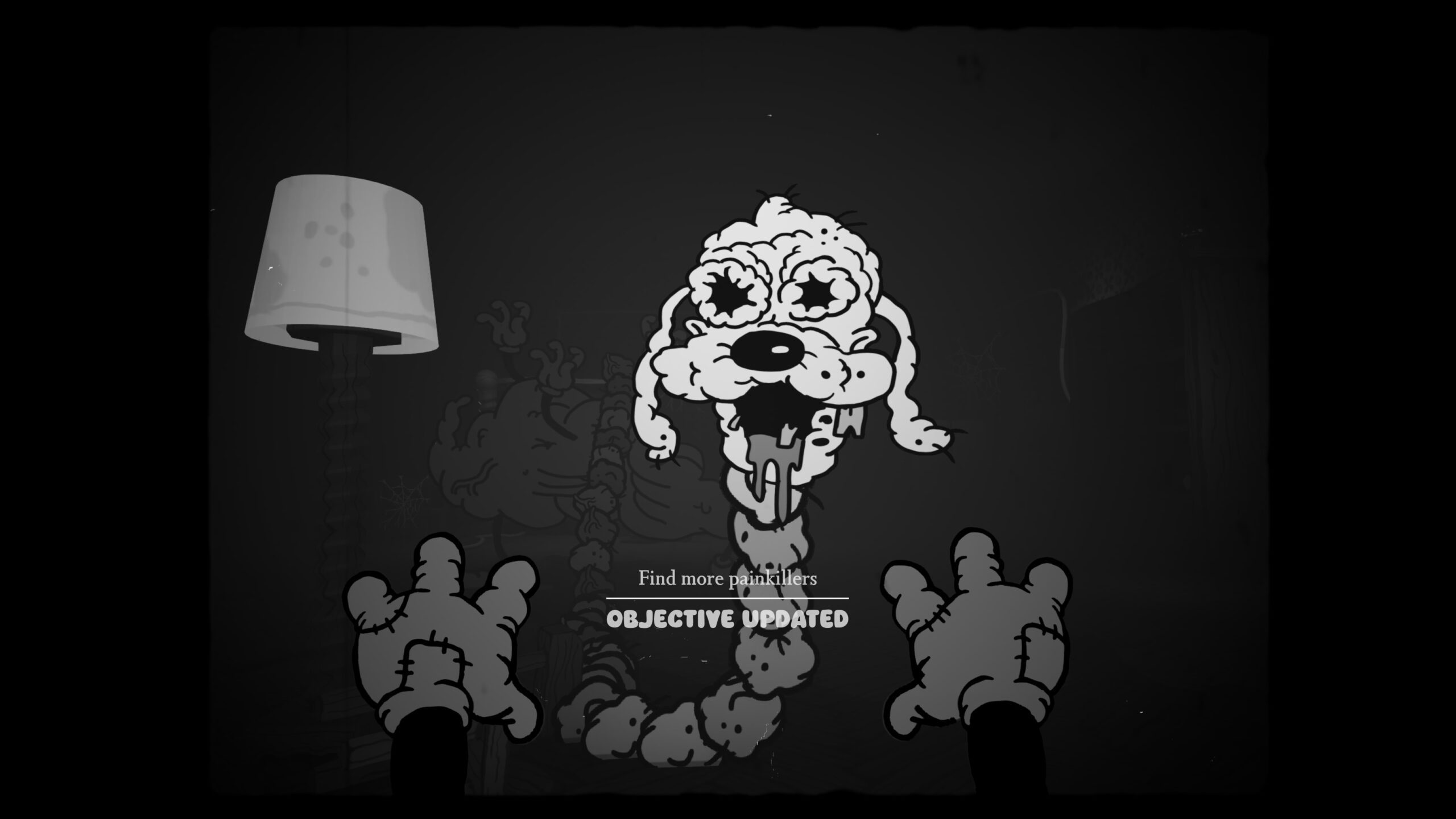
Bad Cheese’s most eye-catching element is also its strongest one, as even while the gameplay was leaving a lacklustre impression, I was constantly amazed by the art style. The closest thing I would describe it to is those scenes in SpongeBob SquarePants that would show characters in immense, disgusting detail. Bad Cheese uses a similar effect, hyper-accentuating flaws while also using mutated designs of partially recognisable Disney-style characters. The art style is clearly where the most attention to detail has been placed, ensuring there’s a wide variety of enemies despite the game’s length, and that each character has its own unique, gruesome design. The only downside is the fog effect, which has been placed to raise tension but really limits visibility in some areas. While I understand that this would have been included to add to the horror elements, I think the art style would do a fine job without it.
Unfortunately, while Bad Cheese is eye-catching with its art style, this also happens to be the only thing it has going for it. While it has a dark story to tell, I didn’t feel like we were there long enough to fully experience it. And while I saw potential in the game’s stealth section, which really added to the vulnerability of the main character, Bad Cheese instead focuses more on bog-standard gun-focused combat and chore-based tasks.
Jess played Bad Cheese on PlayStation 5 with a provided review copy.