
If asked about a console with the best game library, I will always go with the Game Boy Advance (GBA): the final hoorah of mainstream pixel art, multiple peaks for some of the best game series of all time, genre-defining titles, unique, and mini-maximalism design we are barely catching up to in the indie scene. I deeply cherish this 10-button beast, and clearly so does Pipistrello and the Cursed Yoyo.
Opening with a 3D model of a handheld console before zooming in on the screen featuring this beautiful pixel-art sunset, the titular Pipistrello, a blue bat boy with a yoyo and an attitude, bursts through a hatch in the ground. Be sure to check the options menu here; it is a real treat. You can adjust the visuals and add a glass texture on top of the game screen to emulate that tactile feel.
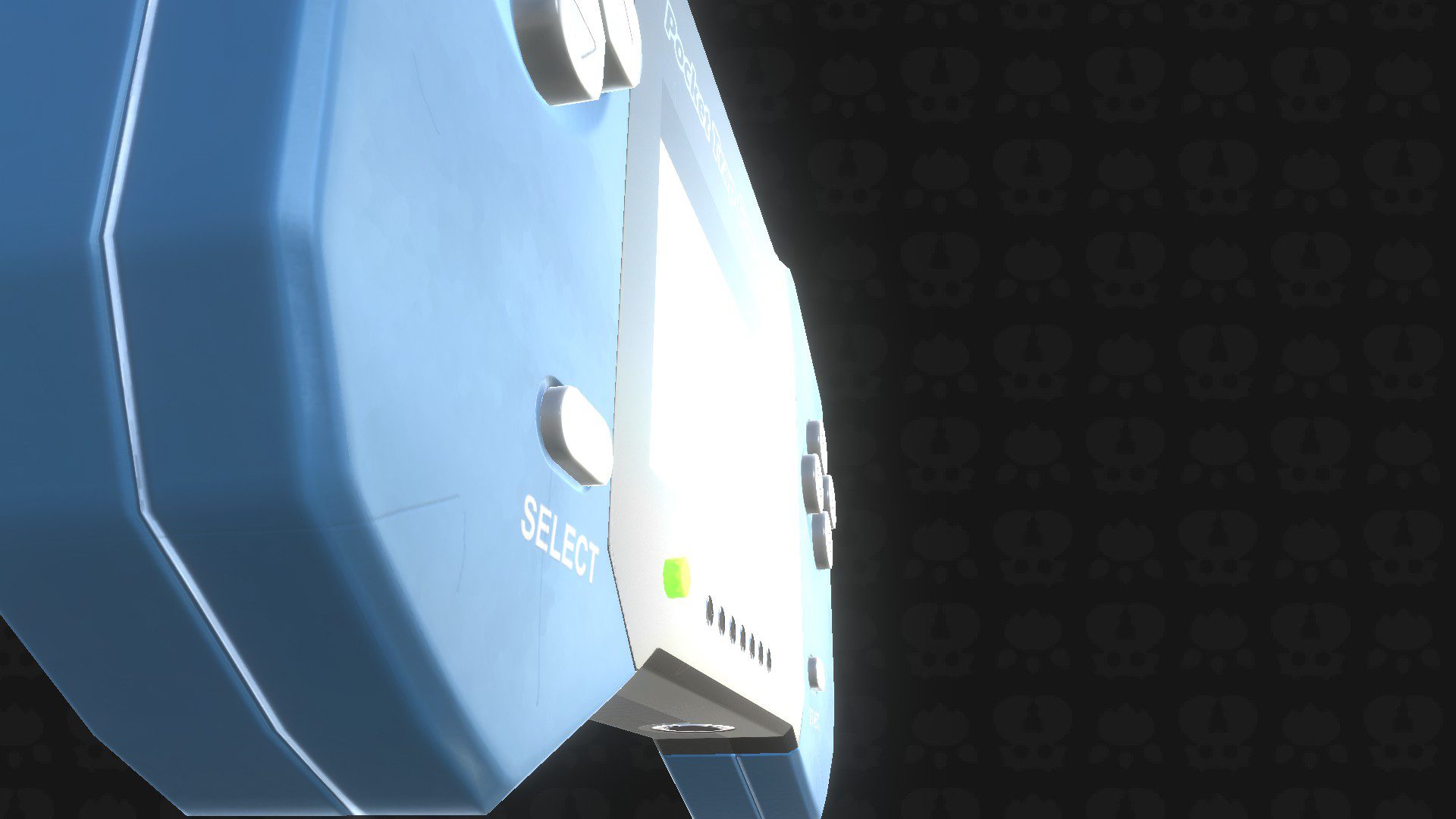
Try out the controls further and you will find that you can zoom out and play the game fully on that previously seen 3D model, or an alternate, more GBA-like one – music blasting through the speakers, console tiltable in all directions. You may have heard stories of sun rays hitting a Game Boy screen in a way where you physically cannot see anything; sure enough, you can see that here in full effect. This is a great way to play on a monitor if you can handle the smaller sprites, adding a satisfying new layer to the presentation.
Handhelds like this imaginary one quickly developed their own game design language, one which Pipistrello deftly taps into. A self-proclaimed “yoyovania,” I recommend approaching it more from a top-down Zelda perspective. It is more involved in its action and quite a bit tougher in its platforming, but if you go in expecting a more robust story of modern metroidvanias you might walk away unsatisfied. As a whole, however, it is a mixture of all great handheld adventure games – the source of its inspiration.
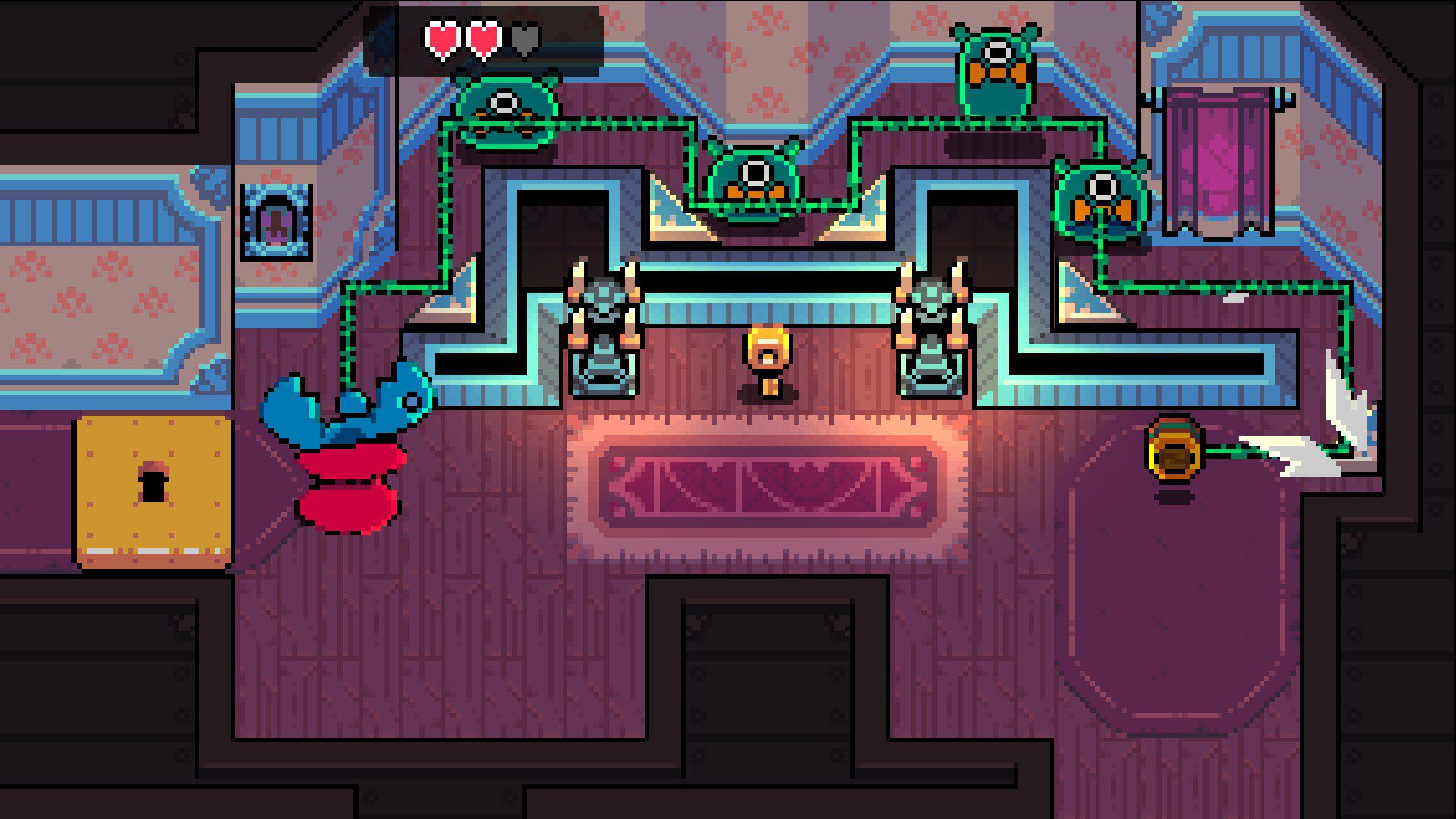
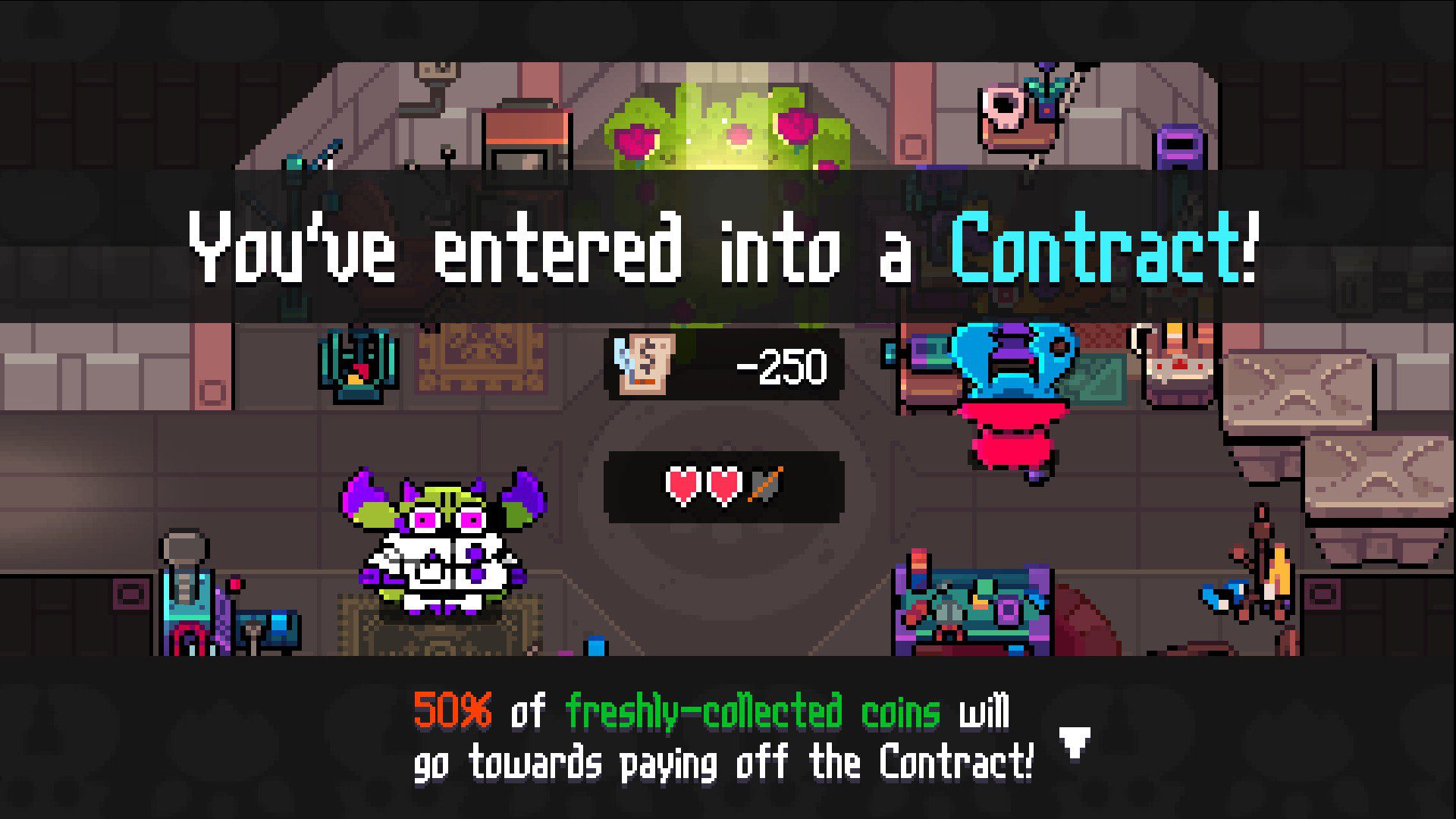
GBA’s “on-the-go” design is best exemplified through systems like Pipistrello and the Cursed Yoyo’s loan-based upgrades. After your aunt’s fortune collapses due to a coup, she becomes trapped in the young lad’s yoyo, powering it up. To implement more power into this bio-mecha of sorts, your germaphobe cousin Pepita requires payment to rid you of the nasty side-effects such as lowered health or damage. Your money, according to him at least, is dirty, so he wants you to give him half of the money you collect on your travels instead. You have to think strategically too: do you rush towards the high-tier loans to get the most powerful upgrades early, or do you work on the small ones and wait until you can cash out big with a few money opportunities you left behind to help speed up the big ones?
There is always a mini-goal on top of a larger one, meaning that each session you play, no matter how short it is, brings you closer to some kind of reward. Think about catching rare Pokemon, real-time mechanics, daunting amounts of ever-present collectibles, secrets with crazy prerequisites or just grinding of any sort – handhelds are naturally predisposed to make these kinds of mechanics work. You are always chipping away at something even if you get stuck, and I think this satisfaction still translates into games like Pipistrello and the Cursed Yoyo even if played on desktop or other consoles.
Part of this is that it is easier to invest that time into smaller game worlds, there is only so much space on a cartridge so it typically is filled to the max. After a slew of games that are too big for their content, worlds like this are making a huge comeback. A lot of GBA games used hubs to truly drive that small world design home, with NPCs that react to your progress or new events, often with mini-character arcs of their own, making smaller worlds feel alive. I think this in particular feels a bit lacking in Pipistrello and the Cursed Yoyo, its straightforward story would really benefit from either more dialogue or at least one location filled with reactive NPCs. New Jolt City feels rather distant due to a lack of involvement from its side characters, though there are a few changes that can be spotted around areas once the main “dungeon” is cleared.
It is still a fantastically realized location though, split into four districts with strong audiovisual and gameplay personalities. Pipistrello and the Cursed Yoyo is very open-ended, with at least two main paths available at all times, each hiding away new movement and combat options, so the fact that every area maintains a sense of unique and challenging rhythm to both traversal and action is impressive! It develops that sense of self-expression by allowing seemingly unplanned ways of traversing gaps with an upgrade you may have found on the other path.
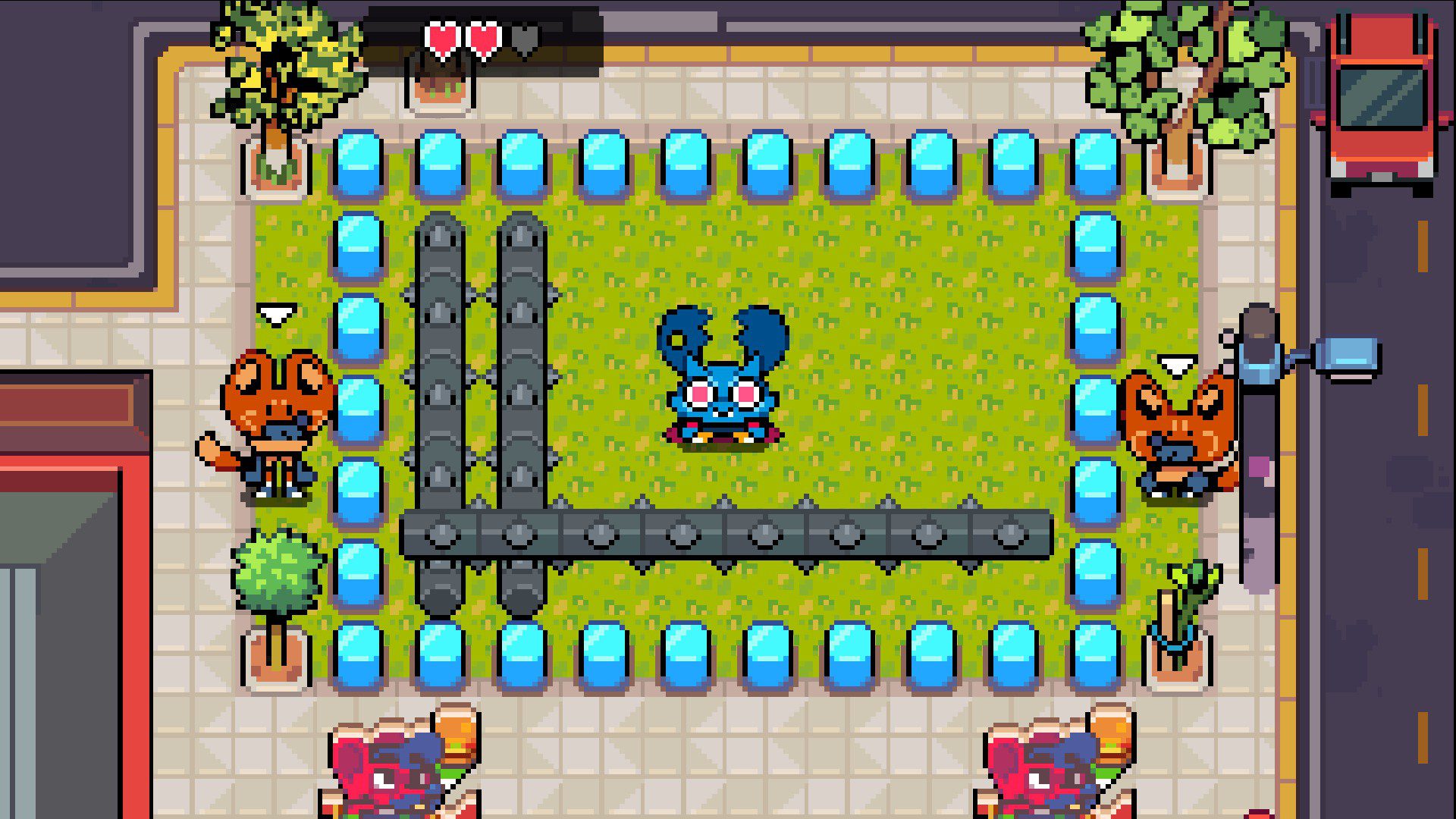
Rarely is platforming in a top-down perspective this good. Though it still has its quirks, slipperiness when you want to stand still being a big one, the level of challenge here is always intensifying and the yoyo tricks used to cross gaps are always inventive. Some of its inspirations were content with creating longer puzzles or throwing more late-game enemies at the player but the core gameplay of its screen-by-screen challenges remains the focus until the very end.
Pipistrello and the Cursed Yoyo’s platformer focus does not diminish either its exploration or combat. The latter does get a bit easy when you start getting fully decked out with upgrades, and that is why bosses always incorporate a lot of movement into their encounters. As for its secrets, these go back to the excellent layout of the city. It allows for the most involved platforming challenges and puzzles using fringe mechanics you have to figure out fully by yourself to hide the game’s most out-there upgrades. I love the kind of playfulness these allow you to pull off, and since you can keep them in New Game Plus, the world is your oyster after the first playthrough.
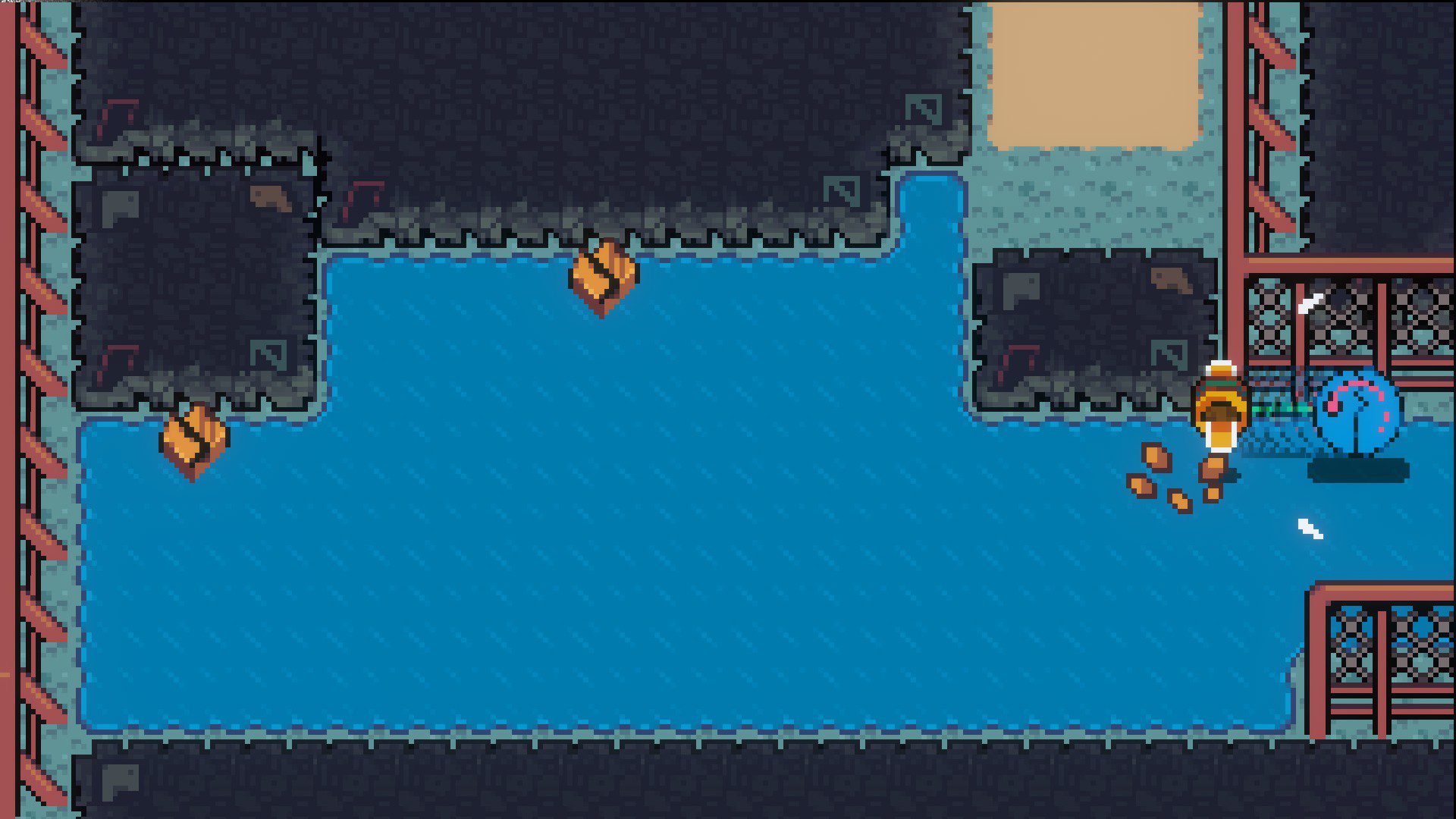
Optional moves are equipped with badges, each badge costing a certain amount of notches – a familiar system for modern metroidvania fans. You can obtain more notches, as well as health, by finding containers or collecting money for the upgrades. There are no “builds” in Pipistrello and the Cursed Yoyo though, each badge found in the overworld is more of a flavor you add to your play style with varying degrees of intensity.
Should you struggle with any one aspect even with upgrades and badges, Pipistrello and the Cursed Yoyo offers a lot of customizability to its difficulty, from extra health to turning off money loss on a game over. For those seeking a bit of a break, you can up money drops from enemies to get those upgrades going faster, or remove fall damage should you find being punished for failing jumps annoying. For those seeking a harder challenge, upping the damage received could do the trick.
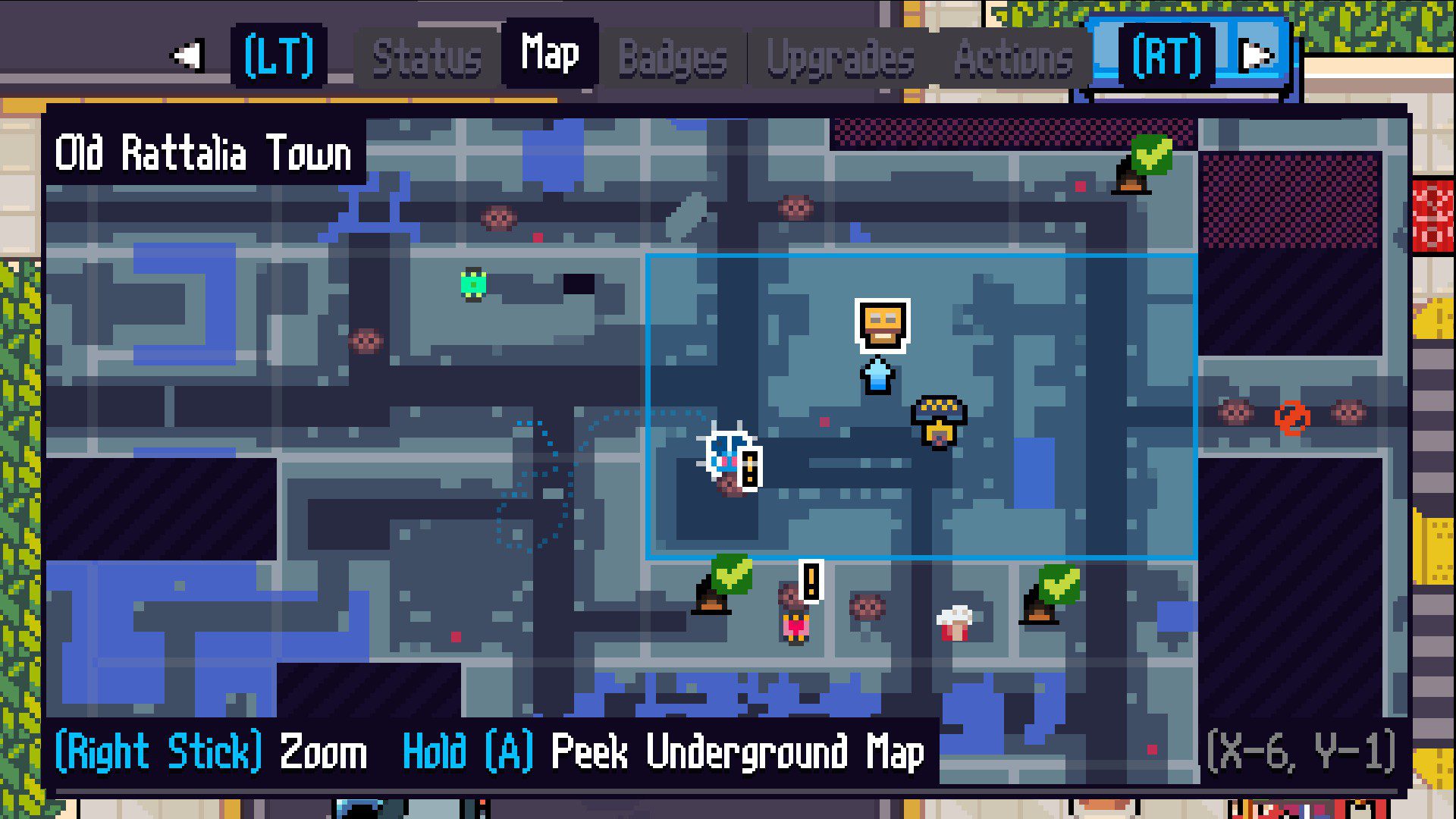
I had a moment of doubt when launching that New Game Plus though. See, that lack of a personal connection with the city and its inhabitants is representative of Pipistrello and the Cursed Yoyo’s cohesion problem. It does not always have one coherent personality, but rather a few personalities battling for attention. Take the main character for example. A neat design of a blue mouse with big ears and a cloak… or at least I assumed so until a few hours in I was reminded that he is meant to be a bat. His shape, which jumps at you in the menu, translates well into the in-game sprite, as are the environments, but the character designs look a bit amorphous at times, blocky with round edges, big heads, and stick-like limbs, whereas others are detailed and easy to identify. They clash, and not in a way that moves me in any way. Similarly, the stop-and-go pace of the music is, in places, very jarring.
Before I get into that, a huge plus of the soundtrack is its dynamic implementation. If you hop into a sewer, the music will sound distant. If you progress through a location, the music might intensify. This is why I wish something similar was utilized for the combat and upgrade hub music. Instead, it often really crashes the general atmosphere of a location with something like a victory jingle before jumping back to its standard vibe. Sound effects are the highlight here, with satisfying crunches and whooshes during combat and pleasant pitter-patters while moving around.
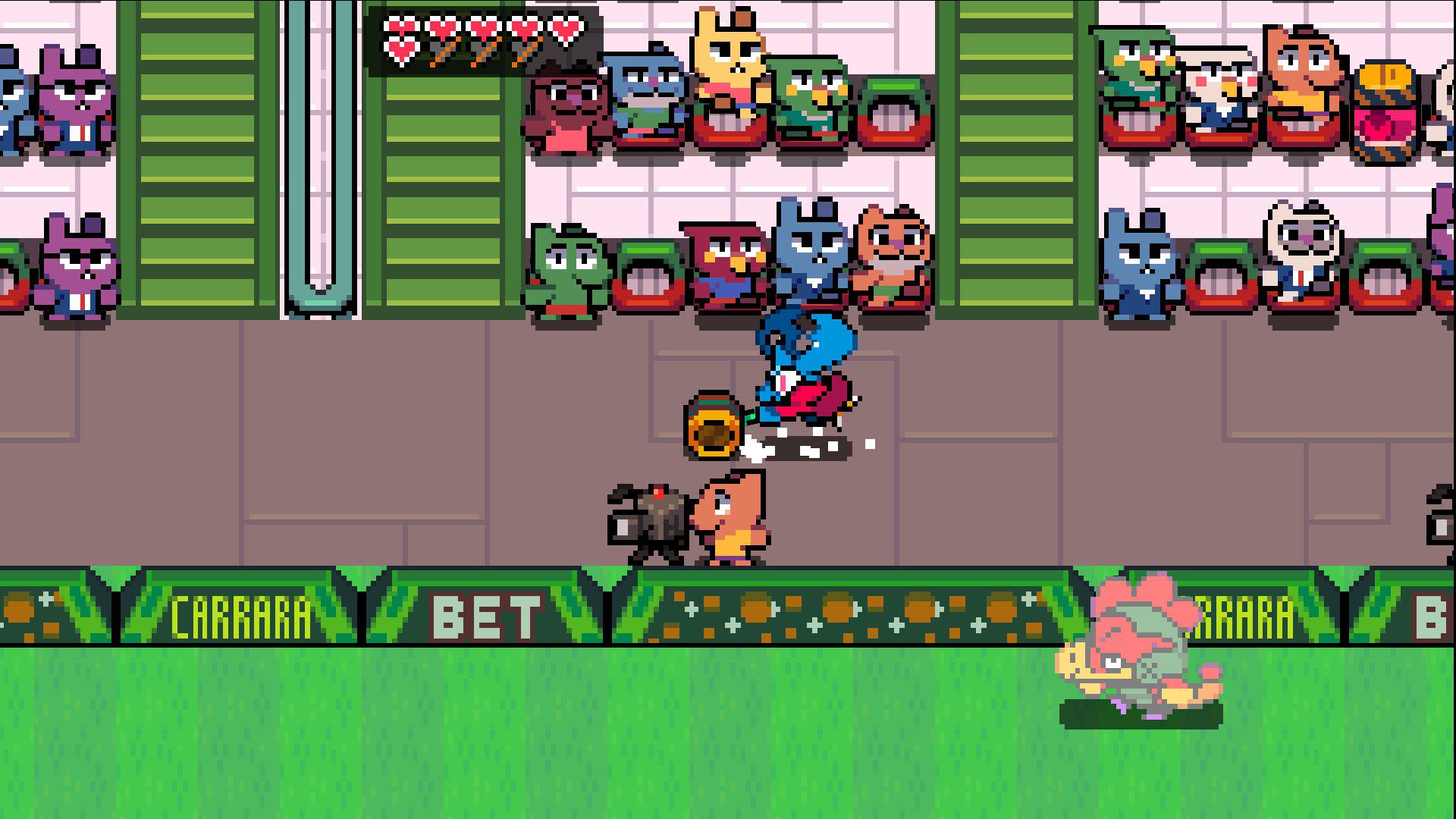
But most important is the feel of playing, and when I eventually jumped back in for a second playthrough, I found its platforming just as delightful as I did the first time. I jumped right into its most difficult parts and allowed myself the use of all its tools. Pipistrello and the Cursed Yoyo is so great because it lets you fumble around with the things it never directly tells you about, making it all feel earned, clever, and playful.
Depending on what part of GBA design resonates with you most, you might find those off-putting moments more impactful, but I think Pipistrello and the Cursed Yoyo is hard to deny. The exploration and level design are tight, replayability and creativity are highly encouraged, you feel like you are achieving something every second of that 15-20 hour playtime, and you simply gotta love a good video game yoyo. And this is a darn good video game yoyo.
Mateusz reviewed Pipistrello and the Cursed Yoyo on PC with a provided review copy.