
It’s always lovely to see a series grow and evolve with the passage of time and improve techniques. One such series that I’ve been following is the Shantae series by developer WayForward. The original game released way back on the Game Boy Color, and while WayForward wanted to make a follow up for the Game Boy Advance almost immediately, their inability to find a publisher for their first sequel forced them to shelve that game and not revisit Shantae until the DSi era with Shantae: Risky’s Revenge, leaving the Game Boy Advance title technically in development hell for over 20 years before taking that original source code and finishing it up for release. Shantae Advance: Risky Revolution is that initially planned sequel, and as it technically came out first for the Game Boy Advance in April, this review is technically for the remastered port of a Gameboy Advance game originally from 2002. The world is strange, everyone
Risky Revolution is set after the first game but before Risky’s Revenge. Shantae, in series tradition, wakes up late for her daily duties of protecting Scuttle Town and helping her uncle Mimic with his latest invention just in time to repel an assault on the town, this time by regular series antagonist Risky Boots in what is but a prelude to her real scheme- using her nefarious Tremor Engines to spin the landmasses of Sequin Land around so previously landlocked locales can be assaulted from the sea. Naturally it falls to Shantae – with the help of her companions Bolo, Sky, and Rottytops – to track down Risky and her allies, undo the damage she’s done to the world, and locate various Relic Hunters to find a permanent solution to the crisis.

What this means in terms of gameplay loops is that after the inciting incident, you will start in an area that’s been mixed up with another, and you’ll need to speak with NPCs to discover where the swapped geography comes from, visit it for clues on where to find a relic hunter and parts to fix a machine to swap the two locales back, and then visit the actual platforming challenge area. In that area you’ll find a foreground and background area, the alignment of which can and must be switched to fully explore the area, several small challenge caves with various rewards and key items, a larger dungeon with a transformation to help Shantae navigate her surroundings, and the primary dungeon that holds another transformation, a boss battle, and the relic hunter needed for plot progression.
As far as gameplay gimmicks go, the background and foreground one is fairly interesting. While the game is 2D, each platforming area is comprised of two ring-shaped areas, one being the foreground and one being the background. Shantae can only swap between the two areas at specific fixed points, which normally leaves certain areas of the foreground and background layers impossible to reach, requiring Shantae to find the tremor engine hidden in each area to rotate the rings and realign the two areas to access new areas and to solve the puzzle in each one, which will involve using one of Shantae’s genie transformations on various spots. It’s pretty easy to tell when an enemy, platform, or Shantae is in the background as their color palette will shift entirely. Certain enemies can freely travel between the front and back areas as well, and those caught me out so many times when rushing through the levels without paying attention. It’s a clever mechanic, though it goes underused in the dungeons. But it’s not entirely unused, as both the foreground and background switch and the revolution mechanic are used in boss fights, but it would have been interesting to use the background during dungeon exploration as well.
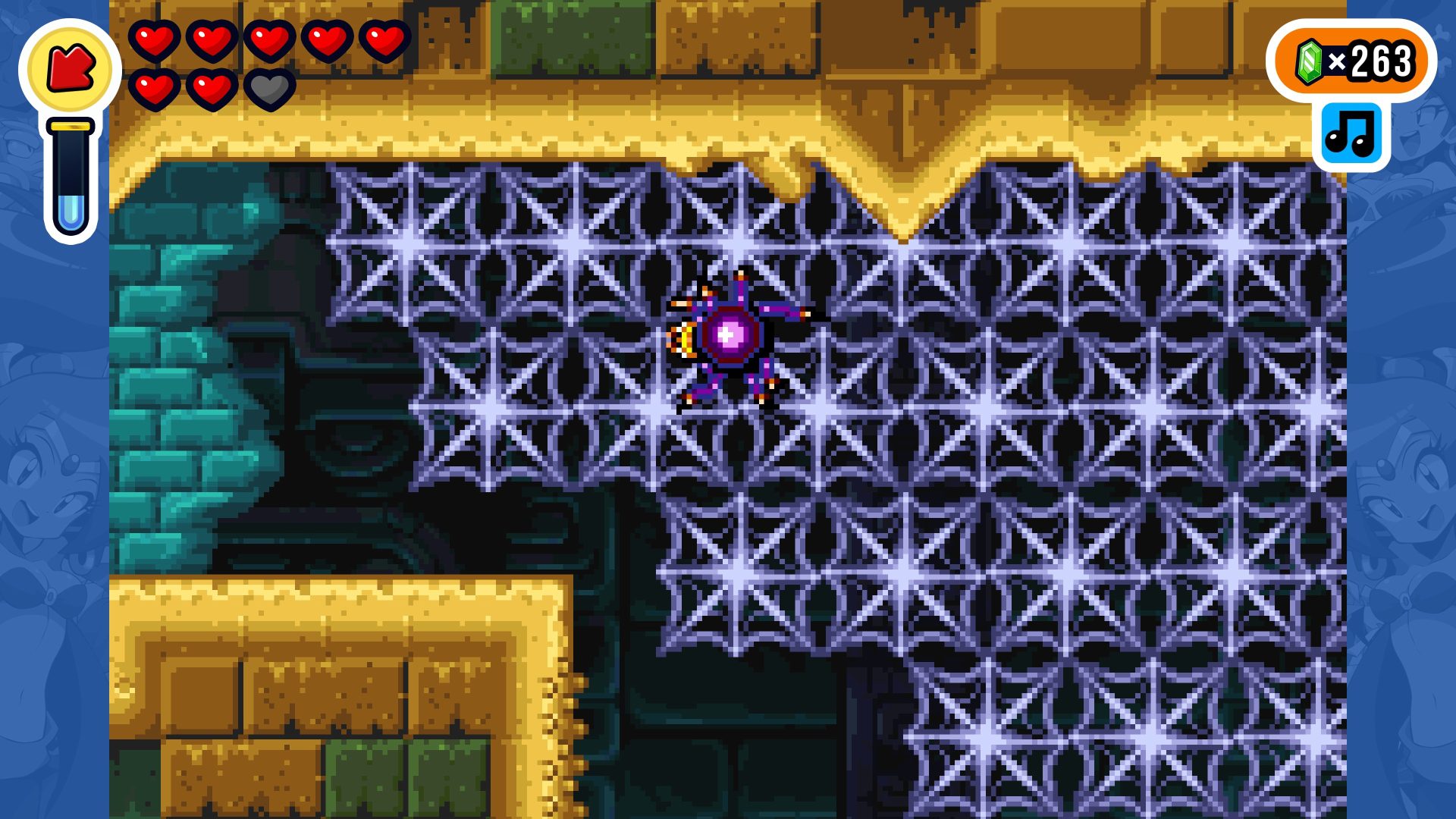
As in previous games, Shantae has a host of techniques to aid her in her quest, from her default hair whip, to her animal transformations and the magic she can access, including series staples fire, thundercloud, and pike ball. The animal transformations are handled excellently, requiring a two button combination to activate and just one to switch back from. Each plays uniquely and offers a skill that Shantae doesn’t have in human form. Other magic abilities in the game also include one that doubles money collection while it’s on, a must if you’re going for the 100% speedrun ending, and one that duplicates Shantae for additional damage. I got to play the deluxe version of the game, and played using one of the DLC outfits, the Relic Hunter outfit, which boosts pike ball damage.
The graphics are a deliberate throwback, and aside from the ones that showed up in Risky’s Revenge and the UI elements clearly redesigned for this release, I couldn’t tell you what was designed 20 years ago and what was added later, that’s how well it all fits together. In an additional retro throwback, voice lines recorded by Shantae’s original voice actress, Megan Glaser, were used for the game. Of course it’s not all retro throwbacks. While the game is keen to keep its story firmly planted in the place it was originally intended, a lot of quality of life features were added, like prompting for saves after major milestones, fast travel between levels as standard, and the inclusion of the attract ability to draw in health and money pickups from Pirate Curse and beyond. The game’s jokey script adds to the charm as well, with certain retrofitted or newly introduced elements being handwaved away with a self aware wink. For example, one plot point has Shantae looking for her hapless friend Bolo’s baby brother, a character never mentioned before or since chronologically. The game jokingly lampshades his absence from later games by mentioning that he should sit out the next few adventures and that he’s fairly forgettable.
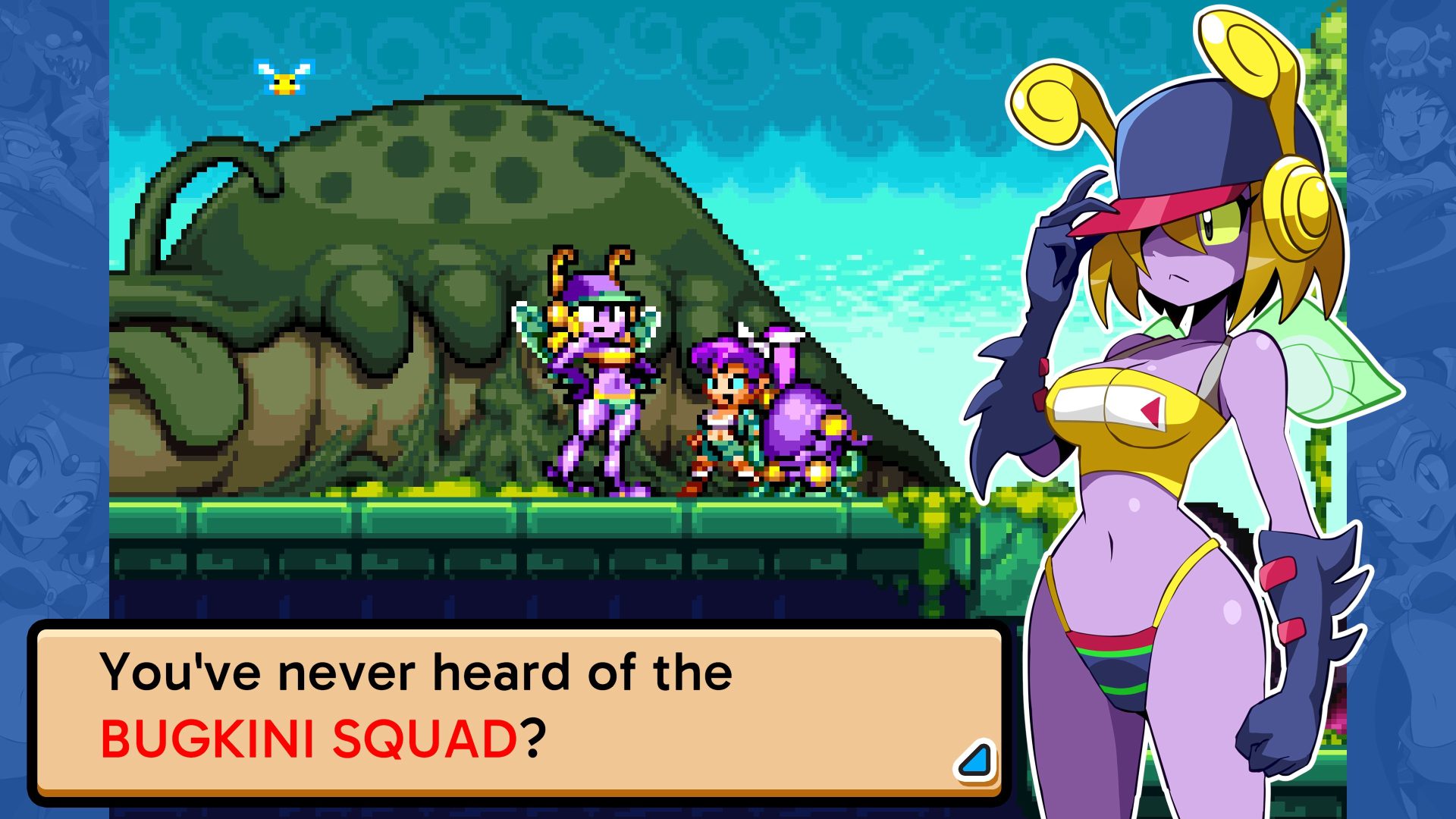
While the whole scenario is deliberately absurd, the game still does a good job of making you feel like there are actual stakes and actual progress being made, even though you know it’s all going to come down to a fight against Risky and the culmination of her evil scheme at the end of the game. All the returning characters feel right for where they are in continuity, without being too informed by their future appearances. The humor feels spot on for the series, including running jokes like Shantae coming to the defense of Rottytops, insisting she won’t be dangerous, and Rotty admitting she might be, just to be honest, and Shantae apologizing for sleeping in extra late this time, as a nod to the game’s very long road to release.
A first time playthrough took me a little over six hours to complete it, but this is a game that encourages multiple playthroughs. In addition to the different outfits from the DLC, you can also unlock other ouftits to change your playstyle after beating the game. There are additional clear screens for regular completion, 100% completion, speedy completion, and speedy 100% completion. You can theoretically unlock all of them on a single run, and I look forward to seeing what the speed run crowd makes of the game. That said, you should also take your time on at least one run because the music is absolutely fantastic and you should take some time to just vibe to it at least once.
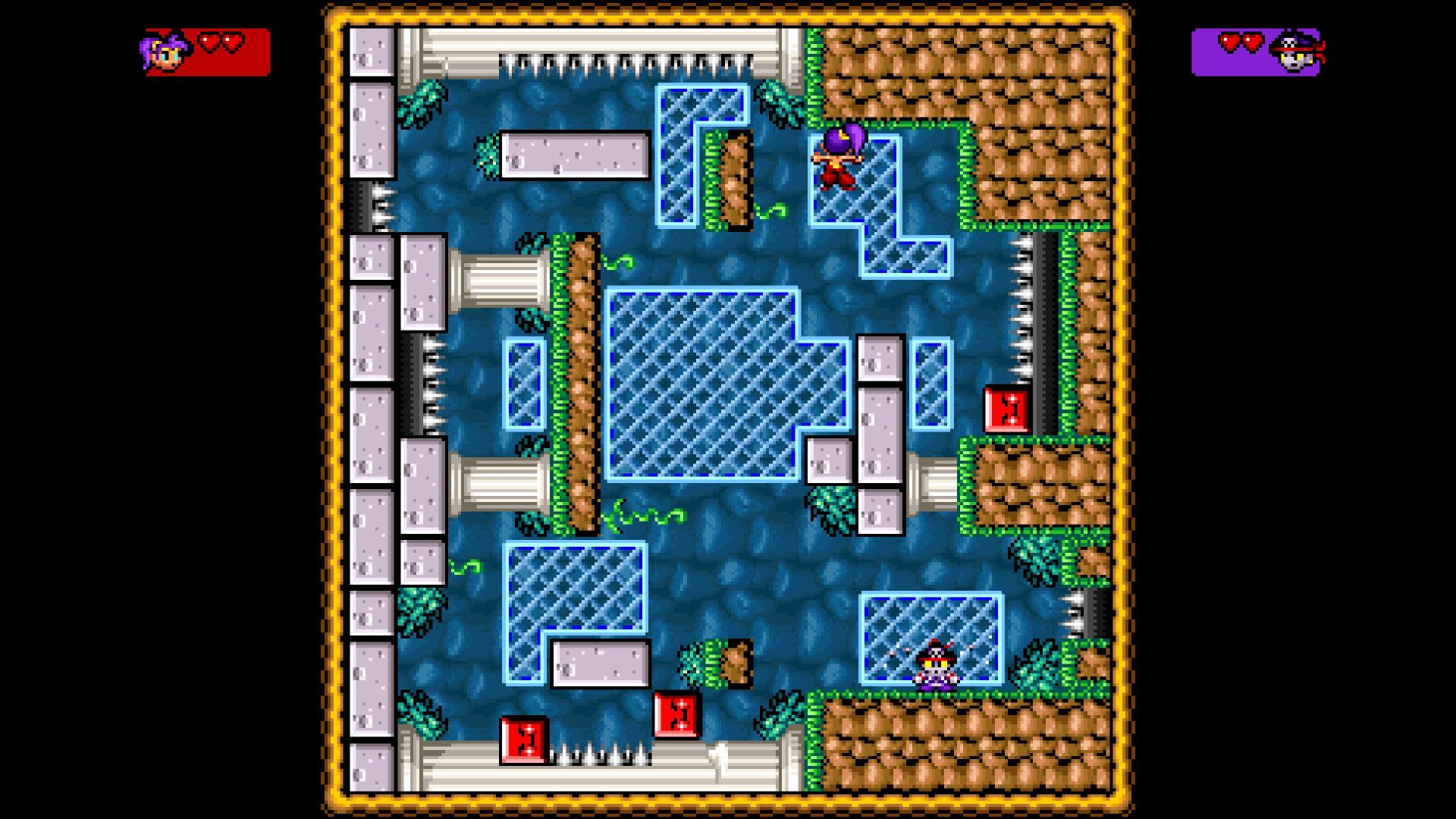
There are two extra modes: the multiplayer battle mode and the classic mode. The multiplayer mode is just a cute little two to four player battle arena that rotates as the players try and be the last surviving person by squishing or shoving their opponents into spikes. Classic mode is literally the entire game, but as it looks and plays on the Gameboy Advance release – just in case you were wanting that little final extra touch of retro verisimilitude.
I have completed Shantae Advance: Risky Revolution once, but you can bet that I’ll be playing it a few more times to try out the other outfits and especially to try and get my run times down. Even if you’re not a fan of the Shantae series, this one is an excellent jumping on point for the rest of the series.
Tim reviewed Shantae Advance: Risky Revolution on PC with a provided review copy.