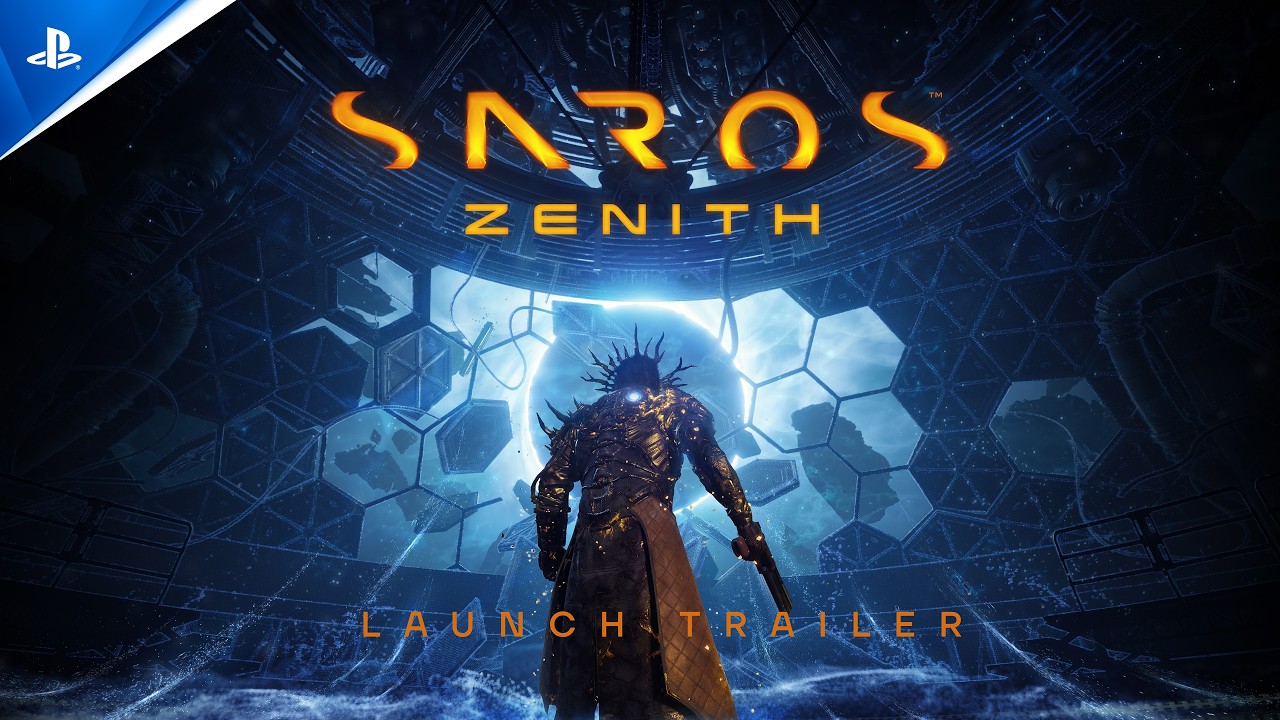
Saros is a PS5 exclusive roguelite shooter from Housemarque, released April 30, 2026, and it pushes the bullet-hell formula into genuinely new territory. If you are trying to understand how shadow and corruption mechanics change the fight, or which upgrades to unlock before your first boss, you are in the right place. This Saros PS5 guide covers the full combat loop, shadow mechanics, top upgrade priorities, and tactical boss breakdowns so you can stop dying and start progressing. For players new to PS5 action games, our PS5 beginner guide is a solid place to start before diving in.
Saros PS5 Review: Is It Worth Playing?
Saros earns its place as a must-play PS5 exclusive for anyone who values tight, demanding combat. Protagonist Arjun Devraj, voiced by Rahul Kohli, fights through the alien planet Carcosa against eight Overlord bosses, and every encounter tests your ability to read projectile color, time your shield, and adapt mid-run. The game is built on Unreal Engine 5, and the PS5 Pro version further enhances shadows, reflections, and PSSR for a sharper 60fps experience. Standard PS5 performance holds at 60fps as well, with fast loading that keeps roguelite retry momentum intact.

Here is a quick breakdown of who will get the most out of Saros:
- Returnal fans: Saros is a spiritual successor to Returnal, and it shares that game’s loop of run resets, permanent unlocks, and increasingly punishing enemy patterns.
- Bullet-hell enthusiasts: The three-color projectile system (blue, yellow, red) demands constant attention and rewards players who love learning attack grammars.
- Roguelite builders: Upgrades split between Lucenite for temporary per-run boosts and Halcyon for permanent unlocks, giving min-maxers a satisfying long-term system.
- Casual action players: Saros is genuinely difficult. Players who prefer accessible difficulty settings may find the Eclipse mechanic frustrating without a willingness to retry and adapt.
The encounter design is consistently inventive, and nine bosses (one tutorial Consort plus eight Overlords) ensure the pacing rarely stalls. A May 5 patch already addressed balancing changes, including a Power Generator nerf, bug fixes, and new UI color settings, showing Housemarque is actively supporting the launch window. Key takeaway: Saros rewards adaptive players who enjoy learning systems through failure, and it is absolutely worth playing if that describes you.
What the Shadow Mechanics Actually Do
Shadow and corruption mechanics in Saros are not just visual effects. They are active gameplay systems that change how you move, what you can absorb, and how aggressively enemies behave. Understanding them is essential before you commit to any build or boss strategy.
The core driver of corruption is the Eclipse mechanic. When you interact with pedestals in the world, you trigger an Eclipse, which corrupts your weapons and artifacts, shifts the visual tone of the environment toward something darker and more hostile, and causes enemies to become more aggressive. Think of it as a voluntary difficulty spike that also unlocks higher-tier rewards.
Shadow-adjacent effects also appear directly in combat through the projectile system:
- Blue projectiles: Absorbable with the Soltari Shield. When absorbed, they recharge your energy, which you use for power shots.
- Yellow projectiles: Must be dodged. They cannot be blocked or absorbed and represent the primary mobility threat in most encounters.
- Red projectiles: Parriable with the Soltari Shield. Successfully parrying a red attack counters the enemy and creates a punish window.
The Eclipse corruption compounds these threats. Corrupted enemies throw faster, denser patterns, and your weapons may behave differently after corruption. New players frequently make the mistake of treating all projectiles the same and either blocking when they should dodge or wasting shield energy trying to absorb unabsorbable attacks.
The three-color projectile rule is the foundation of Saros combat. Every mistake in a fight usually traces back to misreading a projectile color under pressure.
Key takeaway: Shadow and corruption mechanics add a layered threat system on top of the base combat, and mastering projectile color recognition is the single most important skill you can develop early.
How Combat Works in Saros on PS5
Saros builds its combat loop around a rhythm of positioning, resource generation, and precise reaction. Arjun is not a tank. He survives by reading the room, absorbing what he can, and punishing enemies in the windows they open up. Here is how the core loop flows:

- Identify projectile colors immediately. Before you shoot or dodge, read what is coming at you. Blue means absorb with R1. Yellow means move. Red means parry with R1.
- Use the Soltari Shield actively, not reactively. Hold R1 to absorb blue projectiles and build energy. That energy feeds into power shots, which are your primary damage tools against armored or shielded enemies.
- Fire the Power Weapon for burst damage. Holding L2 fully charges an overcharged alt-fire that is devastating for crowd control and boss phases. Reserve it for dense groups or exposed boss weakspots.
- Use Blazing Strike on yellow shields. The melee ability breaks yellow shields that standard projectiles cannot penetrate. This is especially critical on the King, the final boss.
- Maintain positional awareness at all times. Arena edges, jump pads, and cover points are not decorative. They determine whether you survive a Nova wall or a ring attack.
Key combat tips to keep in mind throughout any run:
- Dodge through yellow projectile clusters rather than around them when spacing is tight.
- Parrying red attacks creates punish windows, so do not immediately resume firing after a parry. Let the counter animation complete.
- Crowd control via the Power Weapon reduces the number of projectile sources you need to track simultaneously.
- The Command stat in your armor controls max power, dash proficiency, and shield energy. Prioritizing it makes every element of the combat loop more forgiving.
Combat in Saros rewards players who treat defense and offense as a single integrated system rather than two separate modes.
Best Early Upgrades to Unlock First
Upgrades in Saros are divided into two categories. Lucenite funds temporary upgrades that reset with each run. Halcyon funds permanent unlocks that persist and expand what is available to you over time. Both matter, but your permanent spending decisions have the biggest long-term impact. For players familiar with how layered upgrade trees work in action games, the prioritization here is similar in spirit to combat build guides for other deep action titles.
Prioritize these upgrades early in your runs:
- Second Chance: This permanent upgrade gives Arjun one revive per run. It is the single most impactful early unlock for any player still learning boss patterns, because it converts a run-ending mistake into a recoverable one. Unlock this first.
- Command Stat Armor: Armor pieces with a high Command stat increase your max power output, improve dash proficiency, and boost shield energy simultaneously. Prioritize Command-heavy armor whenever it appears as a reward or shop option.
- Power Weapon Efficiency: Anything that reduces the energy cost or increases the charge speed of your overcharged alt-fire pays dividends in boss fights, where Power Weapon bursts create the largest damage windows.
- Soltari Shield Upgrades: Upgrades that extend shield duration or increase energy gain per absorbed projectile compound throughout a run. More energy means more power shots, which means faster boss phases.
Avoid spreading Lucenite across too many temporary upgrades early. Focus on a narrow upgrade path each run rather than sampling everything available. Consistency beats variety until you have a reliable enough kit to survive mid-game encounters. Upgrade tree sections are gated by boss progress, so clearing each Overlord unlocks new permanent options.
Key takeaway: Second Chance is your first permanent priority, Command stat armor is your second, and everything else supports whichever combat style you are developing.
Best Build Paths and Upgrade Priorities
Once you have the survival basics covered, Saros opens into distinct build directions. Each suits a different playstyle, and choosing one early helps you allocate Lucenite efficiently within a run rather than wasting it on upgrades that conflict with each other.
- Aggressive Burst Build: Centered on the Power Weapon and high Command stat armor. The goal is to absorb blue projectiles quickly, build energy fast, and unload overcharged alt-fire bursts during boss weakspot windows. Best for players who prefer high risk and high damage over sustained survival. Prioritize shield energy gain upgrades and Command armor above all else.
- Defensive Control Build: Focused on Soltari Shield uptime, parry timing, and Blazing Strike for shield breaking. Rather than chasing burst windows, this build aims to control the pace of every fight, absorbing and parrying consistently to reduce incoming damage to near zero. Best for players who want to learn boss patterns without the pressure of racing a damage check. Prioritize shield duration upgrades and melee efficiency.
- Balanced Adaptive Build: Combines Second Chance, moderate Command stat investment, and Power Weapon access for situations that demand burst. This is the most forgiving path and the best choice for first-time Overlord encounters. It does not excel in any single area but keeps you alive through unexpected Eclipse corruption spikes. Prioritize Second Chance first, then split between Command armor and shield upgrades based on what drops.
Eclipse corruption affects all builds, but the Defensive Control build handles it most gracefully because it does not rely on offensive windows that corruption can disrupt. The Aggressive Burst build suffers most when corruption increases enemy speed, since your punish windows shrink.
Boss Tips: How to Survive the Hardest Fights
Saros has nine bosses in total: the tutorial Consort and eight Overlords named Prophet, Bastion, Rhabdom, Legion, Architect, Shepherd, Priestess, and King. Each Overlord follows the three-color projectile grammar, but applies it with unique mechanics and arena geometry. Universal advice first, then specific tips for the three most commonly discussed fights.

Universal boss preparation:
- Enter every Overlord fight with a full shield energy bar. Do not waste power shots on regular enemies in the room immediately before a boss door.
- Identify the boss’s projectile mix in the first phase before committing to aggressive play. Some Overlords front-load red attacks, others lead with blue. Your first 10 seconds should be defensive.
- Save your Power Weapon charge for exposed weakspot windows. Firing it into a shielded or armored phase wastes your best damage tool.
- If you trigger an Eclipse before a boss fight, expect elevated aggression in the encounter. Consider skipping Eclipse pedestals if your build is not yet stable enough to handle the corruption spike.
Specific Overlord tips:
- Prophet (3 phases): This is the first major Overlord and a direct test of the color system. Destroy yellow buds to expose the boss’s weakspot, then fire into it. Absorb the blue projectiles Prophet fires during exposed phases to keep your energy high for follow-up power shots. Do not attempt to parry yellow buds.
- Bastion: A mechanical turret boss. The arena features jump pads; use them to stay airborne and avoid the yellow ring attacks that track along the floor. The red Nova walls can be parried, but jumping over them is equally valid and lower risk if your parry timing is inconsistent.
- King (Final Boss): Yellow shields cover the King’s weakspots throughout the fight. Standard projectiles will not break them. Use Blazing Strike, your melee ability, to strip the shields and create damage windows. If you have not been using Blazing Strike regularly before this fight, the King will feel nearly impossible. For players concerned about managing the difficulty curve into late-game bosses, looking at how PS5 difficulty adjustments affect similar action games can offer useful perspective.
Common Mistakes to Avoid in Saros
Most failed runs in Saros trace back to a small set of repeating habits. Recognizing these early shortens the learning curve significantly.
- Treating the Soltari Shield as a last resort: The shield is a resource generator, not just a panic button. Players who only raise it when panicked miss most of their energy income and arrive at bosses underpowered.
- Ignoring projectile colors under pressure: When enemy density increases, many players default to dodging everything. Dodging blue projectiles wastes absorption opportunities and leaves you energy-starved.
- Triggering Eclipse before your build is ready: Eclipse pedestals offer rewards, but the corruption and aggression spike that follows can end underprepared runs instantly. Wait until you have at least Second Chance unlocked before using pedestals regularly.
- Spending Lucenite across too many upgrade paths: Spreading resources thin results in a build with no strengths. Commit to one path per run and complete it before branching.
- Entering boss fights with low shield energy: Shield energy determines how quickly you can generate power shots. Walking into an Overlord fight on empty means your first phase will be purely defensive with no offensive output.
- Neglecting Blazing Strike before the King: The melee ability feels optional for most of the game, but the King’s yellow shields make it mandatory. Players who never practice Blazing Strike in earlier rooms arrive at the final boss without a functional offense.
- Ignoring arena geometry: Jump pads, cover positions, and arena edges exist for specific combat reasons. Staying in the center of every arena makes dodge routing predictable and gives enemies maximum angles of attack.
Saros PS5 Guide at a Glance
Use this quick-reference summary before a session or when you need a fast reminder between runs.
| Priority | Recommendation |
|---|---|
| First permanent upgrade | Second Chance (one revive per run) |
| Armor priority | High Command stat (max power, dash, shield energy) |
| Safest early playstyle | Balanced Adaptive Build with Second Chance |
| Most important combat rule | Read projectile color before acting (blue absorb, yellow dodge, red parry) |
| Eclipse advice | Skip pedestals until Second Chance is unlocked |
| Final boss must-have | Blazing Strike equipped and practiced |
| Boss entry rule | Always enter with full shield energy |
Frequently Asked Questions
Is Saros harder than Returnal?
Saros follows a similar difficulty philosophy to Returnal, with demanding bullet-hell combat, roguelite resets, and boss patterns that require memorization across multiple runs. Saros introduces the Eclipse mechanic, which adds a voluntary corruption system on top of the base difficulty, making it potentially more demanding for players who engage with pedestals early. Players familiar with Returnal will recognize the loop but should expect a distinct challenge rather than an easier experience.
What do shadow mechanics actually mean in Saros?
Shadow mechanics in Saros refer to the Eclipse and corruption system, which activates when you interact with pedestals in the world. This corrupts your weapons and artifacts, darkens the visual environment, and increases enemy aggression with denser, faster attack patterns. The shadow effects are not passive atmospheric changes; they are active gameplay modifiers that raise the difficulty and reward threshold simultaneously.
What are the best early upgrades in Saros?
The most important early permanent upgrade is Second Chance, which grants one revive per run and significantly reduces the punishment for learning boss patterns. After that, prioritize armor pieces with a high Command stat, which improves max power, dash proficiency, and shield energy at the same time. These two investments cover survivability and offensive output, which are the two things early runs need most.
Is Saros part of the Returnal story or universe?
Saros is described as a spiritual successor to Returnal rather than a direct sequel or part of the same story. It features a new protagonist, Arjun Devraj, fighting on a different alien planet called Carcosa. The two games share a developer in Housemarque and a similar gameplay philosophy, but Saros is its own standalone experience with a separate narrative and setting.
Does Saros run well on PS5?
Yes. Saros runs at 60fps on PS5, with fast loading that supports the roguelite retry loop effectively. The PS5 Pro version adds enhanced shadows, improved reflections, and PSSR upscaling for a sharper image at the same frame rate. Housemarque released a balancing patch on May 5, 2026, which also addressed bugs and added new UI color settings, indicating strong post-launch support.
Is Saros worth buying for action game fans?
Saros is worth buying if you enjoy demanding, systems-driven action games where mastery develops over repeated runs. The three-color projectile system, nine-boss roster, and layered upgrade tree give action fans a substantial amount to engage with. Players who prefer accessible or linear action experiences may find the roguelite structure and Eclipse corruption frustrating, but for fans of the genre, Saros is one of the strongest PS5 exclusives available in 2026. If you enjoy similar action-focused roguelites, our Hades II review covers another standout in the genre worth considering.
The Bottom Line on Saros PS5
Saros is a confident, demanding PS5 exclusive that succeeds on almost every front it aims for. Housemarque has built a combat system where defense and offense are inseparable, and the Eclipse mechanic ensures that even experienced runs carry genuine stakes. The central lesson this Saros PS5 guide keeps returning to is that the color of a projectile tells you everything: absorb blue, dodge yellow, parry red. Get that right under pressure and every other system opens up. From there, unlock Second Chance first, build toward a consistent armor setup with high Command, and arrive at every Overlord fight with a full shield energy bar. The bosses are fair once you know their language, and the nine-encounter roster gives you plenty of room to improve. Saros is worth your time.